

on December 15, 2025
As parents, we all want to give our kids the best possible defense against the seemingly endless parade of playground germs. Building a strong immune system is key, and it all starts with the food on their plates. While many nutrients are important, vitamin C is a true powerhouse, playing a starring role in keeping their bodies strong and ready for action.
The most effective way to harness the power of vitamins and minerals isn't by reaching for a bottle of supplements, but by filling their plates with vibrant, nutrient-rich whole foods. This food-first approach helps build a foundation of wellness that can make a real difference in their overall health.
Building a Strong Immune System From the Start
It’s a familiar story for every parent: one cold or cough barely ends before the next one begins. This constant cycle can be exhausting. Your child's best line of defense is a resilient immune system, and solid nutrition, rich in essential vitamins and minerals, is what builds it from the ground up.
Think of it like building a house. You need strong, quality materials for it to withstand the elements. Vitamins like C, A, and D, along with minerals like zinc and iron, are those essential building materials for your child's body.
While a whole host of nutrients are involved, vitamin C is a key player. It's crucial for helping immune cells function properly and mount a defense against infections. The goal isn't to overdo it with high-dose supplements, but to establish consistent, healthy eating habits that provide a steady supply of what their growing bodies need directly from food.
Fueling Your Child's Immunity with Food
The best strategy is to fill their meals and snacks with a rainbow of colorful fruits and vegetables. These foods are loaded not only with vitamin C but also with a team of other vitamins, minerals, and antioxidants that work together to strengthen their immune system. For a deeper dive into building resilient kids, Dr. Elisa Song provides fantastic insights on how to strengthen your kids' immune system from a holistic perspective.
Here are a few easy and kid-friendly ways to get started:
- Citrus Fruits: Oranges, clementines, and grapefruits are go-to classics for a reason.
- Berries: Who can say no to strawberries, blueberries, or raspberries? They're delicious and full of antioxidants.
- Bell Peppers: Sliced red and yellow bell peppers are a crunchy, sweet snack and actually contain more vitamin C than an orange!
- Leafy Greens: Don't be afraid of spinach and kale—they blend seamlessly into smoothies for a nutrient boost kids won't even notice.
When you focus on serving a variety of whole foods, you're giving your child's body the exact tools it needs to build a robust immune system. This simple habit doesn't just help them now; it sets them up for a lifetime of good health.
Understanding Your Child's Daily Vitamin C Needs
Figuring out exactly how much vitamin C your child needs can feel like a guessing game. The truth is, their requirements aren't static; they change as your child grows, from their first steps as a toddler all the way through their teenage years. A simple way to think about it is like a "daily fuel tank" for their immune system.
Since the body doesn't store vitamin C, this tank needs to be refilled every single day with nutritious foods. A consistent daily intake is far more effective than trying to load up on it only when they feel unwell. This steady supply keeps their immune defenses primed and ready for action.
How Much Vitamin C Is Enough?
The specific amount of vitamin C a child needs varies by age. Global health organizations set these guidelines to prevent deficiency and support healthy development. While getting dressed for the day is important, as you can learn in our guide to choosing a going home outfit, getting the right nutrients is just as crucial for their well-being.
Vitamin C recommendations for kids have been carefully established to support growth. In the United States, the Recommended Dietary Allowance (RDA) starts at 15 mg per day for children aged 1-3 years, jumps to 25 mg for 4-8 years, and hits 45 mg for 9-13 years. It then splits for teens, with girls 14-18 needing 65 mg and boys in that age group needing 75 mg.
This chart illustrates how consistent nutrient intake can shift immune strength from weak to strong and eventually to a boosted state.
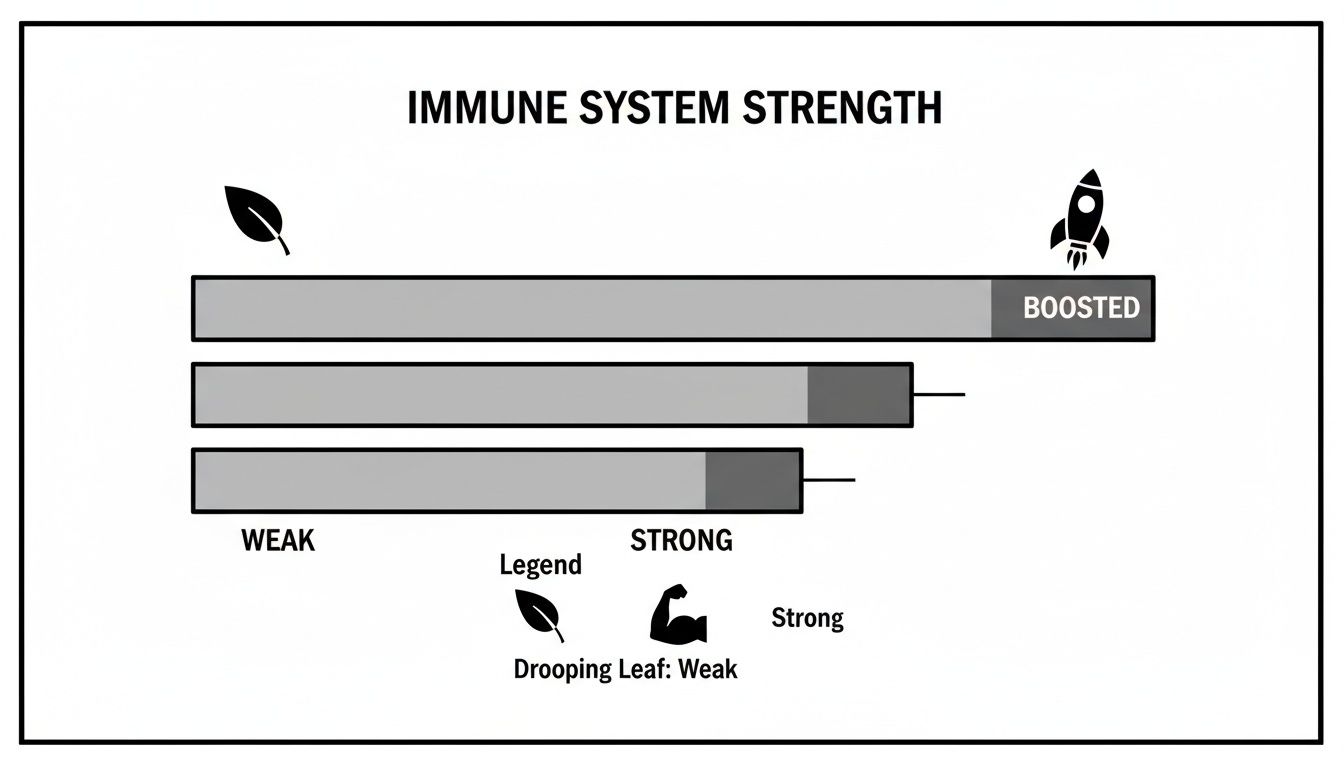
The visualization clearly shows that maintaining a healthy diet helps elevate the immune system to a more resilient level.
To make these numbers easier to digest, here is a quick breakdown of the U.S. guidelines.
Daily Vitamin C Needs for Children by Age (US RDA)
The U.S. National Academy of Medicine provides clear benchmarks for how much vitamin C kids need at different stages of growth. Here’s a look at the recommended daily amounts:
| Age Group | Recommended Daily Allowance (RDA) in mg |
|---|---|
| Infants 0–6 months | 40 mg (Adequate Intake) |
| Infants 7–12 months | 50 mg (Adequate Intake) |
| Children 1–3 years | 15 mg |
| Children 4–8 years | 25 mg |
| Children 9–13 years | 45 mg |
| Teens 14–18 years (Girls) | 65 mg |
| Teens 14–18 years (Boys) | 75 mg |
Remember, these targets are easily met through a balanced diet rich in fruits and vegetables. The goal isn't to meticulously count every milligram but to build healthy eating habits that naturally provide what their growing bodies need.
The Best Foods to Boost Your Kid's Immune System
Now that we've covered the importance of nutrition, let's get to the fun part: the best (and tastiest) foods to strengthen their immune system. I always recommend a "food-first" approach. Why? Because whole foods offer a complete package of vitamins, minerals, fiber, and other goodies that all work together to support your child’s health. It’s a synergy you just can’t get from a pill.
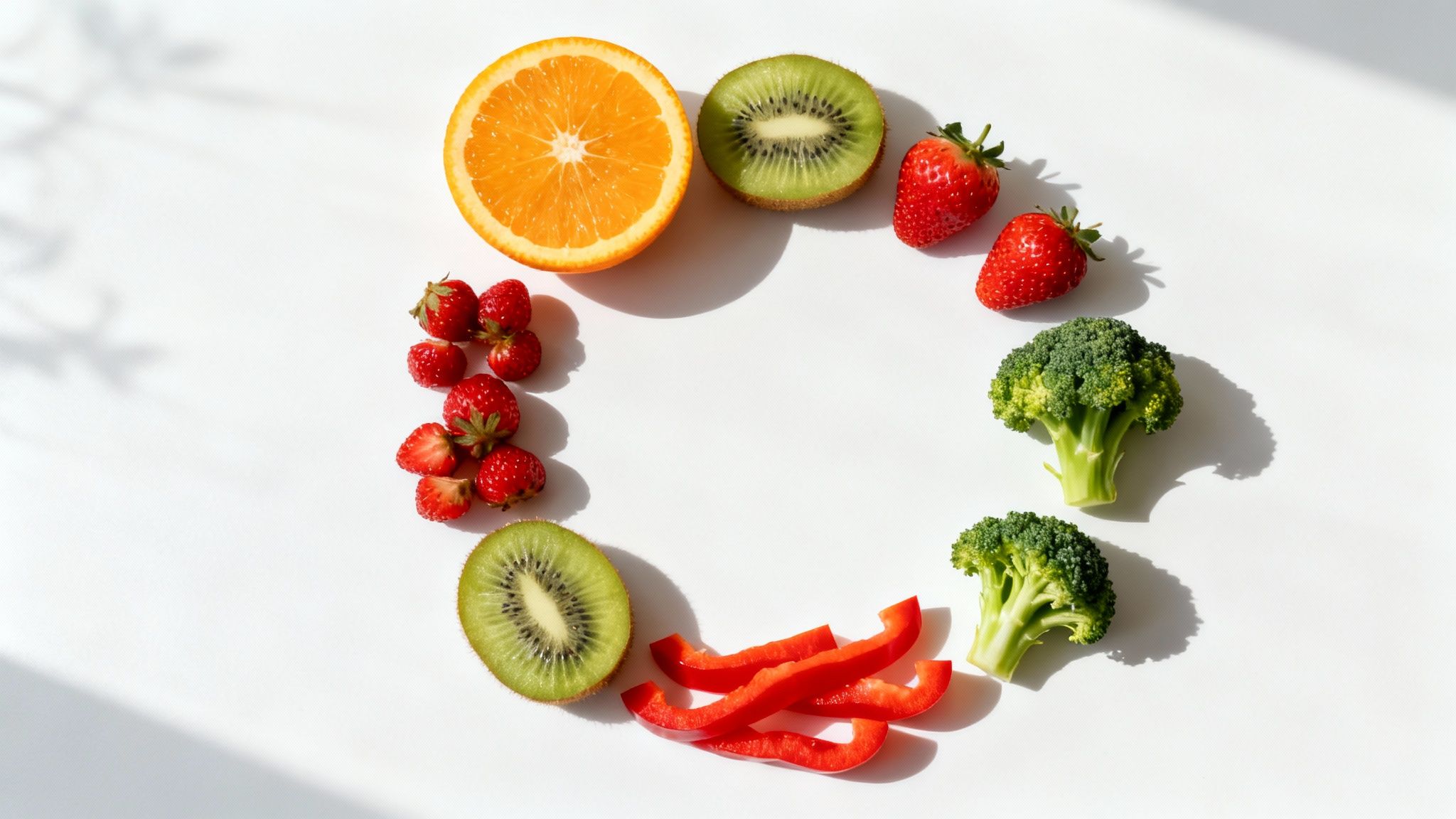
While oranges are great, there's an entire rainbow of options out there waiting to be discovered, even by the most selective eaters. A great little trick is to encourage your kids to "eat the rainbow"—it turns healthy eating into a colorful game and ensures they get a wide variety of nutrients.
A Rainbow of Immune-Boosting Foods
Time to think beyond the citrus aisle. You might be surprised to learn that many common fruits and veggies pack a huge nutritional punch. Here are some of my go-to powerhouses:
- Red Bell Peppers: Believe it or not, these sweet, crunchy veggies contain almost three times more vitamin C than an orange. They’re perfect raw with some hummus for dipping or tossed into a stir-fry.
- Strawberries: Just one cup of these juicy berries delivers nearly a full day's worth of vitamin C for most kids. They're a natural winner in yogurt, oatmeal, or simply on their own as a sweet snack.
- Kiwi: This little fuzzy fruit is a vitamin C giant. Its tangy flavor and vibrant green color make it a fun addition to any fruit salad, and kids often love scooping it out with a spoon.
- Broccoli: Those "little trees" are a fantastic source of vitamin C. A tip from my kitchen: lightly steam the florets to keep them tender and lock in the most nutrients.
- Yogurt: Look for plain yogurt with live and active cultures. These probiotics are beneficial bacteria that help keep the gut healthy, which is a major part of the immune system.
The Shift from Juice to Whole Fruits
Over the last few years, there's been a healthy trend of families moving away from sugary fruit juices and embracing whole fruits instead. But this positive change has created an interesting paradox.
Recent data revealed that while whole fruit consumption among kids shot up by a whopping 75.8%, the number of children not meeting their daily vitamin C goals also increased. This is mostly because juice, which is often fortified with vitamin C, isn't as common on the table anymore.
This trend really underscores how important it is to be intentional about putting vitamin C-rich whole foods on your child's plate. Whole fruits and veggies also provide fiber—something juice completely lacks—which is key for good digestion and stable energy levels. For those navigating the whirlwind of early parenthood, finding thoughtful gifts for new parents that support these healthy habits can make a world of difference.
The ultimate goal is to build a diet rich in a variety of colorful, nutrient-dense foods. This approach not only supports a strong immune system but also establishes healthy eating habits that will last a lifetime.
If you're looking for more inspiration, especially during cold and flu season, you can explore more immune-boosting recipes to find some creative and delicious meal ideas.
Immunity-Boosting Smoothies for Every Age
Let's be honest, convincing a child to eat nutrient-packed foods can be an uphill battle. That's where smoothies come in—they're my secret weapon. You can blend a powerhouse of vitamin C-rich ingredients into a delicious drink that even the pickiest kid will slurp down. The trick is to keep it simple and match the flavors to what your child already likes.
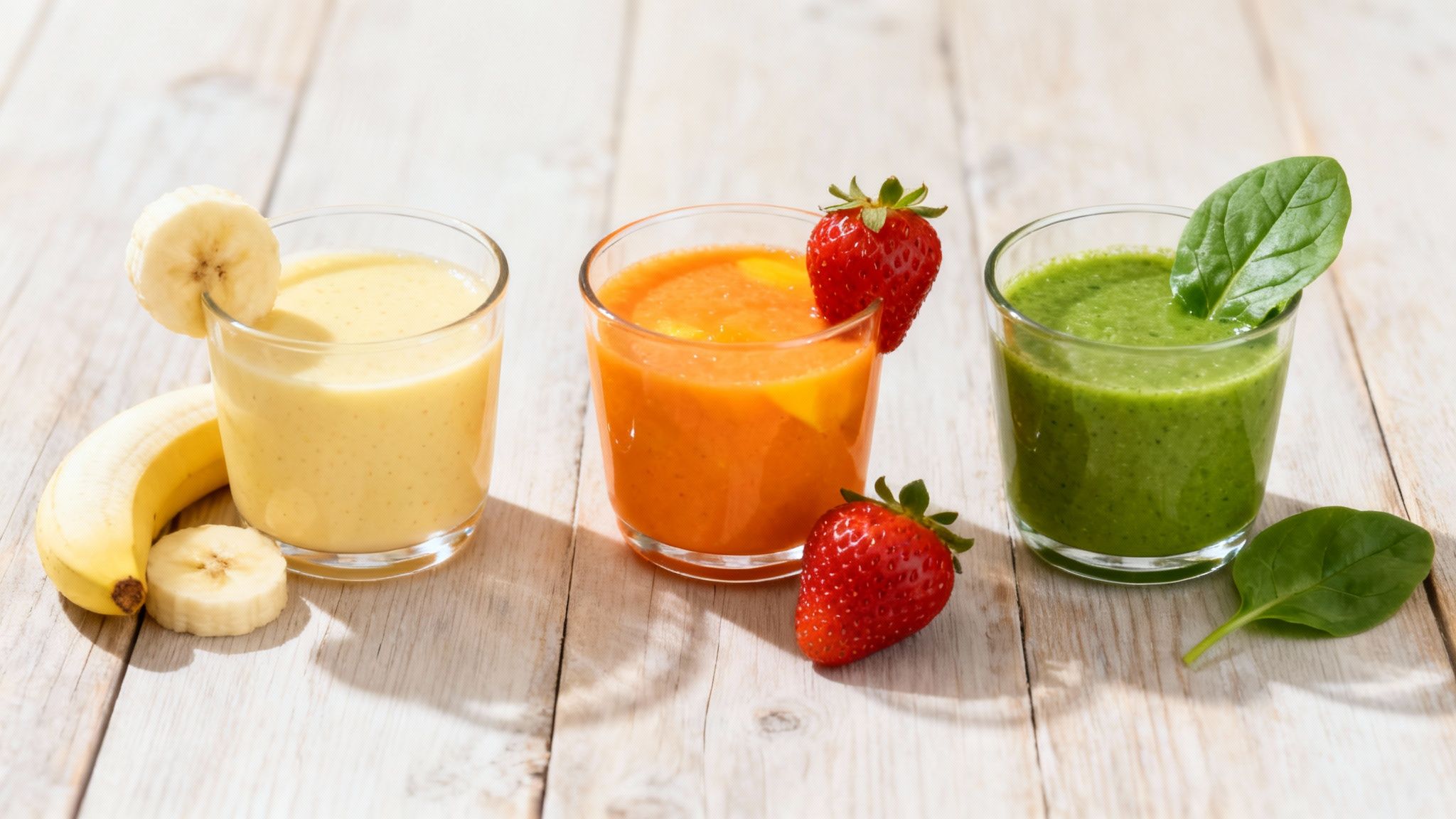
Here are three of my tried-and-true recipes, broken down by age, to turn snack time into a fun, immune-supporting ritual.
For Babies (6+ Months): My First Mango Smoothie
When you're first introducing solids, simple is always better. This gentle, two-ingredient smoothie is easy on a baby's developing digestive system and delivers a great dose of vitamin C, thanks to the mango.
- Ingredients: ½ cup of ripe mango chunks (fresh or frozen is fine) and 2–3 tablespoons of breast milk, formula, or plain water.
- Instructions: Pop the mango and liquid into a blender and blitz until it's completely smooth. You might need to add a little more liquid to get that perfectly thin, easy-to-swallow consistency for your little one.
For Toddlers: Sunshine Smoothie
Toddlers love anything bright and colorful. This sunny yellow smoothie is naturally sweet and packed with the good stuff their active bodies need. It's the perfect fuel for their daily adventures! And speaking of adventures, dressing your little explorer for play is just as important. For some comfy and cute ideas, check out our guide to toddler boy summer outfits.
- Ingredients: ½ cup frozen pineapple, ½ a frozen banana, ¼ cup plain yogurt, and a splash of milk or water to get things moving.
- Instructions: Toss everything in the blender and process until it's creamy and smooth. The pineapple is the real star here, providing a fantastic vitamin C boost.
For Kids: The Green Monster Smoothie
Don't be scared off by the color! This smoothie tastes like a sweet, fruity treat but has a secret—a full serving of leafy greens. It's my go-to strategy for getting more veggies into my kids' diets without a single complaint.
- Ingredients: 1 cup of fresh spinach, ½ cup frozen mango, ½ a frozen banana, and ½ cup of milk (any kind works—dairy or non-dairy).
- Instructions: Here's the key: blend the spinach and milk first. Once the leaves have totally disappeared, add the frozen fruit and blend again until it's thick and creamy, almost like a milkshake.
Pro-tip for picky eaters: let them help! When a child gets to wash the fruit or push the button on the blender, they suddenly feel a sense of ownership and are way more likely to give it a try. If it needs a bit more sweetness, a soft date or a tiny drizzle of honey (only for kids over one) does the trick.
Winning Over Picky Eaters with Healthy Recipes
Smoothies are a great starting point, but let's be honest—sometimes a picky eater requires a little more persuasion at the dinner table. The trick is to make healthy food fun, approachable, and genuinely tasty. When you can turn a meal into a playful experience, you'll be surprised how even the most resistant child might give something new a try, especially when it’s loaded with immune-boosting vitamin C.
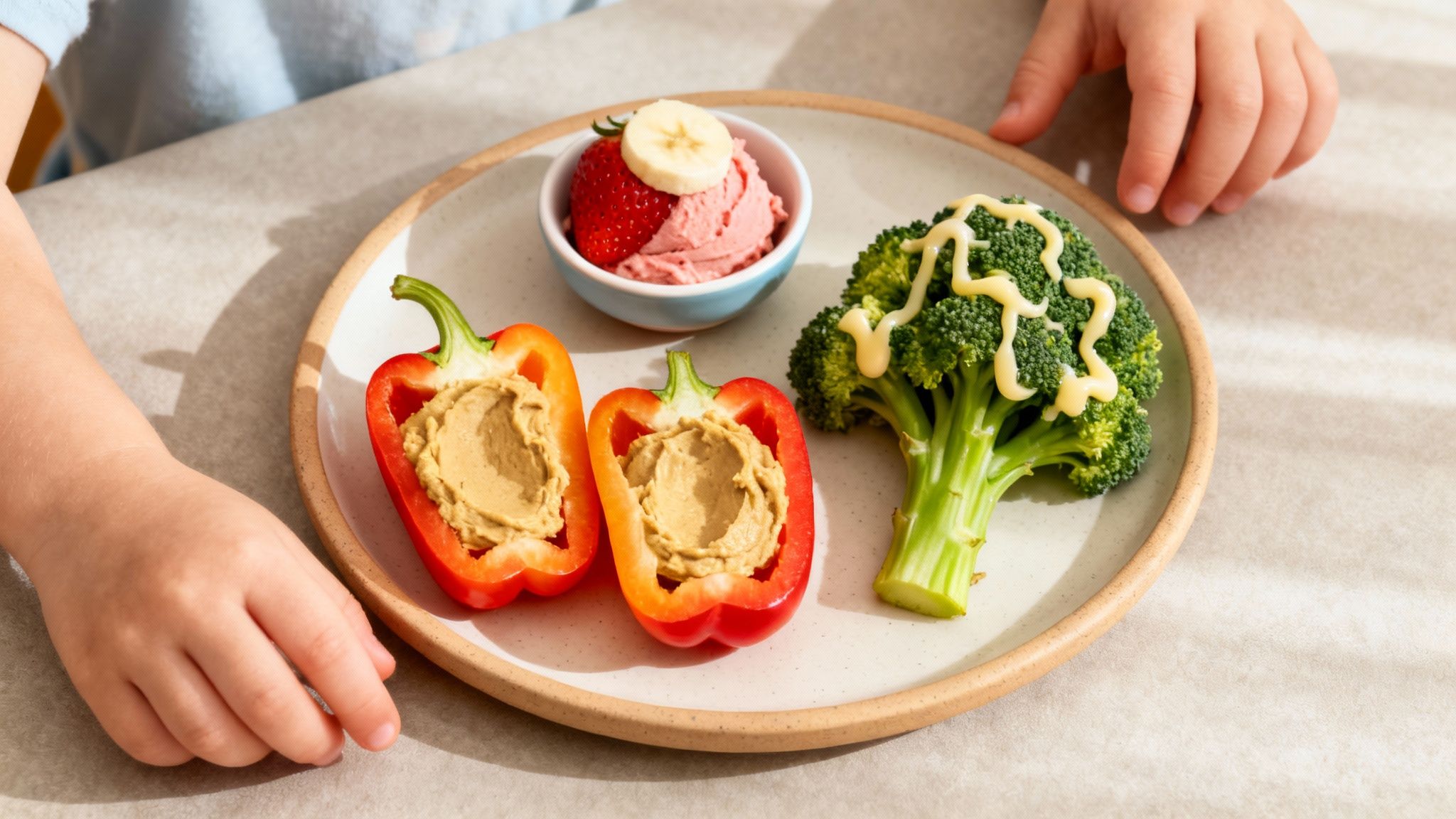
One of the best ways to do this? Invite them into the kitchen. When kids get to help wash, chop (with a kid-safe knife, of course), or arrange food on a plate, they develop a sense of ownership. They're way more likely to eat what they helped create, turning meal prep from a chore into a fun, hands-on activity.
Fun and Simple Recipes for Picky Eaters
A little creativity with presentation can also be a total game-changer. Think cookie cutters for making fun shapes out of fruits and veggies, or giving dishes silly names. Here are a few simple ideas to get you started, all designed to deliver a healthy dose of vitamins with a side of fun.
- Bell Pepper Boats: Slice a red or yellow bell pepper in half from top to bottom and clear out the seeds. Now you have two colorful "boats" ready to be filled with something yummy, like hummus or a yogurt-based ranch dip. The sweet crunch of the pepper is packed with vitamin C.
- Broccoli Trees with "Cheese" Sauce: Lightly steam some broccoli florets so they look like tiny trees. Then, serve them with a simple, creamy "cheese" sauce made by blending cashews, nutritional yeast, and a splash of water. It's dipping fun that's also good for them.
- Strawberry-Banana "Nice" Cream: Need a healthy dessert? Just blend one frozen banana with a half-cup of frozen strawberries until it’s perfectly smooth and creamy. You get a soft-serve texture made entirely from fruit—a fantastic, vitamin C-rich treat.
Strategies for Success at Mealtime
Another proven tactic is pairing a new food with an old favorite. This helps lower the anxiety that can pop up at mealtime. If chicken nuggets are a hit, try serving them with a small portion of sweet potato fries (also a great source of immune-supporting vitamin A).
The goal isn't about forcing a child to clean their plate. It’s about creating positive, low-pressure experiences around food. Celebrate the small wins, like taking just one bite of a new vegetable, to build their confidence over time.
Consistency without pressure is also key. Keep offering a variety of healthy foods at different meals, even if they get rejected at first. It can take 10-15 exposures before a child even considers trying a new food, so patience and a positive attitude are your best friends here. Remember, you're not just feeding them for today—you're helping them build healthy habits that can last a lifetime.
Safety First: When and Why to Talk to a Doctor
As parents, we're always thinking about our kids' nutrition, and the topic of supplements inevitably comes up. But before you even think about reaching for a bottle of vitamin C, it’s important to remember that more isn't always better. A balanced, food-first approach is almost always the best path for keeping your child healthy and safe.
The great news is that a true, severe vitamin C deficiency is incredibly rare in developed countries. Still, it's just as important to know the safety limits on the other end of the spectrum. To help guide parents and doctors, health authorities have set what they call Tolerable Upper Intake Levels (UL)—think of it as a safety ceiling for daily intake.
Understanding the Safety Limits
Giving a child too much vitamin C, which usually happens through high-dose supplements, can lead to some pretty uncomfortable side effects like stomach cramps, nausea, and diarrhea. The established upper limits are there specifically to prevent these problems.
These safety guidelines are globally recognized and help ensure kids don't run into trouble. While a deficiency (known as scurvy) is almost unheard of in places like the US and Europe, it's still smart to stick to the recommended maximums. Here’s what those look like:
- Ages 1-3: 400 mg per day
- Ages 4-8: 650 mg per day
- Ages 9-13: 1,200 mg per day
- Teens 14-18: 1,800 mg per day
Staying within these limits helps you avoid those pesky digestive issues and reinforces the food-first approach that works for the vast majority of kids. If you're curious about the science, you can learn more about the new reference values for vitamin C intake and how these recommendations are developed.
When to Consult Your Pediatrician
While most kids get all the vitamin C they need from a reasonably balanced diet, there are a few situations where it’s a good idea to check in with your pediatrician.
Your pediatrician is your best partner in your child's health. Always consult them before starting any new supplement regimen to ensure it's safe and appropriate for your child's individual needs.
It might be time to schedule an appointment if:
- Your child is an extremely picky eater with a very restrictive diet that consistently leaves out fruits and vegetables.
- They have an underlying health condition that interferes with how their body absorbs nutrients, like celiac disease or certain digestive disorders.
- You are considering a vegan diet for your child and want to make sure all their nutritional bases are covered properly.
A healthcare professional can take a look at your child's unique situation, run tests if they think it's necessary, and give you personalized advice on whether a supplement is truly needed.
Frequently Asked Questions
It’s completely normal to have a few more questions about vitamin C for your little one. Let's tackle some of the most common ones that come up for parents.
Can My Child Overdose on Gummy Vitamins?
Yes, absolutely. It's a scary thought, but it's crucial to remember that gummy vitamins are not candy. While they’re designed to be appealing, they are supplements containing potent ingredients.
The biggest risk often comes from the other things packed into a multivitamin, like iron and fat-soluble vitamins (A, D, E, K), which can build up to toxic levels. The best way to prevent an accidental overdose is to store all vitamins securely out of sight and reach, just as you would with any other medicine.
What Happens if a Child Eats Too Many Vitamin C Gummies?
If your child gets into the vitamin C gummies, the most likely outcome is some significant tummy trouble. You can expect symptoms like an upset stomach, cramping, nausea, and diarrhea.
Thankfully, because vitamin C is water-soluble, the body flushes out the excess. While it's certainly unpleasant, it's generally not a life-threatening situation.
That said, if your child has eaten too many vitamins of any kind, especially a multivitamin with iron, it's a different story. You should call your pediatrician or Poison Control immediately for advice. Don't wait.
Do Kids Need a Vitamin C Supplement During Winter?
This is a common question once cold and flu season hits! For most kids who eat a reasonably balanced diet, the answer is no. Their immune systems are best supported by getting vitamin C straight from the source—fruits and vegetables.
A food-first approach provides a whole package of benefits beyond just one vitamin. However, if your child is an extremely picky eater or has a specific medical condition, a supplement might be a good idea. That’s a conversation to have with your pediatrician, who can give you guidance tailored specifically for your child.
At Yarafly.com, we believe in supporting healthy, happy kids from the inside out. While you fill their plates with nutritious foods, we'll help you fill their closets with comfortable, playful, and durable clothing for all their adventures. Explore our collections today at https://yarafly.com.