

on December 04, 2025
A strong immune system is your child’s best defense against the world, and it all starts with the food they eat. Building a rock-solid foundation for health is about consistently giving their little bodies the right fuel through essential vitamins and minerals from their diet.
This guide will explain the direct link between what’s on their plate and how well their body can fight off germs. We’ll cover what to feed kids to strengthen their immune system, from key nutrients to smoothie recipes for babies and toddlers, and even tips for picky eaters.
Building a Strong Immune System for Your Child
Every parent is familiar with the seemingly endless cycle of sniffles, coughs, and fevers that come with childhood. While you can't wrap them in a bubble, you absolutely can build a powerful defense system from the inside out by focusing on their diet.
Think of a strong immune system like a fortress. The food your child eats provides the building blocks for that fortress, directly fueling the cells that fight off invaders. A child's immunity and their need for vitamins and minerals from food are intrinsically linked.

This process starts right from day one and is crucial through the toddler and school-age years. Giving thought to their nutrition is just as important as choosing their first going home outfit or learning how to dress baby for sleep. A little extra care in their diet pays huge dividends for their long-term well-being.
The Power of a Balanced Diet
When it comes to immune-boosting foods, a colorful plate is a powerful plate. The different colors you see in fruits and vegetables often signal different vitamins and antioxidants, each playing a unique part in keeping your child healthy. The deep red of strawberries and the bright orange of sweet potatoes offer different, but equally important, benefits.
A well-rounded diet to strengthen their immune system should always include:
- A rainbow of fruits and veggies: Try to get at least five servings in a day to cover all the vitamin bases.
- Lean proteins: Things like chicken, fish, beans, and lentils are essential for building and repairing body tissues, and that includes immune cells.
- Whole grains: Oats, brown rice, and whole-wheat bread provide the steady energy kids need to play and grow.
- Healthy fats: Think avocados, nuts, and seeds. These support brain development and help the body absorb certain key vitamins.
Gut Health: The Immune System's Headquarters
Here’s a fact that surprises many parents: up to 80% of the immune system is actually housed in the gut. A healthy gut microbiome—that community of good bacteria living in the digestive system—is absolutely critical for a strong immune response.
Your child's gut is like a gatekeeper. It ensures the good stuff (nutrients) gets absorbed while keeping the bad stuff out. This is why digestive health and overall immunity are so closely connected.
Foods that are rich in fiber, prebiotics, and probiotics are what help these good bacteria flourish. If you're interested in learning more about this connection, understanding the role of prebiotics and probiotics in gut health is a great place to start.
Nourishing your child's gut is one of the most impactful things you can do for their long-term health. Below, we'll get into the specific nutrients that make the biggest difference.
Top 5 Immune-Boosting Nutrients for Kids
To make things simple, here’s a quick reference table of the most important nutrients for a strong immune system and where you can find them in foods your kids will actually eat.
| Nutrient | Why It's Important | Kid-Friendly Food Sources |
|---|---|---|
| Vitamin C | A powerful antioxidant that helps the body produce more white blood cells to fight infection. | Oranges, strawberries, bell peppers, broccoli, kiwi |
| Vitamin D | Often called the "sunshine vitamin," it's crucial for activating immune defenses. | Fortified milk, salmon, eggs, fortified cereals |
| Zinc | Essential for immune cell development and communication. Even a mild deficiency can impact immunity. | Lean meats, beans, nuts, whole grains, yogurt |
| Vitamin A | Helps maintain the physical barriers (like skin and gut lining) that keep germs out. | Carrots, sweet potatoes, spinach, kale, mangoes |
| Probiotics | "Good" bacteria that support a healthy gut microbiome, where most immune activity happens. | Yogurt, kefir, sauerkraut, kimchi |
Focusing on incorporating these foods into your family's regular meal rotation is a simple and delicious way to keep everyone's immune systems in top shape. You don’t need to be perfect, but consistency is key.
The Power Plate: Essential Vitamins and Minerals
Building a strong immune system for your child isn't about finding one single magic food. It's about consistency and variety. Their plate is like a construction site; the vitamins and minerals from food are the specialized workers, each with a crucial job. When they all work together, they build a seriously strong defense system for your little one.
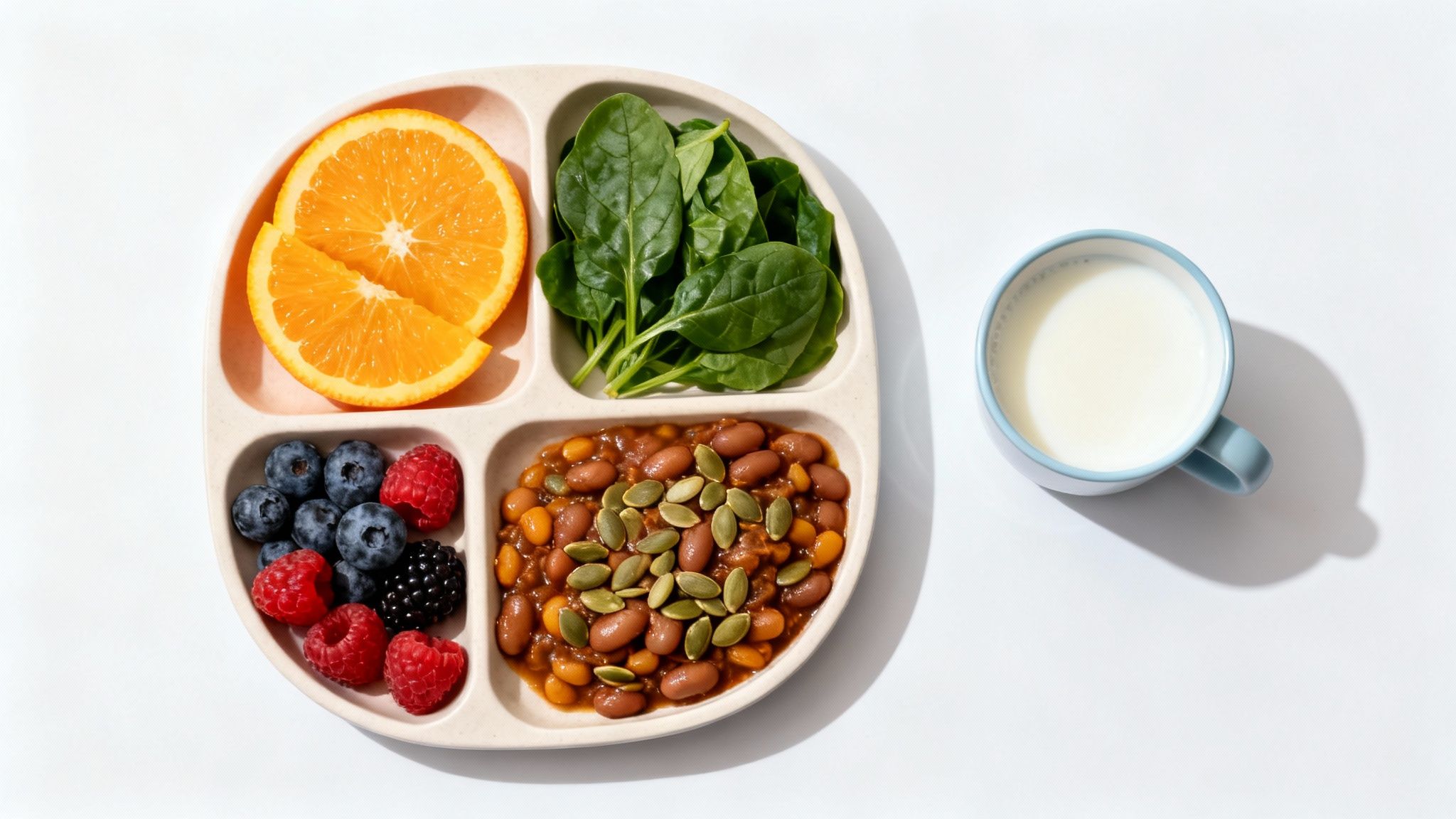
This nutritional foundation is just as vital as carefully choosing their first special occasion clothing, like a newborn's going home outfit. A well-fed immune system is truly the best defense for a healthy childhood. Let’s break down some of the most powerful players on your child's plate.
The Classic Immune Heroes
When you think "immune-booster," Vitamin C is probably the first thing that comes to mind—and for good reason. It's a powerful antioxidant that signals the body to produce more white blood cells, which are the frontline soldiers fighting off infection. Oranges get all the glory, but you can also find plenty of Vitamin C in strawberries, kiwi, and even red bell peppers.
Then you have Vitamin D, often called the "sunshine vitamin." It does a lot more than just support bone health; it's absolutely essential for activating our immune defenses. So many kids don't get enough, especially during the darker winter months. You can boost their intake with:
- Fortified milk and yogurt
- Salmon and other fatty fish
- Egg yolks
- Fortified cereals
These two vitamins are a classic powerhouse pair for a reason, working together to keep your child’s internal army ready for anything.
The Essential Mineral Crew
Vitamins tend to get all the attention, but minerals like Zinc and Iron are the unsung heroes of a healthy immune system. Zinc is critical for developing and activating immune cells. Even a mild deficiency can weaken the body's ability to fight off sickness. Great sources include beans, seeds, lean meats, and yogurt.
Iron is another major player. It’s responsible for helping red blood cells carry oxygen all over the body. Without enough oxygen, immune cells can't work properly, leaving your child feeling tired and much more vulnerable to germs. Lean red meat, lentils, spinach, and fortified grains are fantastic ways to make sure they're getting enough.
A plate full of different colors isn’t just pretty to look at—it’s a clear sign your child is getting a wide range of vitamins and minerals. Each nutrient has a specific role, and they work best when eaten together in whole foods.
While a balanced diet is always the goal, it's natural for parents to worry about filling in nutritional gaps. If you're considering supplements, a good guide to the best vitamins for kids can offer some helpful perspective. That said, it's always best to chat with your pediatrician before adding any new supplements to your child's daily routine.
Immune-Boosting Smoothie Recipes for Babies, Kids and Toddlers
Smoothies can feel like a secret weapon in a parent's toolkit, especially when you're navigating the world of picky eaters. They're a simple, surprisingly delicious way to pack a huge nutritional punch into a single glass that kids actually want to drink.
The best part? They're incredibly fast to make, which is a lifesaver on busy mornings or for a quick afternoon snack. The real magic of a smoothie is how versatile it is—you can easily tuck nutrient-dense ingredients like spinach or avocado behind the sweet flavors of fruit, and your little one will be none the wiser.
This whole approach is about making nutrition fun and accessible. It turns what could be a mealtime struggle into a genuinely delightful treat. From the simplest fruit purees for babies to more complex blends for older kids, there’s a perfect smoothie for every stage of childhood.
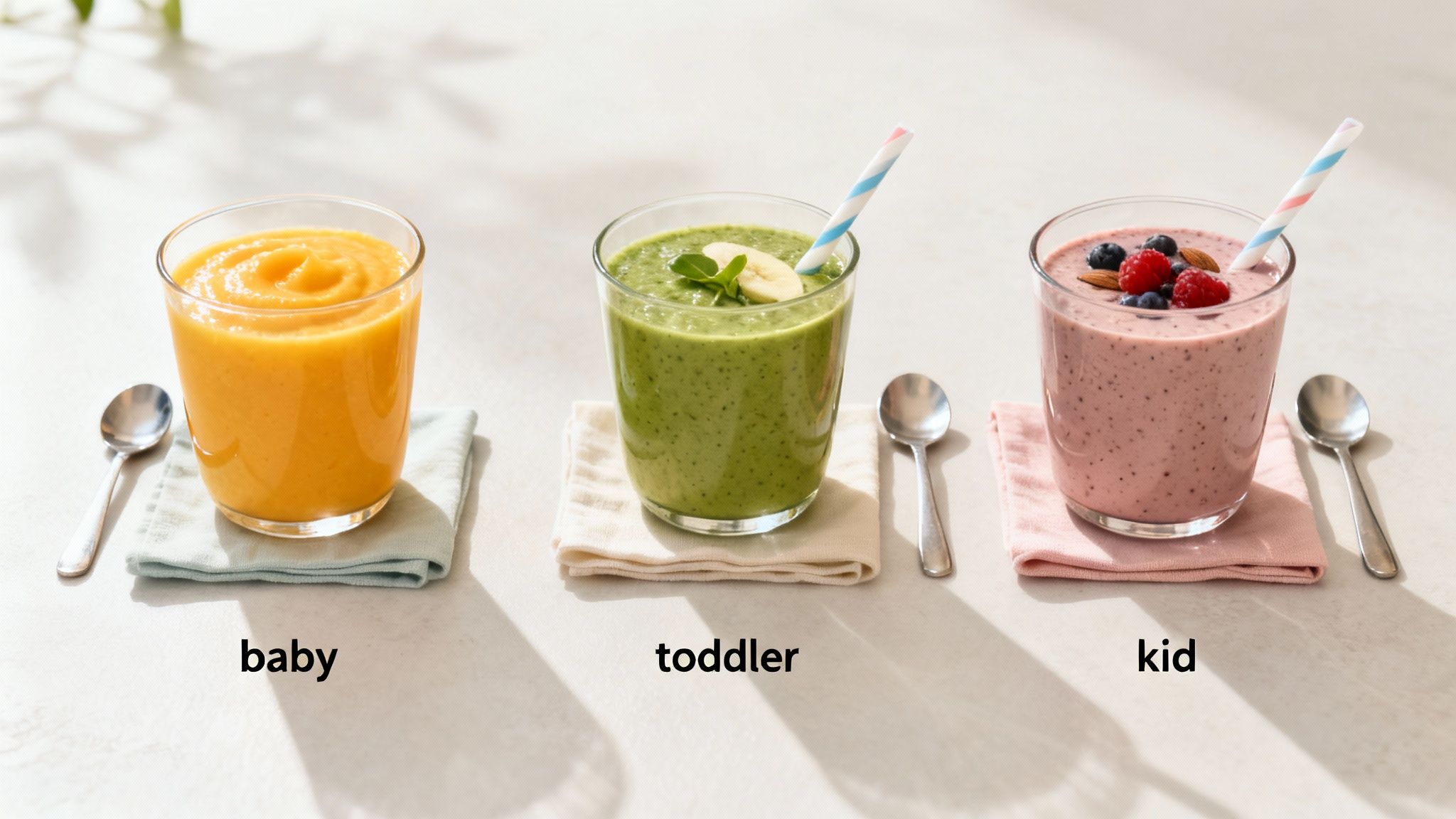
Smoothie Recipes for Babies
When your baby is just starting their journey with solid foods (usually around 6 months), simple purees are a wonderful way to introduce new flavors and textures. At this stage, the goal is all about simplicity and being gentle on their brand-new digestive system.
Stick to two-ingredient blends that are easy to digest and full of the good stuff.
- Mango & Yogurt Swirl: Blend ripe mango chunks with a spoonful of plain, full-fat yogurt. Mango provides a nice dose of Vitamin C and A, while the yogurt introduces helpful probiotics for gut health.
- Avocado & Banana Mash: Combine half a soft banana with about a quarter of a ripe avocado. This creamy mix is loaded with healthy fats crucial for brain development and potassium.
- Pear & Spinach Puree: Lightly steam a small handful of spinach and blend it with a ripe, peeled pear. The pear’s natural sweetness completely hides the spinach taste while delivering a hit of iron.
For babies, always aim for a super smooth, thin consistency. Don't be afraid to add a splash of water, breast milk, or formula to get it just right. You can serve it with a spoon or in one of those handy reusable food pouches.
Smoothie Recipes for Toddlers
Toddlers are known for their boundless energy and, quite often, their very strong opinions about green foods. This is exactly where the "Green Monster" smoothie comes to the rescue. It’s designed to be vibrantly fun while secretly delivering a powerhouse of nutrients.
The trick is balancing the greens with naturally sweet fruits. A classic 'Green Monster' includes a large handful of fresh spinach, which has a surprisingly mild taste that just vanishes when blended with other ingredients.
Go-To Green Monster Recipe:
- Toss 1 cup of spinach into the blender first.
- Top it with 1 frozen banana (this is key for creaminess!) and 1/2 cup of frozen pineapple or mango.
- Pour in 1/2 cup of milk (any kind works—dairy or non-dairy).
- Blend until it's completely smooth, adding a little more liquid if you need to.
What you get is a bright green, delicious smoothie that toddlers absolutely love to name and drink. For more tips on practical and stylish options for kids, you might find our guide to toddler boy summer outfits helpful.
Power Blends for Big Kids
As kids get older, their taste buds become a bit more sophisticated, and their nutritional needs definitely increase. This is a great time to introduce more complex, protein-packed smoothies that can work as a filling breakfast or a perfect post-playtime refuel.
These blends can handle a wider variety of ingredients, like nut butters, seeds, and oats, for more sustained energy.
- Berry & Almond Butter Blend: Combine 1 cup of mixed frozen berries (rich in antioxidants), 1 tablespoon of almond butter (for protein and healthy fats), half a banana, and 1 cup of milk.
- Chocolate 'Milkshake' Smoothie: Blend 1 frozen banana, 1 tablespoon of unsweetened cocoa powder, 1 tablespoon of chia seeds (for fiber and omega-3s), and 1 cup of milk. It seriously tastes like a treat but is loaded with nutrients.
- Sunshine Orange Smoothie: Mix the juice of one orange, 1/2 cup of plain yogurt, 1/2 cup of frozen mango, and one small carrot (steamed or raw). This blend is an absolute Vitamin C powerhouse.
Food Recipes for Picky Eaters
The dinner table can feel like a battlefield sometimes. That familiar chorus of "I don't like that!" can test the patience of any parent. But turning mealtime drama into a peaceful, positive experience is totally possible with a few clever food recipes for picky eaters. The goal isn't to force-feed broccoli; it's to make healthy food seem fun and approachable.
The secret to winning over a picky eater is to start on their turf. Think about the foods they already love and give them a healthy makeover. This approach lets you introduce new flavors and textures slowly, building a foundation of trust that makes them more adventurous over time.
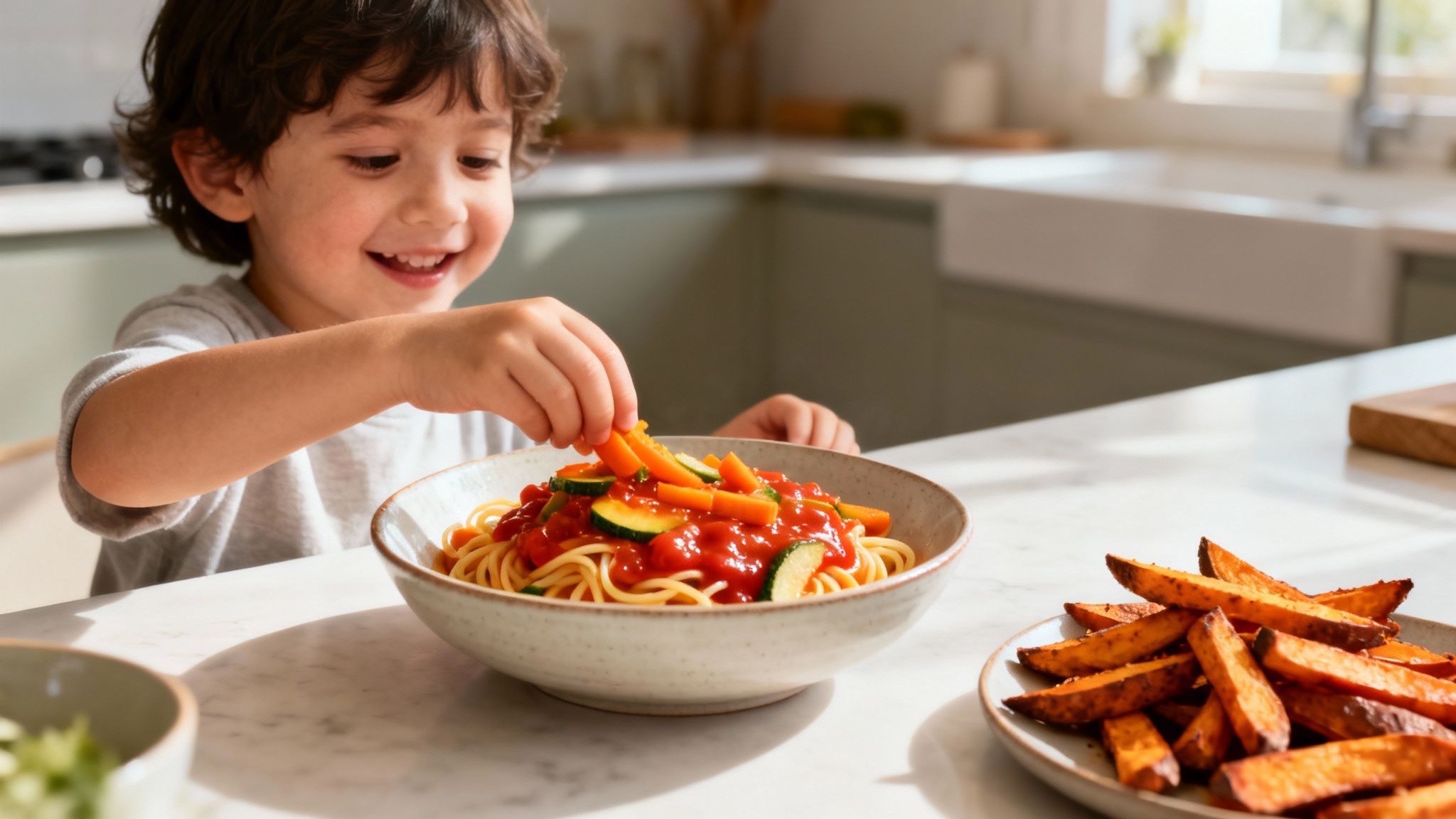
Smart Swaps for Kid Favorites
You don't have to become a gourmet chef to transform classic kid meals into nutritional goldmines. It’s all about smart, simple swaps that upgrade the ingredients. These little changes can make a massive difference in the vitamins and minerals your child gets every day.
-
Crispy Sweet Potato 'Fries': Forget the deep fryer. Just slice sweet potatoes into strips, toss with a touch of olive oil and a sprinkle of paprika, and bake at 400°F (200°C) until they’re perfectly crispy. They're packed with Vitamin A and fiber, and kids love them.
-
Better-for-You Chicken Nuggets: Instead of traditional breading, coat bite-sized chicken pieces in almond flour or crushed whole-grain crackers. Bake them until they're golden and cooked through. You get all the protein without the processed stuff.
-
Cauliflower 'Mac' & Cheese: Here’s a game-changer. Steam some cauliflower until it’s super tender, then blend it right into your go-to cheese sauce. It adds a sneaky serving of veggies and Vitamin C, and the creamy texture is so good, most kids won't even notice the difference.
These recipes are designed to work with your child’s preferences, not against them. A meal that looks and tastes familiar is always an easier sell.
The ultimate trick for picky eaters is making healthy food invisible. When you can blend powerful nutrients into a dish they already love, you’ve won the mealtime battle without a single negotiation.
The Art of Hiding Veggies
One of the most tried-and-true methods for boosting your child’s nutrition is the "hidden veggie" technique. By pureeing or finely grating vegetables, you can slip them into sauces, meatballs, and even baked goods without setting off any alarm bells.
A classic example is a 'Hidden Veggie' pasta sauce. Sauté carrots, zucchini, and red bell peppers, then puree them until smooth before mixing them into a rich marinara. The veggies add a natural sweetness and a ton of antioxidants, and your kids will just think you made an extra-delicious spaghetti.
You can also add shredded zucchini to muffin batter or a scoop of pureed pumpkin to your pancake mix. These little additions quietly boost fiber and vitamin content while keeping the food looking and tasting like the comfort food they crave.
It's all about ensuring they’re getting the good stuff, even on their fussiest days. A well-nourished child is a healthy, resilient child, and that foundation starts with small, consistent steps. Making smart food choices is a cornerstone of their well-being, just like choosing a comfortable going home outfit is for their very first big adventure.
Beyond the Plate: Lifestyle Habits for a Strong Immune System
A plate full of nutrient-rich foods is a fantastic start for building your child's immunity, but it's only half the story. The other, equally important half involves the daily habits that shape their overall wellness. Think of it this way: a healthy diet provides the top-notch fuel, but sleep, hydration, and activity are the essential maintenance that keeps their little engines running strong.
https://www.youtube.com/embed/LYO4CpzqL-Y
When you combine a good diet with these lifestyle habits, you create a powerful, holistic shield that supports their health from every possible angle.
The Undeniable Power of Sleep
Don't underestimate the power of a good night's sleep. This is when the immune system really gets to work, repairing the body and ramping up the production of cytokines—special proteins that are crucial for fighting off infections and inflammation.
When a child doesn't get enough quality sleep, their body simply can't produce enough of these tiny defenders. This leaves them far more vulnerable to every bug going around the playground. A consistent, calming bedtime routine is your best friend here; it signals to their body that it's time to wind down and begin that critical restorative process.
A tired body is a stressed body, and stress hormones can actively suppress immune function. Prioritizing sleep is one of the most powerful, and passive, ways you can bolster your child's natural defenses against illness.
The Importance of Hydration and Active Play
Water is fundamental to just about everything the body does, including supporting a strong immune system. It helps transport oxygen to cells, keeping all their systems functioning properly, and it plays a key role in flushing out toxins. Making sure your child sips water throughout the day is a simple habit with a huge payoff.
Similarly, getting them moving is a fantastic immune booster. For kids, this doesn't mean a structured workout—it just means good, old-fashioned active playtime. Regular physical activity gets their circulation going, which helps immune cells travel throughout the body more effectively.
Not sure how much sleep your little one needs? Here are some general guidelines:
- Infants (4-12 months): 12-16 hours per 24 hours (including naps)
- Toddlers (1-2 years): 11-14 hours per 24 hours (including naps)
- Preschoolers (3-5 years): 10-13 hours per 24 hours (including naps)
- School-Age Children (6-12 years): 9-12 hours per 24 hours
Good Hygiene Starts Young
Finally, never forget the simple power of washing hands. It’s your family’s frontline defense and one of the most effective ways to stop germs in their tracks. By making hand-washing a non-negotiable part of their routine—before meals, after playing outside, after potty breaks—you empower them to take an active role in staying healthy.
Combining these simple lifestyle habits with a nutrient-dense diet creates a comprehensive shield of wellness. It's a bit like choosing the perfect going home outfit for your newborn; you’re focused on providing comfort and protection that lasts. For more tips on preparing for your baby's big debut, be sure to read our complete guide on the coming home outfit.
Your Top Questions About Kids' Immunity, Answered
As a parent, you're constantly trying to do what's best for your kids, but figuring out nutrition and immunity can feel like a maze. Let's clear up some of the confusion and tackle the questions I hear most often from parents just like you.
Are Gummy Vitamins or Other Supplements Actually Necessary?
This is probably one of the most common questions out there. For most kids who are eating a reasonably balanced diet, the answer is no. Their little bodies are designed to get everything they need directly from whole foods, where all the nutrients work together in perfect harmony.
That said, there are definitely exceptions. Your pediatrician might suggest a specific supplement, like Vitamin D, which is a common one for breastfed babies or for kids living in less sunny climates. But this is a conversation to have with your doctor. They know your child's specific health profile and can tell you if a supplement is a good idea. Never start one without their guidance.
How Can I Boost My Child’s Immunity Fast? They Just Started Daycare!
Ah, the "daycare plague." I've been there. While there's no magic pill for instant immunity, the closest thing is a rock-solid, consistent routine. When your child starts being exposed to a whole new world of germs, a strong foundation is your best defense.
Sleep is your secret weapon. Seriously. This is when the body goes into overdrive, repairing itself and producing crucial immune cells. At the same time, keep offering plenty of foods packed with Vitamin C (think citrus and strawberries) and Zinc (beans, seeds, and yogurt are great sources). And, of course, make hand-washing a frequent and fun habit. It's not about avoiding every sniffle, but building a system that can bounce back faster.
The goal isn't to prevent every single cold but to build a resilient immune system that can fight off illnesses more effectively and recover faster. Consistency in diet, sleep, and hygiene is your best strategy.
Help! My Toddler Won't Touch a Single Vegetable. What Do I Do?
If you're dealing with a veggie-hating toddler, you are not alone. This is an incredibly common—and yes, frustrating—phase. The trick is to play the long game with a mix of patience and creativity. The minute mealtime becomes a power struggle, you've lost.
Instead, try a few stealthy (and not-so-stealthy) tricks:
- Go Undercover: Smoothies, pasta sauces, and homemade muffins can hide an amazing amount of nutrients. Finely grated zucchini or pureed spinach can disappear completely.
- Switch Up the Prep: My kid who scoffs at steamed broccoli will devour "broccoli trees" roasted with a little olive oil until they're crispy. Sometimes, a simple change from cooked to raw with a fun dip is all it takes.
- Make Them a Helper: Toddlers love to be involved. Let them help wash the lettuce or arrange bell pepper strips on a plate. When they have a hand in making the food, they're often far more curious to try it.
Remember, it can take 10 to 15 exposures before a child even considers accepting a new food. Celebrate the small wins, even if it's just touching a carrot to their lips.
Is It True That Sugar Makes Kids Get Sick More Often?
There's some truth to this. A diet loaded with refined sugar and processed foods can lead to chronic inflammation, which puts a strain on the immune system. Some research also suggests that a major sugar rush can temporarily slow down the white blood cells that fight off germs.
An occasional cookie or slice of birthday cake is a normal, happy part of childhood and isn't going to cause any harm. The problem arises when sugary snacks become the norm, pushing out the nutrient-rich foods their bodies actually need to build a strong defense. The best approach? Think of sugar as a "sometimes food" and keep the focus on whole, real foods most of the time.
From building a strong immune system to getting dressed for a day of play, Yarafly is with you every step of the way. Check out our collection of super soft, durable, and adorable kids' clothes perfect for all their adventures at https://yarafly.com.