

on December 31, 2025
When you're shopping for cute baby clothes online, you’re thinking about more than just style. You’re creating a safe, comfortable world for your little one. That same care extends to what they eat, because a strong immune system is truly the best outfit they can wear, built from the inside out.
Building a Strong Foundation for Kids' Immunity
Have you ever thought about what really fuels your child's ability to stay healthy? It's not just about dodging sniffles at daycare; it's about building a powerful internal defense system with the right nutrition. The everyday foods they eat can be their strongest shield.
Surprisingly, the journey to a tough immune system kicks off in the gut. A healthy gut environment is basically the command center for your child's defenses. It's wild to think about, but roughly 70-80% of the body's immune cells are actually housed in the gut. This makes the link between diet and immunity impossible to ignore.
This connection is direct and powerful. What you put on your little one's plate directly strengthens their ability to fight off whatever comes their way. A diet packed with a variety of nutrient-rich foods helps good gut bacteria flourish, and those little helpers are essential for a strong immune response.
The Role of Wholesome Foods
You don't need to overcomplicate things to start incorporating immune-boosting foods. Simply adding a mix of fruits, veggies, and whole grains into their daily meals can make a huge difference. Think of each meal as another brick in the foundation for a healthy future. The real goal is just to make nutrient-dense eating a normal, no-stress part of your family's routine.
A well-nourished child is a resilient child. Focusing on a diet filled with vitamins and minerals is one of the most proactive steps you can take to support their developing immune system and overall health.
Just like you carefully select clothes for comfort and protection, choosing the right foods provides that same protection from within. For instance, in the same way you’d seek out the benefits of soft organic baby clothes, you should also look for organic, whole foods to reduce their exposure to pesticides and boost their nutrient intake. It’s a holistic approach that ensures your baby is cared for, inside and out.
The Essential Vitamins and Minerals Kids Need
Figuring out what kids need to eat to stay healthy can feel overwhelming, but you don't need a nutrition degree to give your little one’s immune system a serious boost. Let's break down the real superstars—the key vitamins and minerals that act like a tiny security detail, keeping them strong from the inside out.
Thinking about your child’s health isn't so different from when you're shopping for cute baby clothes online. You're looking for the best quality to keep them safe and thriving. When it comes to nutrition, that means focusing on a rainbow of whole foods that are naturally packed with the good stuff.
As this visual shows, there’s a direct line connecting what kids eat to how well their bodies can fight off germs.
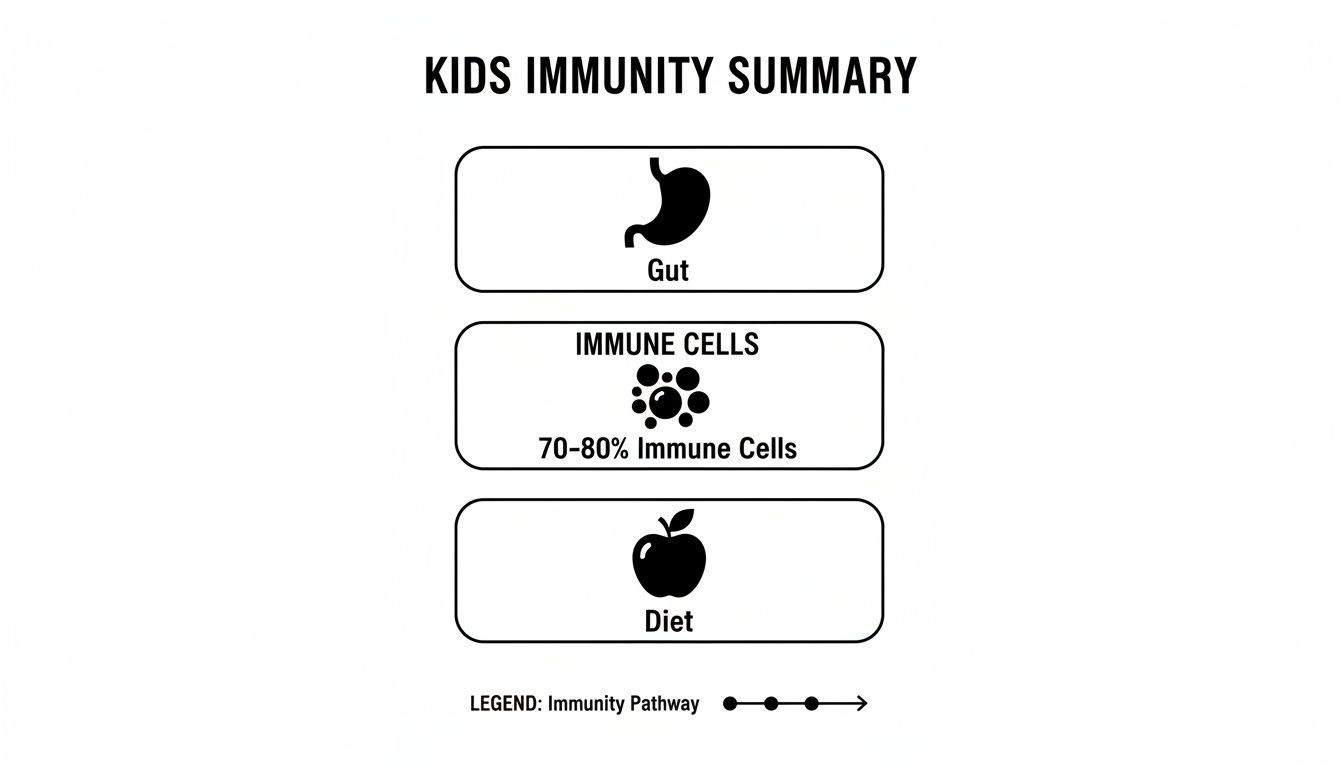
A healthy diet fuels a healthy gut, which is mission control for the immune system—that's where a whopping 70-80% of their immune cells are.
The Powerhouse Nutrients
While a balanced diet is always the goal, some nutrients are particularly famous for their immune-supporting roles. Think of these as the A-team for your family's meals.
- Vitamin C: This one's the classic for a reason! It’s a powerful antioxidant that helps the body build up its defenses. You’ll find it in citrus fruits, bell peppers, strawberries, and broccoli. We dive deeper into its benefits in our guide to Vitamin C and kids.
- Vitamin A: Crucial for keeping the body's natural barriers strong—think of the mucous membranes in the eyes, lungs, and gut that trap germs. Load up on sweet potatoes, carrots, and spinach.
- Vitamin D: Often called the "sunshine vitamin," it's like a light switch that activates the immune system's defenses. Good food sources include fatty fish like salmon, fortified milk, and eggs.
- Zinc: This mighty mineral helps the immune system fight off invading bacteria and viruses. You can find it in lean meat, beans, nuts, and pumpkin seeds.
- Iron: Absolutely essential for helping red blood cells carry oxygen everywhere in the body, which is vital for immune cells to function properly. Lentils, tofu, and lean red meats are packed with it.
Immune-Boosting Nutrients and Where to Find Them
Here’s a quick-reference guide to the top vitamins and minerals for a strong immune system and the kid-friendly foods that contain them.
| Nutrient | Why It's Important | Kid-Friendly Sources | Serving Idea |
|---|---|---|---|
| Vitamin C | A powerful antioxidant that supports various immune cell functions. | Oranges, strawberries, kiwi, bell peppers, broccoli | Add sliced strawberries to yogurt or cereal. |
| Vitamin D | Helps activate the body's T-cells, which are critical for fighting infections. | Fortified milk, salmon, eggs, mushrooms | Scramble an egg for breakfast. |
| Vitamin A | Maintains the integrity of mucosal barriers in the gut, lungs, and eyes. | Carrots, sweet potatoes, spinach, kale | Serve baked sweet potato fries as a side. |
| Zinc | Essential for developing and activating immune cells. | Lean meat, beans, pumpkin seeds, yogurt | Sprinkle pumpkin seeds on a bowl of oatmeal. |
| Iron | Crucial for oxygen transport, which immune cells need to function. | Lean red meat, lentils, beans, spinach, tofu | Add a handful of spinach to a fruit smoothie. |
This table makes it easy to see how you can mix and match different foods to cover all your bases throughout the week.
Weaving Nutrients into Daily Meals
Getting these powerful nutrients onto your child's plate doesn't mean you have to completely overhaul your meal plan. Honestly, small and consistent changes make the biggest difference.
For instance, adding a small handful of spinach to a fruit smoothie is a super sneaky way to boost Vitamin A—they’ll never even taste it. Sprinkling some pumpkin seeds on their yogurt gives them a quick hit of Zinc. It can be as simple as that.
The goal is variety, not perfection. Offering a colorful plate is the single best strategy. When you see different colors, you're seeing different vitamins and minerals working together to support their growing body and build a truly resilient immune system.
Wholesome Smoothie Recipes for All Ages
Let's be honest, smoothies are a parent’s secret weapon. They're a fantastic, and frankly, delicious way to sneak fruits, veggies, and other superfoods past even the pickiest of eaters. You're already focused on finding the coziest cute baby clothes online, so think of a nutrient-packed smoothie as their internal layer of comfort—one that builds a strong immune system from the inside out.
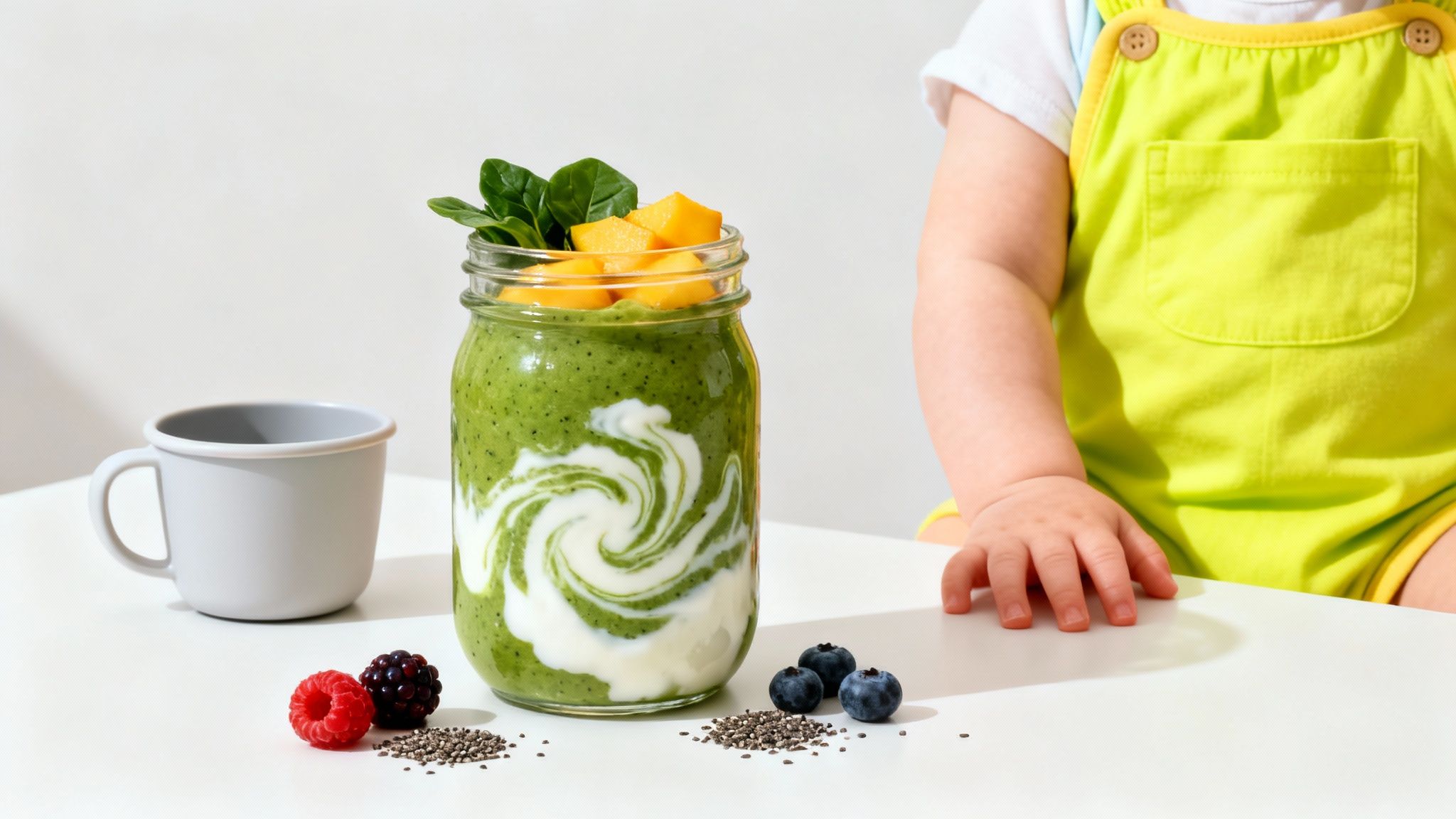
These recipes are designed to grow with your child, from simple first tastes for babies to more complex flavors for toddlers and big kids. The best part? They're all adaptable and built on simple, whole-food ingredients.
Simple Smoothies for Babies
When your baby is just starting on solids (usually around 6 months), you want to keep smoothies simple and incredibly easy to digest. I always recommend sticking to two-ingredient purees to introduce new flavors gently and watch for any reactions.
- Sunshine Puree: Blend half a ripe banana with a handful of fresh spinach. Add a splash of water or breastmilk to get it perfectly smooth. The banana provides a natural sweetness they love, while the spinach packs in essential iron and vitamins.
- Peachy Keen: Combine half a peeled, ripe peach with 2-3 tablespoons of plain, full-fat yogurt. It creates a wonderfully creamy texture and offers a nice dose of probiotics for their developing gut.
These simple blends are the perfect gateway into the world of mixed flavors. A good blender makes all the difference in getting that silky-smooth texture babies need. You can find some great advice by choosing the best blenders for smoothies.
Tasty Blends for Toddlers
Once your little one is a more confident eater, you can start getting adventurous with their smoothies. This is a great time to introduce more complex combinations, different textures, and little nutrient boosters.
The "Green Monster" is a classic in my house for a reason—it’s vibrant, yummy, and secretly loaded with goodness.
Green Monster Smoothie Recipe
- 1 large handful of fresh spinach
- ½ cup frozen mango chunks
- ½ cup plain Greek yogurt
- ¼ cup milk (any kind works!)
- Optional: 1 teaspoon of chia seeds for extra fiber and omega-3s
Just blend everything until it's creamy. The sweet mango completely overpowers the taste of the spinach, making it a guaranteed hit. They'll just think they're drinking a delicious fruit smoothie.
Power-Packed Smoothies for Kids
For older kids, smoothies can easily become a balanced mini-meal or a supercharged after-school snack. At this stage, I like to add more protein and healthy fats to keep their energy levels stable and their bellies full.
A well-made smoothie can knock out a huge chunk of a child's daily fruit and vegetable needs in one go. It’s an efficient, enjoyable way to keep their immune system running strong.
Here's a recipe that's a proven winner with the elementary school crowd.
Berry Blast Smoothie Recipe
- ¾ cup mixed frozen berries (strawberries, blueberries, raspberries)
- ½ a ripe banana
- 1 tablespoon almond butter
- ½ cup milk of your choice
- 1 tablespoon hemp seeds for a protein kick
The berries are bursting with antioxidants, and the almond butter adds healthy fats and protein for sustained energy. This combo doesn't just taste great; it works hard to keep them healthy.
Winning Over Picky Eaters with Immune-Boosting Foods
Let’s be honest: the dinner table can sometimes feel like a battlefield. If you’re navigating the strong opinions of a picky eater, you're not alone. It's a completely normal phase many kids go through. The trick is to trade the stress for a little creativity and a lot of patience, ensuring they get the good stuff their immune systems need.
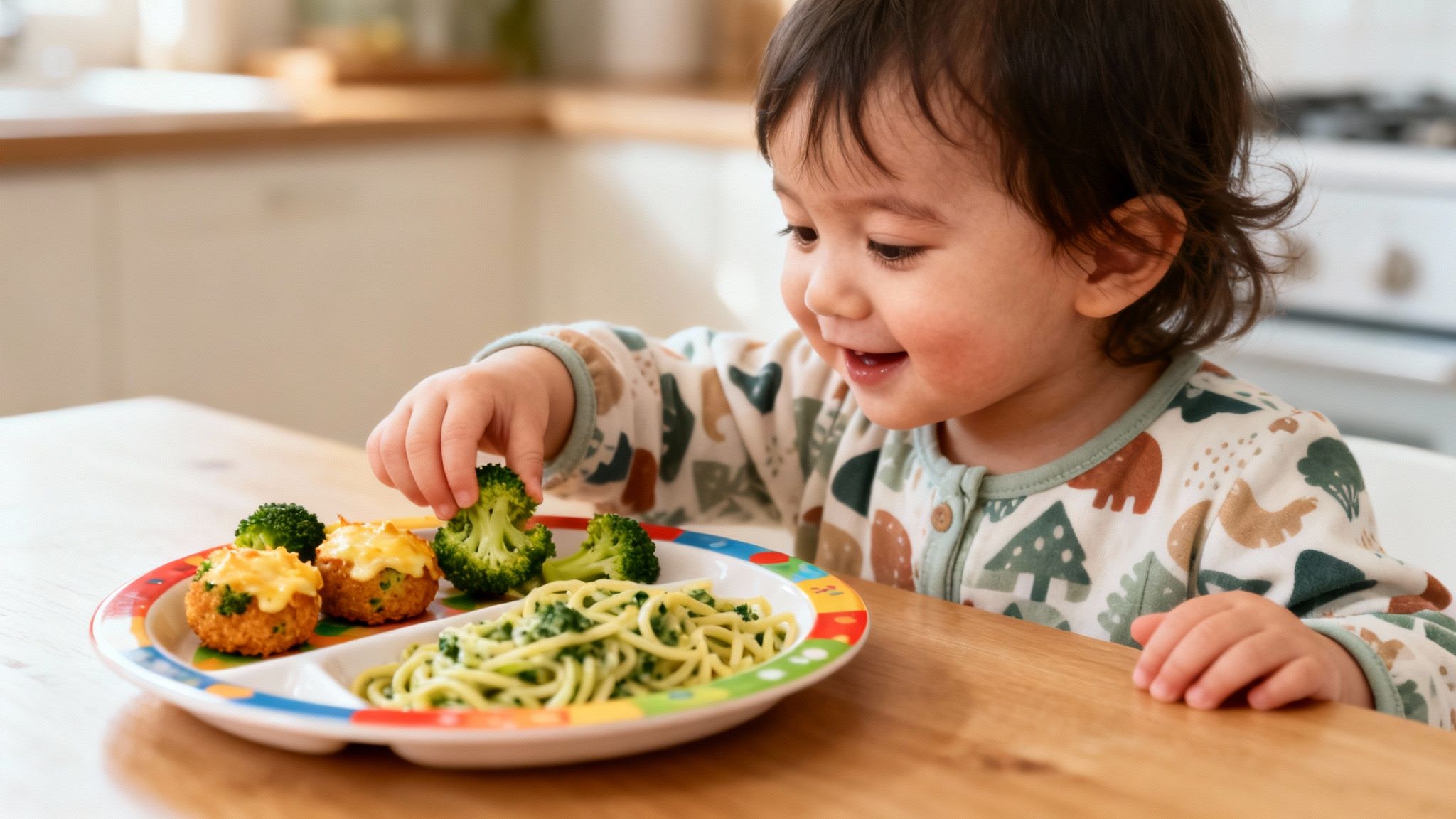
The best approach I’ve found is to treat all food neutrally. Forget labels like "good" or "bad." When you put a variety of healthy options on the table without any pressure to eat them, you give your child the power to listen to their own hunger cues. Don't lose hope if they reject something new—it can take 10-15 exposures before a kid is brave enough to even try a new food. Patience is everything.
Making Nutritious Food Genuinely Appealing
One of the easiest ways to pique their interest? Get them involved in the kitchen. Let them help wash the veggies, stir a sauce, or pick out a funny-looking squash at the grocery store. Giving them a little ownership over the meal makes them far more likely to actually eat it.
You can also give their favorite foods a nutritious boost. This isn’t about being sneaky; it’s about making healthy food taste great. It's the same idea as when you're searching for cute baby clothes online—you want something that’s practical but also makes you smile. Food should be the same!
Here are a few kid-tested ideas that win over even the toughest critics:
- "Hidden Veggie" Pasta Sauce: Grate some carrots, zucchini, or bell peppers super finely and let them dissolve into your go-to tomato sauce. They add a touch of sweetness and a major dose of vitamins A and C, and no one will be the wiser.
- Cheesy Broccoli Bites: Who doesn't love something cheesy and dippable? Steam and chop up broccoli, mix it with shredded cheddar, an egg, and some whole-wheat breadcrumbs. Roll them into little tots and bake until golden brown.
- Almond Flour "Fried" Chicken Nuggets: Ditch the freezer aisle. Coat chicken pieces in almond flour seasoned with a bit of paprika and garlic powder, then bake them. You get that satisfying crunch with a boost of protein, healthy fats, and Vitamin E.
Remember, the goal here is progress, not perfection. Celebrate the small wins! A lick of a carrot stick or a single bite of a new dish is a huge victory. That positive encouragement goes a long way in building a healthy relationship with food for life.
Fun and Creative Food Presentation
Sometimes, all you need is a little razzle-dazzle. The way food looks on the plate can make a massive difference to a skeptical toddler.
Try These Simple Ideas:
- Use Cookie Cutters: Turn a boring sandwich into a star. Cut melon slices into hearts. It takes ten extra seconds and can completely change their attitude.
- Make Food Faces: A couple of blueberry eyes and a strawberry smile can make a bowl of oatmeal infinitely more interesting. Arrange veggies and fruits into a silly face on their plate.
- Serve with Dips: Everything is better with a dip. A small side of hummus, yogurt ranch, or mild salsa makes raw veggies feel like a fun snack instead of a chore.
A little bit of playfulness can defuse a tense mealtime. By focusing on connection and fun instead of pressure, you’ll help your little one slowly but surely explore new foods and build a strong immune system, one bite at a time.
Creating a Family Meal Plan That Boosts Immunity
Consistency is really the secret weapon when it comes to building up a strong immune system. A simple, sustainable weekly meal plan built around immune-supporting foods is the best way to make sure your kids get a steady stream of the nutrients they need to thrive—even when life gets crazy.
Ultimately, the goal is to make healthy eating the path of least resistance. When you have nutritious options ready to go, you're far less likely to grab those not-so-great convenience foods in a pinch. It all starts with a plan.
Family meals are a huge part of this. Research has shown that children who regularly eat with their families tend to have diets richer in things like fiber, calcium, iron, and crucial vitamins. You can read more about the benefits of family meals on StanfordChildrens.org, but the takeaway is clear: these nutrients are all vital for a well-oiled immune system.
Smart Meal Prep Strategies
Let's be honest, meal planning can sound like a huge chore that takes over your entire Sunday. It doesn't have to be. A few smart moves can save you a ton of time during the week.
- Batch Cook Your Staples: Spend just an hour cooking a big pot of a versatile grain like quinoa or brown rice. While that’s going, you can roast a large sheet pan of mixed veggies (think broccoli, carrots, and sweet potatoes) to use in different meals.
- Think of Leftovers as Ingredients: Don't just reheat leftovers—reimagine them. That leftover roasted chicken from dinner can be shredded for chicken salad sandwiches tomorrow. Extra chili is amazing served over a baked potato for a totally different meal.
- Keep a Well-Stocked Kitchen: Your pantry and freezer are your best friends on busy nights. Having canned beans, frozen fruits and veggies, and whole-wheat pasta on hand means you can always pull together something healthy.
A stocked kitchen and a loose plan are your best defense against the "what's for dinner?" panic. It gives you the power to whip up a healthy meal in minutes, which is a total game-changer for busy parents.
A Sample Weekly Framework
If you're just getting started, try mapping out a simple schedule. The idea here is to create a flexible guide, not a rigid set of rules you have to follow perfectly.
| Day | Dinner Idea | Meal Prep Tip |
|---|---|---|
| Monday | Lentil Soup & Whole-Grain Bread | Make a double batch of soup. Freeze half for a future meal. |
| Tuesday | Baked Salmon & Roasted Broccoli | Roast extra broccoli to toss into pasta later in the week. |
| Wednesday | Chicken & Veggie Stir-fry with Rice | Buy pre-chopped veggies from the store to slash your prep time. |
| Thursday | "Breakfast for Dinner" Scrambled Eggs | Sneak a handful of spinach into the eggs for an easy nutrient boost. |
| Friday | Homemade Veggie Pizza on Whole Wheat | Let the kids top their own mini pizzas to get them excited about dinner. |
A framework like this cuts down on that daily decision fatigue and helps you consistently offer a variety of immune-supporting foods. For more ideas on how to make this work without the stress, check out these tips for realistic meal planning for busy families. It’s all about finding simple systems that stick.
Beyond Diet: Lifestyle Habits for a Stronger Immune System
While what your child eats is a huge piece of the immunity puzzle, it's not the whole story. The daily habits you build together—from sleep to playtime—are just as critical for keeping them healthy and resilient. Think of it as a holistic approach; you're creating a complete wellness foundation that goes far beyond their dinner plate.
A well-rested child is simply better at fighting off germs. It’s during sleep that the body gets to work repairing itself and producing crucial proteins called cytokines, which are like the immune system's front-line soldiers against infection and inflammation.
When kids are sleep-deprived, their bodies make fewer of these defenders, leaving them much more open to getting sick after being exposed to a bug.
The Power of Sleep and Play
One of the best things you can do for your child's immunity is to create a consistent, calming bedtime routine. This simple act signals to their body that it's time to wind down, making it so much easier for them to fall asleep and get that deep, restorative rest they need.
Of course, rest needs to be balanced with movement. Regular physical activity is fantastic for immunity because it gets the blood pumping, helping immune cells travel through the body more efficiently to do their job. This doesn't mean you need to sign them up for a structured sport; running around the yard or having a silly dance party in the living room works just as well.
A healthy lifestyle is a balanced equation: nutritious food + restorative sleep + joyful movement. Each element supports the others, creating a powerful synergy that strengthens your child’s natural defenses against illness.
Managing Stress and Mastering Hygiene
It might seem strange, but even young children feel stress, and just like in adults, stress hormones can suppress their immune response. Creating a predictable daily routine and a calm, stable home environment helps them feel safe and secure.
For toddlers and older kids, building in quiet time can make a world of difference. This could be as simple as reading a book together or having a dedicated quiet corner where they can decompress. You can learn more about how to create a safe playroom for toddlers to give them their own comforting space.
Finally, let's not forget the basics. Never, ever underestimate the power of good old-fashioned handwashing. Teaching your kids to wash their hands thoroughly with soap and water is one of the simplest and most effective ways to stop germs in their tracks. Make it a non-negotiable rule: before meals, after playing outside, and after using the bathroom. It’s a small habit with a massive impact.
Got Questions About Your Kid’s Immunity? We've Got Answers.
When it comes to your child's health, it’s natural to have a million questions. Let's tackle some of the most common things parents worry about when it comes to building a strong immune system.
Common Immunity Questions
Are things like elderberry or vitamin gummies really necessary for kids?
Honestly, for most kids who eat a reasonably balanced diet, the answer is no. Supplements just can't replace the complex nutrients found in actual food. Your child's body is designed to get what it needs from fruits, veggies, and proteins.
If you’re worried about a specific nutrient, like a lack of Vitamin D during long winters, it's always best to chat with your pediatrician first. They can guide you, because some vitamins can actually be harmful in high doses.
How can I quickly boost my child's immunity for back-to-school season?
Everyone wishes there was a magic button for this, but building immunity is all about consistency, not quick fixes. The best defense is a good offense built over time.
Focus on the fundamentals:
- Make sure they're getting enough sleep. It's non-negotiable for a healthy immune system.
- Keep offering a rainbow of fruits and vegetables every single day.
- Make handwashing a regular, non-negotiable habit.
Adding probiotic-rich foods like yogurt or kefir is also a fantastic move. A happy gut is a cornerstone of strong immunity.
Here's the thing: building a strong immune system is a marathon, not a sprint. Those small, consistent habits you build every day—in what they eat and how they live—are what truly create a resilient foundation for life.
Help! My child won't touch a single vegetable. What do I do?
First off, take a deep breath. You're not alone! The key is persistence without pressure.
Keep offering small portions of different veggies. Try roasting them to bring out their natural sweetness or serve them raw with a fun dip like hummus or ranch. Smoothies where you can sneak in some spinach or "hidden veggie" pasta sauces are also a parent's best friend.
Most importantly, let them see you eating and enjoying vegetables. Kids are natural copycats, and your example is more powerful than you think.
At Yarafly.com, we believe a child's well-being starts with feeling comfortable and safe in their world. We're here to help with playful, soft, and durable clothing designed to let your little ones explore and grow. Check out our collection at Yarafly.com.