

on January 14, 2026
When you think about keeping your child safe and healthy, what comes to mind? For so many parents, it’s ensuring they have a strong immune system. A robust immune system is like a personal bodyguard for your little one—it defends against germs and helps them recover faster when they do get sick. This single aspect of their health simplifies everything from daycare days to playdates, making it a true hero of their early years.
What Makes a Strong Immune System a Childhood Essential
If you're a parent, you know that keeping your child healthy is a top priority. A strong immune system delivers exactly that, blending the power of good nutrition with the science of development. You can forget about the constant worry of every cough and sneeze. A well-nourished body means fewer sick days and more time for learning and playing.
It's no surprise this has become a key focus for parents everywhere. The first few years of life are a critical window for immune system development. This boom in awareness is driven by parents who prioritize long-term health—and providing the right vitamins and minerals through food is right at the top of their list.
The Ultimate Blend of Food and Function
What really makes nutrition stand out in building immunity is its brilliantly simple power. A diet rich in vitamins and minerals provides the essential building blocks for immune cells. Think of it as supplying the troops for their internal army, ready to fight off invaders.
On top of that, a healthy gut, supported by the right foods, plays a massive role in immune function. You don't have to become a professional chef overnight. Small, consistent choices make a huge difference in your child's day-to-day wellness. You can also explore our guide to baby footed onesies to see how comfort plays its own part in overall well-being.
More Than Just a Meal
A child's diet is designed to fuel their entire day, from energetic playtime to peaceful sleep. To really understand its appeal, let's break down why certain nutrients have become such go-to's for parents.
Why Parents Focus on Immune-Boosting Foods
Here’s a quick look at the key nutrients and the benefits they offer for building a strong immune system.
| Nutrient | Parent & Child Benefit |
|---|---|
| Vitamin C | Helps produce white blood cells, the body's primary infection fighters. Found in citrus, berries, broccoli. |
| Vitamin D | Crucial for activating immune defenses. Found in fatty fish, fortified milk, and sunlight. |
| Zinc | Essential for immune cell development and communication. Found in lean meat, beans, nuts, and seeds. |
| Probiotics | Supports gut health, where a large part of the immune system resides. Found in yogurt and kefir. |
From practical meal planning to understanding the science, focusing on an immune-supporting diet is an all-star player in any child's health journey. It’s a strategy that works as hard as you do to keep your little one healthy, happy, and ready for anything.
Choosing the Right Foods for Your Child's Health
A child's growing body is so much more delicate and demanding than our own. That’s why the food they eat is more than just a meal—it's about their development and health. Think of it as fuel for their "second brain," the gut; it needs to be incredibly nutrient-dense and free of anything that doesn't serve them.
Getting the diet right means your little one stays healthy and happy, whether they're curled up for a nap, having some tummy time, or exploring the world. For everyday health, especially for young children, whole foods are almost always your best bet. They provide a symphony of nutrients that work together, which is key to keeping your child's immune system in top shape.
The Best Foods for All-Day Wellness
As you start planning meals, you’ll see a few food groups pop up again and again. Knowing what makes each one special will help you build a balanced plate with confidence.
- Colorful Fruits & Vegetables: This is the top-tier choice, and for good reason. They are packed with antioxidants, vitamins, and minerals. Think berries for Vitamin C, sweet potatoes for Vitamin A, and leafy greens for iron. They are naturally delicious and a dream for growing bodies.
- Lean Proteins: When it comes to building immune cells, protein is your best friend. It’s a macronutrient famous for being the building block of the body. Sources like chicken, fish, beans, and lentils provide essential amino acids and minerals like zinc.
- Healthy Fats: You'll be amazed by how crucial fats are for brain development and absorbing certain vitamins. Options like avocado, nuts (as butters for little ones), and seeds are fantastic because they provide energy and support overall health.
Not sure which meals to start with? This little flowchart can help you decide.
It’s a handy visual guide to help you match your meal planning to your child's needs, keeping nutrition and enjoyment in mind.
What to Look for on the Label
Besides just the food type, it's a good idea to check labels for hidden sugars and additives. These can undermine your efforts to build a healthy diet.
The most respected certification you'll see is USDA Organic. When a food has this label, it means it has been grown and processed according to federal guidelines, addressing soil quality, animal raising practices, and pest and weed control.
It's no surprise that parents are increasingly focused on safe, high-quality ingredients. The global baby food market hit USD 85.6 billion in 2021 and is expected to continue growing. A big reason for this boom? Parents are getting smarter about nutrition. In fact, a significant number of parents now prefer organic options to help lower the risk of exposure to pesticides.
At the end of the day, choosing soft organic baby clothes and whole, natural foods are two of the easiest and most important things you can do for your baby's well-being. It’s all about making sure every part of their world is as safe and healthy as it can be.
Finding the Perfect Meals for Growing Kids
Trying to figure out what to feed your child can feel like you're trying to solve a puzzle, especially in that first year when their tastes seem to change overnight. Guidelines like "eat the rainbow" are a decent starting point, but they're far from the whole story. Every child is on their own unique developmental curve.
It's completely normal for one toddler to love broccoli, while another will only eat it hidden in a smoothie. Think of recipes as suggestions, not strict rules. The best way to get it right is to focus on nutrient density and variety. Always take a quick look at your child's preferences and introduce new foods slowly—it’s a simple step that saves a ton of mealtime stress.
Creating Immune-Boosting Smoothies
Once you have some healthy ingredients, a few simple recipes can make all the difference. Smoothies are a classic for a reason: you can pack a ton of nutrition into a delicious drink that kids love.
Berry-Spinach Power Smoothie (Babies 6m+ & Toddlers):
- 1/2 cup mixed berries (fresh or frozen)
- 1 large handful of fresh spinach
- 1/4 ripe avocado
- 1/2 cup plain yogurt or kefir (for probiotics)
- A splash of water or milk to blend
Blend until smooth. The berries hide the green color and taste of the spinach!
A proper diet is about more than just avoiding illness; it ensures your child has the energy they need for healthy development. A diet lacking in key nutrients can impact everything from their mood to their ability to learn and play.
Recipes for Picky Eaters
You’ll quickly become a pro at creative cooking. Here are some kid-approved ideas:
- Hidden Veggie Meatballs: Finely grate zucchini and carrots into your ground turkey or beef meatball mix. They cook down and become virtually undetectable, adding moisture and a boost of vitamins.
- "Hulk" Pancakes: Blend spinach into your pancake batter. The pancakes turn a fun green color, and you can tell your kids they're getting superhero powers! Top with fresh fruit for extra nutrients.
It’s no surprise that the baby apparel market is booming, with an expected value of USD 14.28 billion by 2025. Parents everywhere are looking for clothes that are comfortable, and healthy food is the internal equivalent. For our Yarafly.com customers, we've focused on creating high-quality hooded onesies that keep kids cozy on the outside, while you focus on nourishing them from the inside. If you're curious, you can learn more about the latest babywear market trends.
Styling a Hooded Onesie All Year Round
One of the best things about a baby hooded onesie is how surprisingly versatile it is. You might think of it as just a winter staple, but it’s a real wardrobe workhorse that can be styled for any season. You don’t need to tuck it away when the weather warms up; it can be the foundation for adorable and practical outfits all year.
On those chilly days, a fleece or velour hooded onesie is the perfect cozy base layer. It’s like an instant, all-over hug that’s perfect for braving the cold.
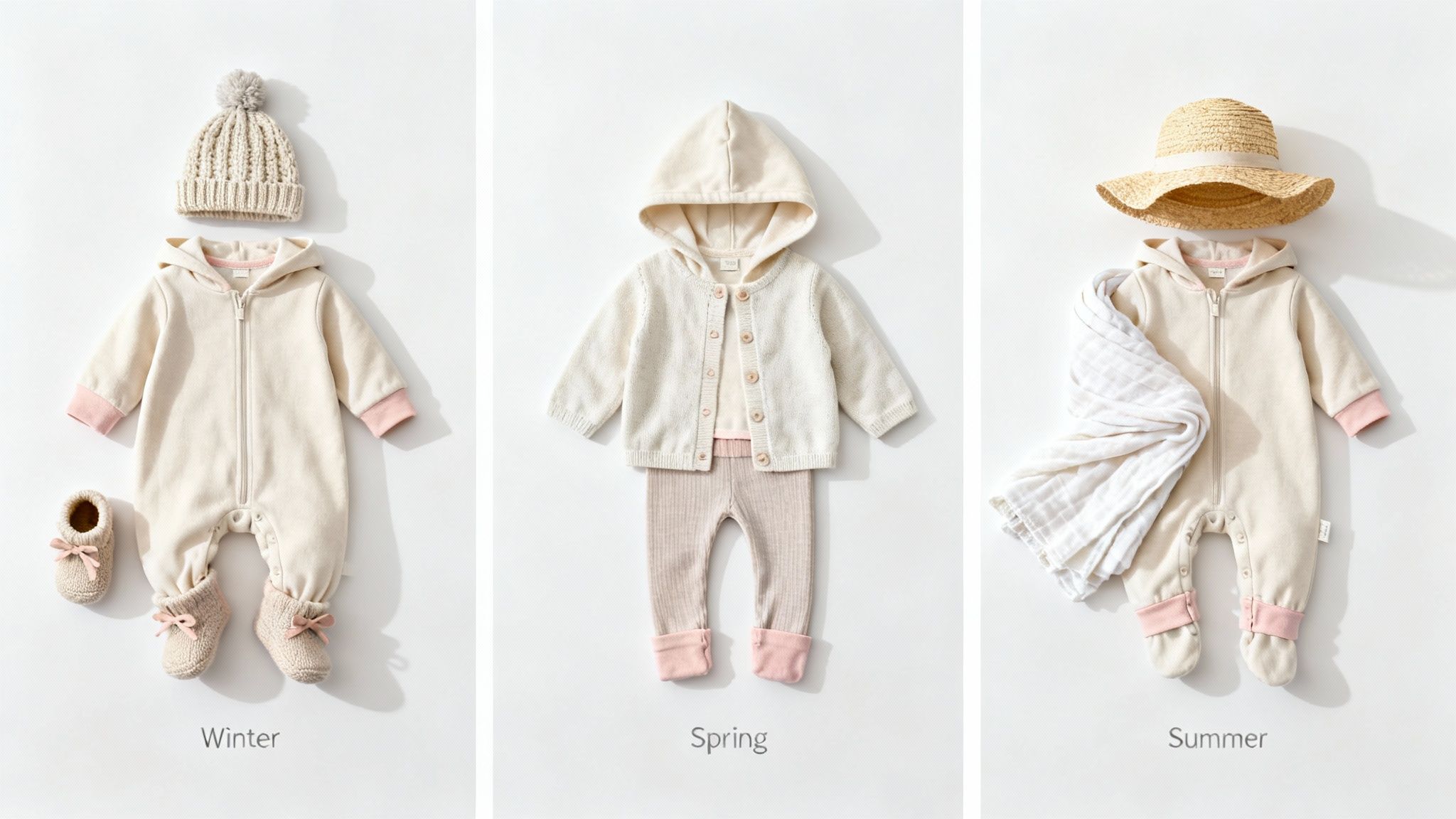
With just a couple of extra items, this single piece can be transformed into a complete, snow-ready outfit.
Creating Cozy Winter and Autumn Looks
Layering is the secret to keeping your baby comfortable when the temperature drops. The hooded onesie makes this so much easier.
- Under a Snowsuit: For the coldest winter days, a cotton hooded onesie fits perfectly under a bulky snowsuit. It adds a soft layer against their skin without being too puffy.
- With Leggings or Pants: Try pairing a fleece onesie with some soft leggings or thermal pants for an extra bit of insulation. This is a great trick for car rides, since you can easily slip off the outer layer once you're indoors.
- Essential Accessories: Don't forget the final touches! Warm booties keep tiny toes from getting cold, and a pair of soft mittens protects little hands. For extra windy days, a snug beanie under the hood gives them maximum protection.
This layering strategy keeps your baby warm outside but helps prevent them from overheating once you're back inside.
Remember, the key to layering is using thin, breathable fabrics. That way, you can add or remove layers to get their temperature just right without any fuss.
Styling for Spring and Summer Breezes
As the weather gets warmer, the hooded onesie easily transitions right along with it. Lighter materials like organic cotton or bamboo make it a fantastic standalone outfit.
A thin cotton baby hooded onesie is really all your baby needs for a comfy day playing at home or for a quick trip to the park. The fabric is breathable, which helps prevent overheating, and the one-piece design gives them total freedom to kick, crawl, and explore.
For those breezy spring afternoons or cooler summer evenings, you just need to add a simple top layer.
- A soft, button-up cardigan
- A lightweight zip-up jacket
- A pair of thin, stretchy leggings
And for sunny adventures, a brimmed sun hat is a non-negotiable. It protects their delicate face, even if the hood is up. This simple setup creates a photo-ready look that's just as practical as it is cute, proving the hooded onesie has a secure spot in your baby's closet no matter the season.
Keeping Onesies Soft and Bright After Every Wash
Let’s be honest: your baby’s hooded onesie is going to see its fair share of spit-up, pureed sweet potatoes, and the occasional diaper blowout. That’s just life with a little one! Keeping these tiny outfits soft and stain-free without using harsh chemicals is easier than you might think. With a few tweaks to your laundry routine, you can preserve their cozy feel and bright colors.
First things first, always use a baby-safe detergent. These formulas skip the heavy dyes and perfumes found in regular detergents, which can easily irritate a baby's delicate skin. Look for plant-based or hypoallergenic options for a gentle but powerful clean.
Pre-Treating and Washing Basics
The secret to conquering stains? Act fast. For everyday messes like spit-up or food, rinse the spot immediately with cold water. A quick dab with a gentle soap, like liquid castile soap, can work magic before the stain has a chance to settle in.
For those extra-stubborn stains that don’t want to give up, a simple paste of baking soda and water can be your best friend. Just apply it to the stain, let it sit for 30 minutes, and then wash as you normally would.
When you're ready to start a load, following these simple steps will help protect the fabric of your baby hooded onesie:
- Check the Label: This is your best guide. Always follow the garment's specific care instructions.
- Use Cold Water: Washing in cold water is great for preventing colors from fading and helps stop fabrics from shrinking.
- Secure Fasteners: Zip up any zippers and snap all the snaps. This simple step keeps them from snagging on other clothes in the wash.
Drying and Maintaining Softness
The dryer can be a little rough on baby clothes. To keep that onesie feeling super soft, stick to a low-heat setting or tumble dry. High heat can make cotton feel stiff and can damage delicate fleece fibers over time.
For an even gentler touch, air-drying is a fantastic choice. Just lay the onesie flat or hang it up out of direct sunlight, as strong sun can cause colors to fade. This method saves energy and is the kindest way to treat the fabric. If you're tackling some really tough spots, you can learn how to remove stains from baby clothes in our detailed guide.
Why a Hooded Onesie Is the Perfect Baby Shower Gift
Trying to find a baby shower gift that's both adorable and actually useful can feel like a mission. In a world of cute but impractical options, the baby hooded onesie is that perfect, can't-go-wrong present that new parents will be so grateful for. It’s that sweet spot where practicality meets pure cuteness, guaranteeing your gift sees plenty of action.
Unlike a fancy outfit that might get worn once for a photo, a hooded onesie is a true workhorse in a baby's wardrobe. New parents quickly learn they can go through a shocking number of outfits in a single day (hello, spit-up and diaper blowouts). When you gift a few high-quality onesies, you're giving them something they'll be reaching for constantly. That's a huge win.

Tips for Gifting the Perfect Onesie
Choosing a hooded onesie as a gift is a great start, but a few little details can make it even better. The biggest one? Sizing.
Gift-Giving Pro Tip: Always size up! Babies grow at lightning speed, and parents usually get swamped with newborn-sized clothes. Gifting a onesie in a 3–6 month or even 6–9 month size ensures it will get worn for much longer than just a few weeks.
Another way to make your gift stand out is to pick prints and colors that feel like the parents' personal style. Sure, tiny animal prints are a classic, but many modern parents lean toward neutral tones or minimalist patterns. Think about their vibe—a chic, earthy color or a fun, graphic print shows you really put some thought into it.
- Consider a Multi-Pack: Why give one when you can give a few? A coordinated set of two or three onesies is an amazing gift that adds even more value.
- Pair It with an Accessory: To round out your present, try adding a matching pair of booties or a soft muslin swaddle blanket. It creates a beautiful little gift set.
At the end of the day, a baby hooded onesie is a gift that nails the blend of style, comfort, and real-world usefulness. If you're building a whole gift basket, check out some other thoughtful gifts for new parents that go perfectly with a practical onesie.
Your Top Questions About Baby Hooded Onesies
Stepping into the world of baby clothes can feel like learning a new language. You're trying to build a tiny wardrobe, and you want every piece to be safe, comfy, and genuinely useful. We get it.
To make things a little easier, we've pulled together answers to the most common questions parents ask about the ever-popular baby hooded onesie. Think of this as your go-to cheat sheet for all things cozy and cute.
Are Hooded Onesies Safe for My Baby to Sleep In?
For a supervised nap—where you’re in the same room and can easily check on your little one—a hooded onesie is perfectly fine. It’s a great way to keep them snug and warm while they doze.
When it comes to overnight sleep or any time they're unsupervised, it’s best to stick with the official safe sleep guidelines. That means a clear crib with no loose items, and that includes hoods. For nighttime, it’s a good idea to switch to a non-hooded sleeper or a wearable sleep sack. This ensures nothing can accidentally cover your baby's face, keeping their airway clear all night long.
How Many Hooded Onesies Do I Actually Need?
For a newborn, having 5 to 7 hooded onesies is a fantastic starting point. Babies are mess-making machines—spit-up, drool, and diaper blowouts are just part of the daily routine. This number gives you enough to have a fresh one on hand without constantly doing laundry.
This way, you can handle a couple of outfit changes a day and still have a cushion. Of course, you can adjust this based on your laundry habits and where you live. If you have an in-home washer and dryer, you might get by with a few less, just as this handy minimalist baby registry guide suggests.
What Is the Difference Between a Onesie and a Romper?
It's easy to get these terms mixed up! Here’s the simple breakdown:
-
A "onesie" (which is technically a brand name for a bodysuit) is just a top that snaps at the crotch. It doesn't have any legs, kind of like a t-shirt with built-in snaps to keep it from riding up.
-
A "romper" or a baby hooded onesie is a full one-piece outfit. It covers the torso and has legs (either short or long), making it an all-in-one garment. The hood is just that extra cozy feature.
Can My Baby Wear a Hooded Onesie in a Car Seat?
This is a big one, and car seat safety is non-negotiable. Safety experts are clear: avoid putting your baby in bulky or puffy clothing under their car seat harness. That includes thick, fleecy hooded onesies.
Here's why: that extra padding can compress during a crash, creating a dangerous gap between your baby and the harness. A loose harness can't do its job properly. The safest approach is to dress your baby in a thinner layer, like a simple cotton onesie, for the car seat. Once they're buckled in snugly, you can drape a blanket or their coat over the top of the harness to keep them warm.
At Yarafly.com, we put your baby's comfort and your peace of mind into every stitch. Our hooded onesies are designed to be as practical as they are adorable. Come see for yourself!