

on November 16, 2025
Choosing the right baby girl swimwear for the 12-18 month stage is a whole new ballgame. It's less about just looking cute (though that's a bonus!) and more about finding that perfect blend of sun safety, serious comfort, and practicality for a toddler who is officially on the move.
Your little one is crawling, pulling up, and maybe even taking those first wobbly steps. Her swimsuit needs to keep up—offering a snug fit that comfortably covers a swim diaper, high UPF protection for that delicate skin, and a design that doesn't make diaper changes a wrestling match.
What Really Matters in Toddler Swimwear
When your baby transitions into this active 12-to-18-month window, her needs change dramatically. She's not just sitting anymore; she's exploring. Her swimwear has to support all this newfound mobility without rubbing, chafing, or getting in her way.
It’s no surprise that parents are prioritizing quality gear. The global children's swimwear market has grown into a massive USD 19.18 billion industry, a clear sign that we're all focused on water safety and quality clothing for our kids' adventures. This growth is driving a lot of innovation, which you can read more about in recent market trend reports.
Protection and a Perfect Fit Come First
For this age, two things are absolutely non-negotiable: powerful sun protection and a secure fit. Look for a swimsuit with a high Ultraviolet Protection Factor (UPF) to shield her sensitive skin from the sun’s harsh rays.
At the same time, the fit is everything. A good swimsuit stays put during all that energetic splashing and—critically—keeps a swim diaper securely in place. Toddlers grow so fast, so getting the size right can feel tricky. If you're scratching your head over sizing charts, take a look at our complete parent's guide to children's clothing sizes for some really helpful advice.
To help you narrow down your search, here’s a quick-glance table of what to look for.
Key Features for 12-18 Month Swimwear at a Glance
| Feature | Why It Matters for an Active Toddler | What to Look For |
|---|---|---|
| High UPF Rating | A toddler's skin is incredibly sensitive to UV rays. | UPF 50+ fabric, especially in rash guards and full-coverage suits. |
| Easy Diaper Access | Nobody wants a poolside struggle for a quick change. | Snaps or zippers at the crotch of one-pieces; two-piece sets. |
| Secure & Stretchy Fit | The suit must stay in place and contain a swim diaper. | Four-way stretch material, snug leg openings, adjustable straps. |
| Chlorine Resistance | Prevents the suit from fading, stretching, or deteriorating quickly. | Look for fabrics labeled "chlorine-resistant" or "durable." |
This isn't just about finding another cute outfit; it's about choosing functional, protective gear for your little adventurer.
Remember, the perfect swimsuit for a 12-18 month old isn't just about cute patterns. It’s a piece of functional gear designed to keep her safe, comfortable, and ready for a day of fun in the water.
Here are a few other game-changing features to keep an eye out for:
- Long-Sleeve Rash Guards: These are your best friend for maximizing sun protection on her arms, chest, and back.
- Full-Length Zippers: A zipper down the front makes getting a wet, sandy toddler out of her suit so much easier.
- Quick-Dry Fabric: Helps her stay comfortable and warm once she's out of the water, preventing post-swim chills.
Getting Serious About Fabrics and Sun Safety
When you're picking out baby girl swimwear 12-18 months, the fabric is so much more than a fashion statement. It’s actually her most important layer of defense against the sun. I can't stress this enough: a toddler's skin is incredibly thin and sensitive, making it far more susceptible to UV damage than ours.
That’s why the first thing I always look for on the tag is the Ultraviolet Protection Factor (UPF). It’s basically SPF for clothing, and it’s a game-changer.
You want to see a UPF 50+ rating. That's the highest you can get, and it means the fabric blocks a whopping 98% of harmful UVA and UVB rays. This is way more dependable than just sunscreen, which we all know can wash off in the water or rub off with a towel.
What's in a Good Swimsuit?
Once you've confirmed the UPF rating, the actual material blend tells you a lot about comfort and how well the suit will hold up. Most of what you'll find falls into two main categories.
- Nylon & Spandex: This is the classic combo. It’s got that super soft, silky feel and stretches beautifully, which is perfect for a wriggly toddler. The downside? It can sometimes break down a little faster with lots of chlorine exposure.
- Polyester & Spandex: I think of polyester as the workhorse of swimwear fabrics. It’s incredibly durable, keeps its vibrant color, and stands up really well to both chlorine and salty ocean water. It's a fantastic choice if you plan on spending a lot of time at the pool.
Here's a tip from experience: The right fabric isn't just about sun protection—it's about keeping your little one comfortable. A suit that dries quickly is a must. It helps prevent nasty chafing and stops her from getting a chill once she's out of the water.
At the end of the day, you're looking for that perfect blend of a soft-feeling material with that essential UPF 50+ rating. As you browse different styles, like these one-piece swimsuits for babies, you’ll notice how the best brands prioritize high-quality, protective fabrics. Always flip that tag and look for "UPF 50+"—it’s the best way to give her skin a reliable shield for all your sunny days together.
Finding the Right Style and Fit for Active Toddlers
When you're shopping for baby girl swimwear 12-18 months, remember you're dressing a tiny human who is constantly on the move. They’re crawling, toddling, and exploring with boundless energy, so their swimsuit needs to keep up without riding up or causing a fuss.
A classic one-piece is a great choice because it stays securely in place no matter how much they splash and play. But for many parents, the real winner is a two-piece rash guard set. Why? Diaper changes. Trying to peel a wet one-piece off a sandy, squirming toddler is a challenge, and a two-piece makes it so much faster.
Prioritizing Practical Design
It's the little things that make a huge difference in baby swimwear. Look for smart features that simplify your life.
- Easy On and Off: Front zippers on rash guards or one-pieces are a game-changer. You can say goodbye to wrestling a wet, sticky suit over a tired baby's head.
- Diaper Access: If you love the one-piece look, make sure it has snaps at the crotch. This lets you do quick diaper checks or changes without a full-blown wardrobe battle.
A snug fit is everything. The suit should be firm enough to hold a swim diaper securely in place, but never so tight that it leaves red marks. A good rule of thumb: you should be able to slide one finger comfortably under the straps and leg openings.
It’s tempting to buy a size up so she can grow into it, but I’d advise against it. A baggy suit is a recipe for disaster—it won’t contain any messes from a leaky swim diaper and can bunch up uncomfortably, restricting her movement. If she’s between sizes, always opt for the smaller one for a secure, safe fit right now.
This little decision tree can help you narrow down what fabric to focus on based on where you'll be spending most of your time.
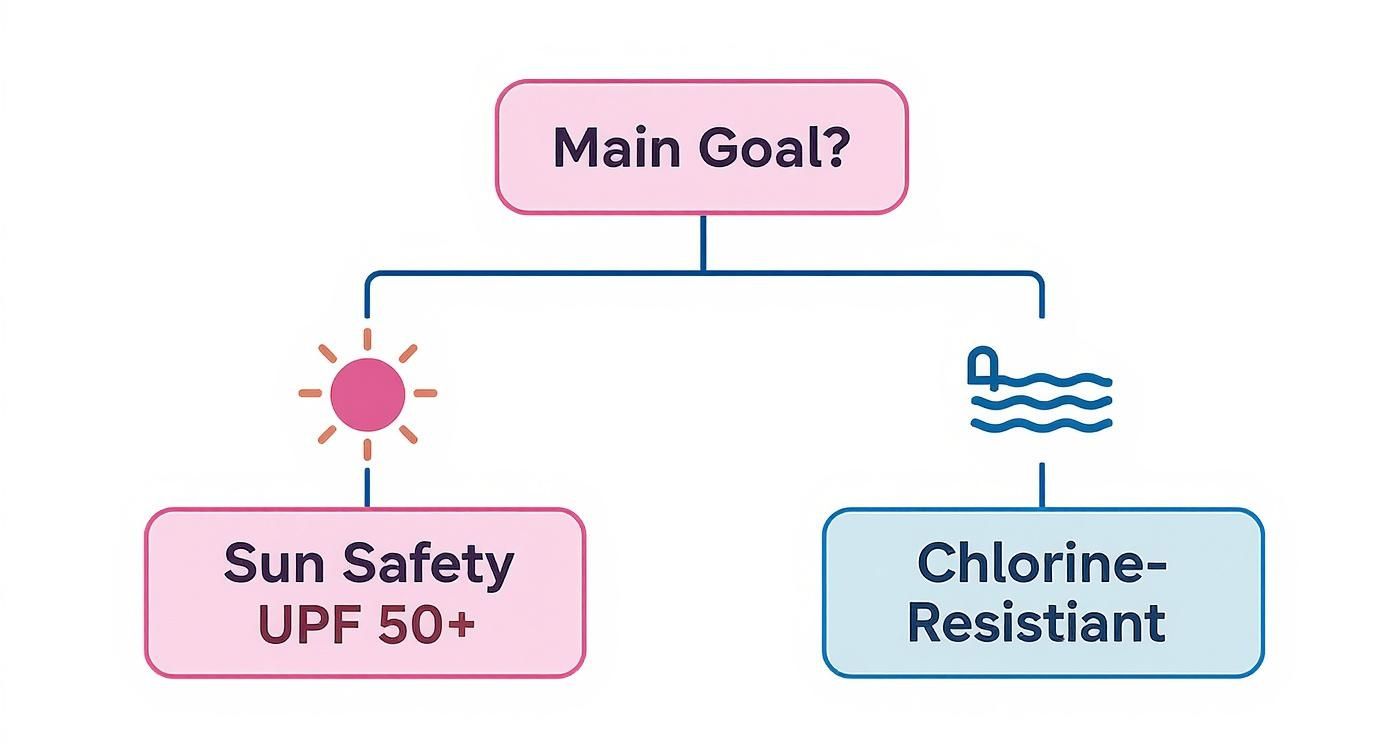
As you can see, if sun safety is your top concern, UPF 50+ fabric is non-negotiable. For frequent trips to the local pool, a chlorine-resistant material will keep the suit from fading and stretching out.
This focus on high-performance gear reflects a bigger trend. The market for children's swimwear is booming, especially in the Asia Pacific region, which has become the fastest-growing market globally. This growth is driven by parents having more disposable income and a greater focus on water safety and recreation. You can discover more insights about the children's swimwear market to see just how quickly it's expanding.
You’ve found the perfect suit—that’s a great first step! But for a truly safe and fun day by the water, a few key accessories are just as important as the baby girl swimwear 12-18 months itself. Think of them as your essential toolkit for keeping your little one protected from head to toe.

A wide-brimmed sun hat is at the very top of that list. While a UPF 50+ suit covers her body, her delicate face, neck, and ears are still exposed. A good hat is her personal shade provider, and we’ve got a whole guide on how to choose the best sun hats for babies if you need some pointers.
Don't Leave Home Without These
Beyond the hat, there are a couple of other non-negotiables I’ve learned to always pack for the pool or beach. Having these ready to go means less stress and more splashing.
- Swim Diapers: Don't even think about using a regular diaper in the water! They puff up into a soggy, useless mess instantly. You’ll need proper swim diapers (disposable or reusable) to contain any solid messes without absorbing the entire pool. In fact, most public pools require them.
- Water Shoes: Toddler feet are tender, and you never know what you'll encounter. Hot sand can burn, pool decks get slippery, and you don’t want a sharp shell or rock ruining the day. A good pair of flexible, quick-drying water shoes gives them the grip and protection they need to explore safely.
Here's the most important thing to remember: nothing replaces your eyes. Constant, focused supervision is the golden rule of water safety. A toddler can get into a dangerous situation in just a few inches of water in the time it takes to check your phone. Always have a designated "Water Watcher" whose only job is to watch the child.
At the end of the day, water safety is about more than just gear. It's about being prepared and present. That means staying within arm's reach at all times, making sure pools are securely fenced, and draining even small wading pools right after you're done.
When you pair the right accessories with vigilant supervision, you can relax and focus on what really matters: making sweet, splashy memories together.
How to Care for Swimwear So It Lasts
A great swimsuit for your baby girl aged 12-18 months is an investment, and you want it to last through all your summer fun. But let's be honest—chlorine, salt, sunscreen, and sand are a tough combination for any fabric. They can cause a brand-new suit to fade, stretch out, and even lose its all-important UPF protection.
The good news is, with a few simple habits, you can keep her swimsuits looking bright and fitting well all season. The single most important thing you can do? Rinse the suit in cool, fresh water as soon as you're done at the pool or beach. This one small step washes away the worst of the damaging stuff before it has a chance to set in.
Simple Washing for Long-Lasting Wear
Whatever you do, please don't wring out her swimsuit! Twisting and wringing the fabric is the fastest way to break down the delicate spandex fibers that give the suit its comfy stretch. Instead, just gently roll it in a towel or squeeze the excess water out.
When it's time for a proper wash, hand washing is your best friend. It's much gentler and will significantly extend the life of the suit.
- Pick a gentle soap: A mild baby soap or a special detergent for delicates works perfectly. Steer clear of harsh detergents or anything containing bleach.
- Stick to cool water: Fill up a sink or basin with cool water, add just a tiny drop of soap, and gently swish the swimsuit through the water.
- Rinse it all out: Make sure every last bit of soap is gone. Any residue left behind can weaken the fabric over time.
Once it's clean, lay the swimsuit flat to dry in a shady spot with good airflow. Never, ever put a swimsuit in the dryer. The high heat will absolutely ruin the elastic and can even damage the fabric's UPF rating. Taking care of her gear this way means it'll always be ready for the next water adventure.
Answering Your Top Baby Swimwear Questions
When it comes to picking out swimwear for your little girl, a few common questions always seem to pop up. I've been there, and getting these sorted out ahead of time makes for a much smoother, happier swim day for everyone.
One-Piece vs. Two-Piece: Which Is Better?
Honestly, this one boils down to what you value more: coverage or convenience.
A one-piece is fantastic for full coverage. It stays put no matter how much your little one wiggles, splashes, or crawls around on the sand. You don't have to worry about a top riding up and exposing that delicate belly skin to the sun.
But then there's the diaper change. A two-piece set, especially a baby girl swimwear 12-18 months rash guard and bottoms, is a game-changer here. You only have to pull down the wet bottoms instead of wrestling with an entire wet, clingy suit. For quick changes, the two-piece wins every time.
Is UPF 50+ Protection Really a Big Deal?
Yes, it's absolutely essential. A baby's skin is incredibly thin and sensitive, making it far more vulnerable to sun damage than ours. Think of a UPF 50+ fabric as her personal, wearable shade.
This rating means the fabric blocks over 98% of harmful UV rays from ever reaching her skin. It's a reliable, physical barrier that works hand-in-hand with sunscreen to give you total peace of mind.
A quick but crucial tip: Never, ever put a regular diaper on your baby for swimming. They are designed to absorb liquid and will instantly puff up into a heavy, waterlogged mess that can easily fall apart. Always use a dedicated swim diaper, which is made to contain solids without swelling up.
Ready to find the perfect mix of adorable style and serious sun protection? Head over to Yarafly.com. You can explore our full collection of UPF 50+ swimwear and find a suit you'll both love.