

on October 29, 2025
Picking out your baby's first swimsuit is a fun milestone, but with so many options, it can feel a little overwhelming. Let's make it simple. For most parents I talk to, a baby one piece swimsuit is the hands-down winner for safety, comfort, and sheer convenience. It just makes for a much easier day of splashy, wiggly fun.
Why a One Piece Is the Smartest Choice for Your Baby
When you're juggling towels, toys, and a wriggly baby, the last thing you need is fussy swimwear. A one-piece swimsuit takes the guesswork out of beach days.
Unlike a two-piece that can ride up and expose that sensitive tummy skin to the sun, a one-piece provides solid, reliable coverage right where it's needed most. That means less skin to slather with sunscreen and more peace of mind for you.
Plus, you won't be constantly tugging it back into place. Whether your little one is mastering the army crawl on a sandy blanket or splashing happily in your arms, a well-fitted one-piece stays put. It’s designed to move with them, not against them.
Real-World Convenience and Why It Matters
Let's be real: diaper changes at the pool or beach can be a challenge. Modern one-piece designs get it. Many now come with brilliant features like full-length zippers or snaps at the bottom, which are an absolute game-changer. No more wrestling a wet, clingy suit off a squirming baby.
This focus on practical design is why the baby one piece swimsuit dominates the children's swimwear market, a sector that hit USD 19.18 billion in 2024. As more families get out and enjoy the water, they're looking for gear that actually works. You can see more details on this trend in the global swimwear market growth report.
When you're a new parent, remember this: the best baby swimsuit isn’t just about the cute pattern. It's about a smart, functional design that makes your day easier and keeps your baby safe and comfortable.
Ultimately, choosing a one-piece is about choosing a single, reliable garment built for both play and practicality. If you want to see what I mean, take a look at our collection of baby girl swimwear to get a feel for the different styles and features available.
Diving Into Fabrics And Sun Safety
When you're picking out a baby one piece swimsuit, the cute pattern is fun, but the fabric itself is what really matters. A baby’s skin is so much more delicate than ours and incredibly vulnerable to sun damage, which is why the material’s protective qualities should be your number one concern.
This is where you'll see the term UPF, or Ultraviolet Protection Factor. It’s a rating that tells you how much UV radiation a fabric lets through to the skin. You’ll want to look for a UPF 50+ rating—this is the gold standard. A suit with this rating blocks at least 98% of the sun's harmful rays. Think of it as a reliable, all-day sunscreen for every inch of skin it covers.
Getting to Know Swimsuit Materials
Beyond the UPF rating, the fabric blend will dictate how comfortable the suit is, how long it lasts, and how it stands up to pool chlorine and ocean salt.
You’ll typically find that most baby swimsuits are made from a mix of polyester and spandex or nylon and spandex. Polyester blends are fantastic because they're very chlorine-resistant and hold their color well, so those vibrant designs won't fade after a few trips to the pool. On the other hand, nylon blends often feel a little softer and have more stretch, which can make for a really snug and cozy fit.
When you're looking at different swimsuits, the right fabric can make all the difference for your baby's comfort. Here’s a quick breakdown of the most common materials you'll encounter.
Baby Swimsuit Fabric Comparison
| Material | Key Benefit | Ideal For |
|---|---|---|
| Polyester/Spandex | Highly chlorine-resistant and colorfast. | Frequent pool use and swim lessons. |
| Nylon/Spandex | Incredibly soft, stretchy, and quick-drying. | All-around comfort, especially for sensitive skin. |
| Recycled Polyester | Eco-friendly and durable. | Environmentally-conscious families. |
| Neoprene | Provides extra warmth. | Cooler water or breezy beach days. |
Ultimately, any of these can be great choices as long as they come with that crucial UPF 50+ rating. The best option really just depends on where you’ll be swimming and what feels best for your little one.
My Two Cents: Don't even consider a swimsuit without a UPF 50+ tag. It's a non-negotiable for me. Making that quick check is the easiest way to guarantee your baby has the best sun protection a garment can offer.
This infographic breaks down why a one-piece is such a smart choice.

As you can see, it all comes down to better sun protection, a fit that won't slip or bunch up, and features that make life easier for parents. A well-designed full-body long-sleeve swimsuit is the perfect example, giving you total coverage from their neck down to their wrists and ankles. When you prioritize a UPF 50+ fabric and a smart, full-coverage design, you can relax and enjoy the water, knowing your baby is safe and sound.
How to Find the Perfect Fit for Your Baby
Getting the right fit for a baby's one-piece swimsuit can feel like you're trying to hit a moving target. We all know how quickly they grow! A suit that’s too snug will chafe and dig into their delicate skin, but one that's too loose becomes a saggy, waterlogged mess that's just not safe. It’s all about finding that sweet spot between comfort and security.
First thing’s first: ignore the age on the tag. I’ve learned from experience that age sizing is more of a suggestion than a rule. A much better approach is to go by your baby’s current weight and height. Any good swimwear brand will have a size chart based on these measurements, which will get you much closer to a perfect fit.
Before you even start shopping, grab a soft measuring tape and get your baby's torso length. Measure from the top of their shoulder, diagonally across their little belly, down to the bottom of their diaper. This "trunk" measurement is the secret to a great one-piece fit, preventing that awful pulling at the shoulders or bunching around the middle. If you're new to the world of baby sizing, our parent's guide on understanding children's clothing sizes is a lifesaver.
Checking for a Good Fit
Once you have the swimsuit, a quick at-home try-on session is a must. The "pinch test" is a classic for a reason. If you can pinch about a half-inch of fabric at the torso and along the legs, you're in good shape. You should also be able to slide a finger easily under the shoulder straps and leg openings—it should feel snug, not constricting.
Here are a few tell-tale signs you've nailed the fit:
- No Red Marks: When you take the suit off after a few minutes, their skin should be clear. Deep red lines on their shoulders or thighs mean it’s way too tight.
- Snug Leg Openings: The elastic around the legs needs to be firm enough to keep a swim diaper contained (no gaping!), but not so tight that it feels like it's cutting off circulation.
- A Smooth Torso: The fabric should lie flat against their chest and back. If it's wrinkly and baggy, it's too big. If the pattern is stretched out and it looks strained, it's too small.
A word of caution: don't size up just to make room for a swim diaper. It's a common mistake, but most well-designed baby swimsuits already account for one. Buying a suit that’s too large just leads to a droopy fit that can fill with water, weighing your baby down and making them uncomfortable. Always stick to their current measurements.
Features That Actually Make a Parent's Life Easier
Let’s be honest, a cute pattern is great, but it’s the smart, practical details that really make a baby one piece swimsuit a winner. These are the little things that solve real-world problems—like trying to wrestle a wet, sandy suit off a wiggly baby. When you're shopping, keep an eye out for these game-changers.

A full-length front zipper is a lifesaver. Forget trying to pull a cold, clingy swimsuit over a tired baby's head. With a zip-front, you just lay the suit flat, place your little one on top, and zip them in. Easy on, easy off. No fuss, no tears.
And what about diaper changes? Snaps along the inseam are pure genius. They let you do a quick diaper check or a full change right there on the beach blanket, without having to take off the entire wet suit. It's faster, warmer, and so much less of a hassle.
Prioritizing Comfort and Sun Coverage
Long-sleeve rash guard styles are everywhere now, and for good reason. They offer incredible sun coverage for delicate arms, shoulders, and torsos, which means less skin you have to chase with a bottle of sunscreen.
This shift toward protective gear is a huge trend. Parents are actively looking for swimwear that combines cute designs with serious UV defense, which is driving a lot of innovation in the industry. You can even discover more insights about the one-piece swimsuit market to see how much safety features are shaping what’s available.
Here are a few more functional details I always look for:
- Zipper Guards: A tiny fabric flap at the top of the zipper is a must-have. It stops the zipper from scratching or pinching your baby’s soft chin.
- Flatlock Seams: Run your fingers over the seams. They should feel smooth and lie flat against the fabric to prevent any chafing on sensitive skin.
- Chlorine-Resistant Fabric: If you spend a lot of time at the pool, this is key. It keeps the colors from fading and the material from stretching out and degrading.
When you focus on these thoughtful features, you’re not just buying another cute outfit. You’re getting a piece of gear that makes your family’s day at the water safer, more comfortable, and way more fun.
Keeping Your Baby's Swimsuit Looking Brand New
You've found the perfect baby one piece swimsuit, and it's an investment in your little one's comfort and sun safety. But let's be honest—chlorine, saltwater, and stubborn sunscreen residue are the enemies of that delicate fabric. Keeping it in top shape is easier than you think, and it all starts the second you're done swimming.
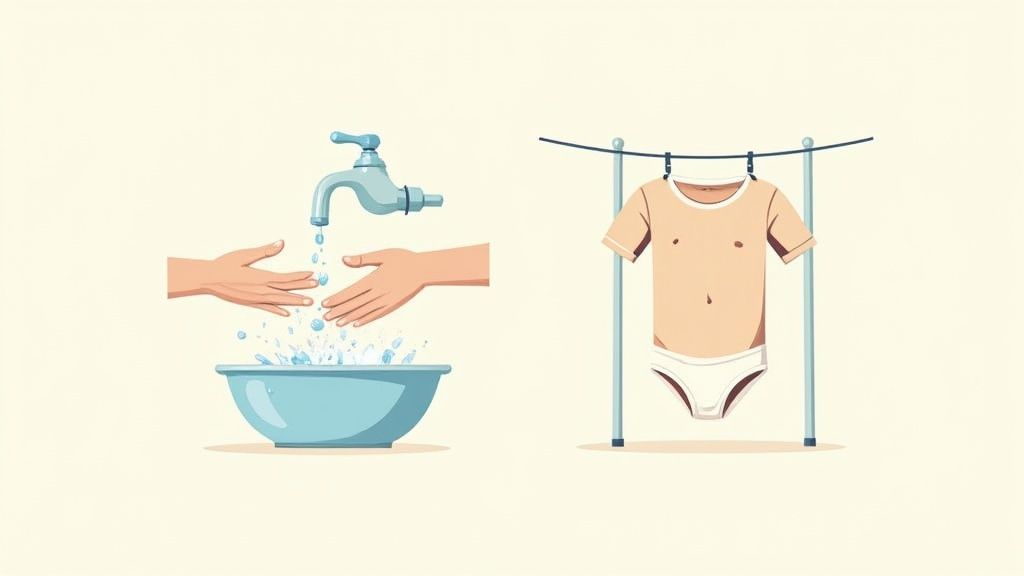
The most crucial thing you can do? Rinse the suit in cool, fresh water immediately after every use. I can't stress this enough. This simple step flushes out all those harsh chemicals before they can break down the stretchy fibers. Just give it a gentle squeeze to get the excess water out; no aggressive wringing needed.
The Right Way to Wash and Dry
When it's time for a more thorough cleaning, hand washing is always the way to go. The spin cycle on a washing machine is just too rough and can stretch the material, ruining that perfect fit. A little bit of mild soap or a detergent made for delicates is all you need.
After washing, skip the dryer completely. Lay the suit flat on a clean towel or hang it up somewhere with good air circulation, but keep it out of direct sunlight.
Pro Tip: Never, ever put a swimsuit in the dryer. The intense heat will absolutely destroy the elasticity, leaving you with a saggy, misshapen suit. The sun is just as bad, as it will bleach those bright, fun colors in no time.
Dealing With Pesky Stains
Sunscreen stains, especially from the thick mineral-based creams, are almost unavoidable. If you see that familiar white or yellowish mark, you can usually tackle it before you wash the suit.
Here are a couple of my go-to tricks:
- For Oily Sunscreen Marks: Sprinkle a bit of baking soda or cornstarch on the spot. It works wonders to soak up the oil. Let it sit for about an hour, then gently brush it off before washing.
- For Mineral Residue: Mix a little baking soda with water to create a paste. Apply it to the stain, let it dry completely, and then rinse it off.
Taking these few extra minutes after a swim day will make a huge difference. You'll keep that adorable baby one piece swimsuit fitting well and looking vibrant all season long.
Answering Your Top Questions
When you're shopping for that first little baby one piece swimsuit, a few questions always seem to pop up. It's totally normal! Let's walk through some of the most common things parents ask so you can feel confident in your choice.
Do I really need a swim diaper under the swimsuit?
Yes, this one is non-negotiable. A regular diaper will absorb pool or ocean water in seconds, turning into a heavy, soggy mess that won’t do its job. It’s a recipe for a droopy, uncomfortable suit and a potential pool-fouling incident.
Swim diapers, both the disposable and reusable kinds, are designed differently. They're made to contain solids without swelling up like a balloon. Thankfully, almost all baby swimsuits are designed with a little extra room in the bottom to accommodate a swim diaper without making the fit awkward or tight.
Is a long-sleeve swimsuit actually better?
If your baby is going to be in the sun, a long-sleeve suit is hands-down the best choice. It offers built-in, reliable protection for their delicate arms, shoulders, and back—areas that burn incredibly easily. This means you have less skin to worry about slathering and re-slathering with sunscreen.
Of course, if you're just heading to an indoor pool for swim lessons, a cute tank or short-sleeve style is perfectly fine. But for any outdoor water fun, long sleeves are the smart-parent move.
Sun safety is everything. Think of a UPF 50+ long-sleeve suit as your first and best line of defense against harmful rays. It lets you relax and enjoy the moment instead of constantly worrying about sunburns.
What’s the right age to put a baby in a swimsuit?
Babies can wear a swimsuit as soon as you feel ready to take them into the water, even as young as two or three months old. The real question isn't about the swimsuit, but about sun exposure. The American Academy of Pediatrics advises keeping infants under six months out of direct sunlight entirely.
So, while a UPF 50+ swimsuit is a great tool, it isn't magic. For the tiniest swimmers, you still need to pair it with:
- Ample shade (think a big umbrella or a pop-up tent)
- A wide-brimmed sun hat
- Avoiding the sun during its peak hours (10 a.m. to 4 p.m.)
Ready to find a suit that checks all the boxes for safety, comfort, and cuteness? Check out the full collection of thoughtfully designed swimwear over at Yarafly.com. You’ll find high-quality suits with smart features that make every splash a happy one. Find your new favorite today!.