

on January 11, 2026
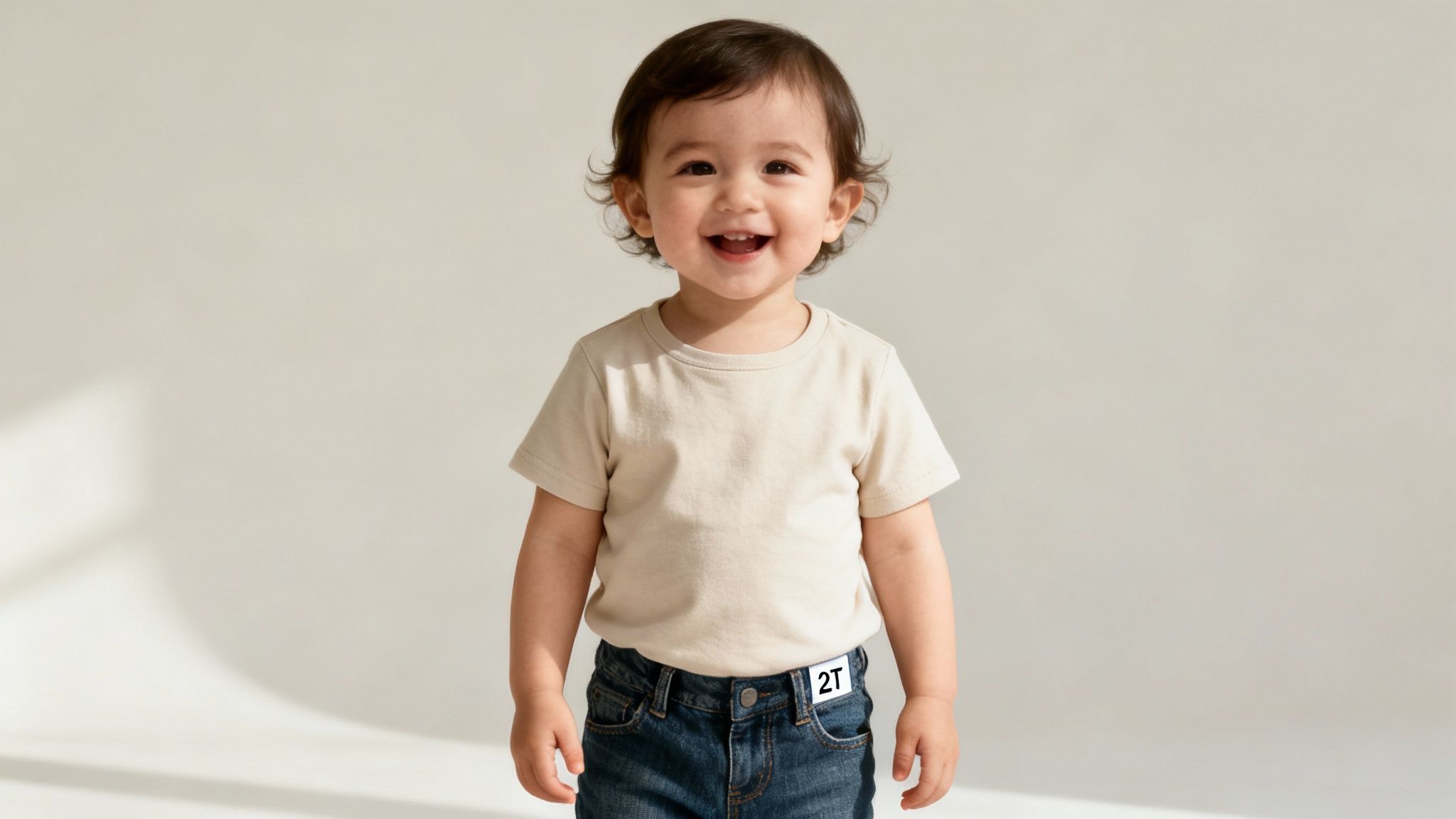
Stepping into the world of toddler clothing can feel like you're trying to crack a secret code. But understanding what size is 2T is actually much more straightforward than it seems. The "T" simply stands for Toddler, and it’s a size built for kids around two years old who are up and moving—walking, running, and starting to lose that adorable baby roundness.
Think of it this way: 2T clothing is cut slimmer and a bit longer than baby clothes, designed specifically for a newly active, upright little human.
Unpacking The Meaning Of 2T Sizing
If you've ever held up a 24-month onesie next to a 2T t-shirt and felt puzzled by the difference, you're not alone. That comparison perfectly highlights the shift from baby to toddler sizing. Baby sizes, like 24 months, are designed for a baby's unique proportions—they're shorter, wider, and have generous room in the seat for a diaper.
On the other hand, 2T signals a major transition in your child's growth. The fit is intentionally different to match their changing body shape.
- Slimmer Fit: This cut accommodates a toddler who has leaned out from all that running around.
- Longer Torso and Legs: It's built to keep up with those sudden vertical growth spurts.
- Less Diaper Room: Many 2T items are designed with potty training in mind, offering a less bulky fit in the bottom.
Ultimately, the switch to 2T is less about your child’s exact birthday and more about their developmental stage. As they grow, their needs change in every way, from their clothes to their playtime. It’s a great time to explore appropriate learning toys for 2-3 year olds, too. Think of 2T as the first real step into "big kid" clothes, made for movement and a more streamlined silhouette.
Quick Toddler Size Comparison
To help you see the differences at a glance, here’s a simple breakdown of how these common toddler sizes stack up.
| Size | Typical Age | Best For | Key Features |
|---|---|---|---|
| 24 Months | 18-24 months | Babies | Rounder fit, more diaper space |
| 2T | 2 years | Toddlers | Slimmer, longer, less diaper room |
| 3T | 3 years | Older Toddlers | Taller and slightly wider than 2T |
This table should make it easier to pinpoint which size is the right fit for your little one right now.
Your Complete 2T Size Chart And Measurements
Let's get down to the numbers. While the "2T" tag is a good starting point, the real secret to a perfect fit lies in your toddler's actual measurements. Knowing these key numbers is what will give you the confidence to click "add to cart."
Think about it: a proper chest measurement means their little arms can move freely in a jacket, and the right inseam keeps pants from becoming a tripping hazard for an unsteady walker. These details make a huge difference in comfort and safety.
Standard 2T Measurement Guide
Here’s a handy chart with the typical measurements that most brands use for their 2T clothing. I recommend bookmarking this page or snapping a screenshot to keep on your phone for shopping trips. It takes all the guesswork out of the process.
| Measurement | Inches | Centimeters |
|---|---|---|
| Height | 33" - 35" | 84 - 89 cm |
| Weight | 27 - 30 lbs | 12.2 - 13.6 kg |
| Chest | 20" - 21" | 51 - 53 cm |
| Waist | 19.5" - 20.5" | 49.5 - 52 cm |
Of course, remember that these are just industry averages. Every child is different and grows on their own unique schedule, so think of this as a reliable guide, not a strict rule.
Key Takeaway: Age is a decent starting point, but your child's height and weight are the real indicators of a good fit. When in doubt, always trust the measuring tape over the age on the tag.
Once you have these numbers, you’re empowered. You can easily compare different brands and styles, turning what used to feel like a guessing game into a simple, straightforward task. You'll be able to pick clothes you know will fit well right from the start.
How to Measure Your Toddler The Right Way
Knowing the average measurements for a 2T outfit is a great starting point, but getting those numbers from a wriggly, constantly moving toddler? That's a whole different ball game. Trying to measure an active two-year-old can feel like trying to catch a whirlwind in a bottle, so the trick is to make it fast and fun.
Grab a soft, flexible measuring tape. Instead of making it a chore, turn it into a game. You could say, "Let's see how tall our little superhero is today!" or even measure their favorite stuffed animal first to show them it’s no big deal. A little bit of playfulness can turn a potential struggle into a quick, easy win.
This chart gives you a quick snapshot of the key measurements—height, weight, and chest—that most brands use for a 2T fit.
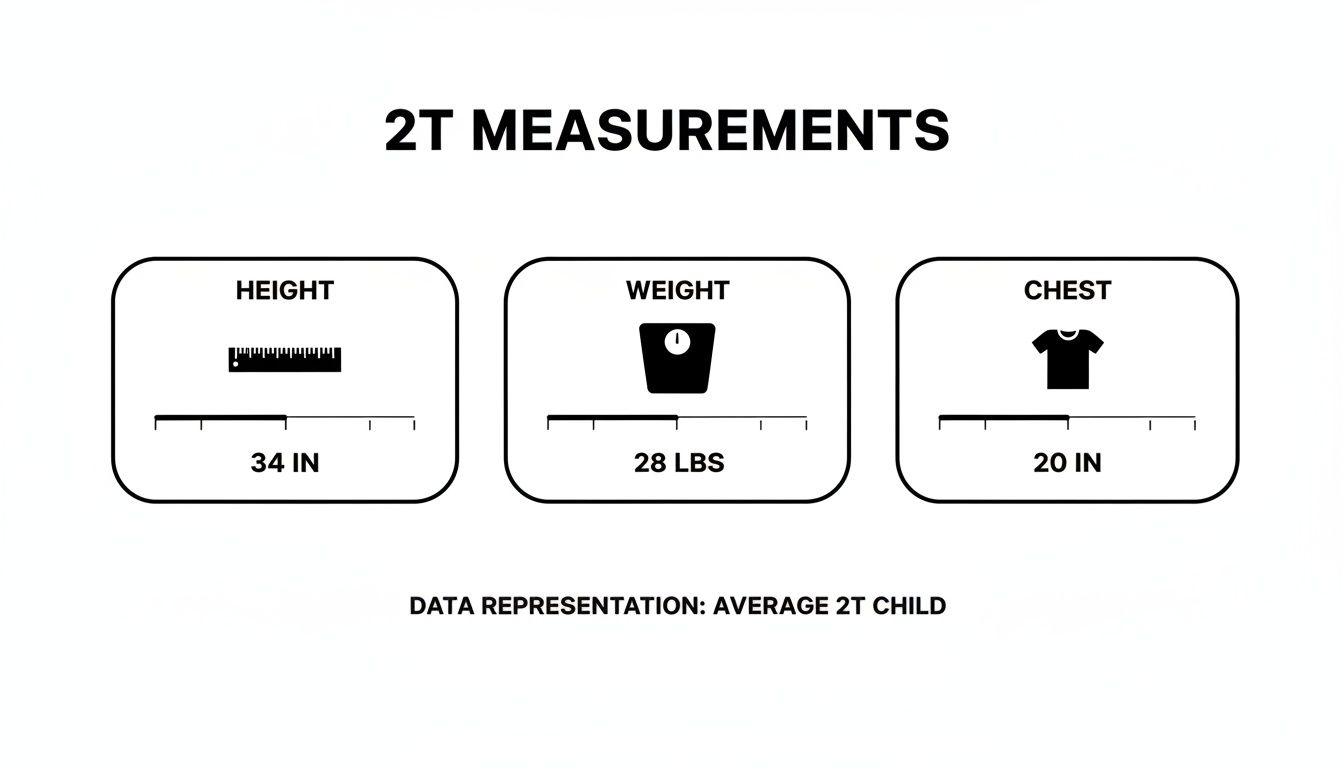
These three measurements are your best guide for finding clothes that are comfortable enough for all their running, jumping, and playing.
Key Measurements and How to Get Them Right
To get the most accurate fit, you'll want to focus on three simple measurements. Getting these right means you're choosing clothes they can actually move in during their daily adventures. For a deeper dive into how height affects sizing, check out our children's clothes height guide to find that perfect fit.
- Height: Have your toddler stand with their back straight against a wall (no shoes!). Gently place a book flat on their head and make a tiny pencil mark where the bottom of the book meets the wall. Then, just measure from the floor up to your mark.
- Chest: Run the measuring tape around the broadest part of their chest, right under the armpits. Keep the tape level all the way around, but don't pull it super tight—you should be able to slip a finger underneath.
- Inseam: This one is crucial for pants. Measure from the inside of their upper thigh straight down to their ankle. It’s the secret to finding pants that don't trip them up.
One of the biggest mistakes parents make is measuring over bulky clothes, like a sweater or puffy vest. For the truest measurement, measure them while they're in a thin t-shirt or even just their diaper. Also, make sure the tape is snug but not squeezing them; pulling it too tight can throw off the numbers and trick you into buying a size that's too small from the get-go.
Why That 2T Shirt Fits Differently From Every Brand
You’ve probably been there. You grab a 2T t-shirt from one store, and it fits your toddler like a glove. The next day, a 2T from another brand is way too tight. It’s not just you—this is a super common headache for parents.
The simple truth is there's no legally required, one-size-fits-all standard for what a 2T actually is. This leaves every single brand to come up with its own sizing system.
It All Starts With a "Fit Model"
So, how do they decide? It often comes down to their fit model. This is the real-life child (or sometimes a mannequin) that a brand uses as the foundation for its entire clothing line. If their model is on the taller and slimmer side, their 2T clothes will be cut that way. If another brand's model is shorter and a bit chunkier, their clothes will have a totally different shape.
On top of the fit model, a few other things can dramatically change how a piece of clothing fits, even if the tags are identical.
- The Fabric Matters: A soft, stretchy cotton t-shirt has a lot more wiggle room than a pair of stiff denim jeans or a crisp linen shirt. That stretchy 2T tee might last your kid for months, while a non-stretch button-down could be outgrown in a flash.
- The Style and Cut: Keep an eye out for descriptions like “slim fit,” “relaxed fit,” or “loose fit.” A pair of 2T slim-fit jeans from a brand will have a much tighter waist and leg than their relaxed-fit style.
Pro Tip: Your best bet is to always, always check a brand’s own size chart before you click "buy." Measuring your child and comparing those numbers to the chart is the secret to getting a great fit and avoiding the hassle of returns.
Getting sizing right is a huge deal for retailers, especially since the global toddler wear market recently hit a value of about USD 265.71 billion. That’s a massive market, and it shows just how important sizes like 2T are. You can learn more about the growth of the toddler apparel market to see how things are changing.
Boosting Your Toddler's Immune System with Food
Finding clothes that fit your growing toddler is one puzzle, but keeping that energetic little one healthy is a whole different challenge. A strong immune system is your child's best defense against common bugs and colds, and it all starts with the vitamins and minerals they get from their food.
A toddler's body needs the right fuel to build a robust immune response. Key nutrients like Vitamin C, Zinc, and Iron are the building blocks. Vitamin C, found in delicious foods like oranges, strawberries, and bell peppers, is a powerhouse for creating infection-fighting white blood cells. Zinc, present in beans, seeds, and lean meats, helps the immune system function and repair itself.
Building an Immunity-Boosting Plate
The easiest way to make sure your toddler gets a wide range of nutrients is to serve them a rainbow of colors. Different colors in fruits and vegetables often signify different vitamins and minerals, making variety your best friend.
- Colorful Berries and Fruits: Blueberries, raspberries, and kiwis are packed with antioxidants.
- Leafy Greens: Spinach and kale are nutritional champions. For picky eaters, blending them into a smoothie is a classic parent trick.
- Lean Proteins: Chicken, fish, and lentils provide essential building blocks for a strong body.
- Healthy Fats: Avocado and nut butters (in an age-appropriate form) are fantastic for overall development and health.
This focus on well-being is a major trend. Parents are investing more in their children's health, which is reflected in the growing toddler apparel market. While North America leads with USD 31.4 billion in revenue, the Asia-Pacific region is expanding the fastest. You can explore these toddler wear market insights to see how global trends are evolving. By focusing on these food groups, you're building a foundation of health that will support their natural defenses as they grow and explore.
Easy Recipes To Strengthen Your Kid's Immunity
Knowing which foods boost immunity is one thing; getting a picky toddler to eat them is another. The secret is to make healthy food fun and delicious. A little creativity in the kitchen can transform superfoods into meals your toddler will actually ask for.
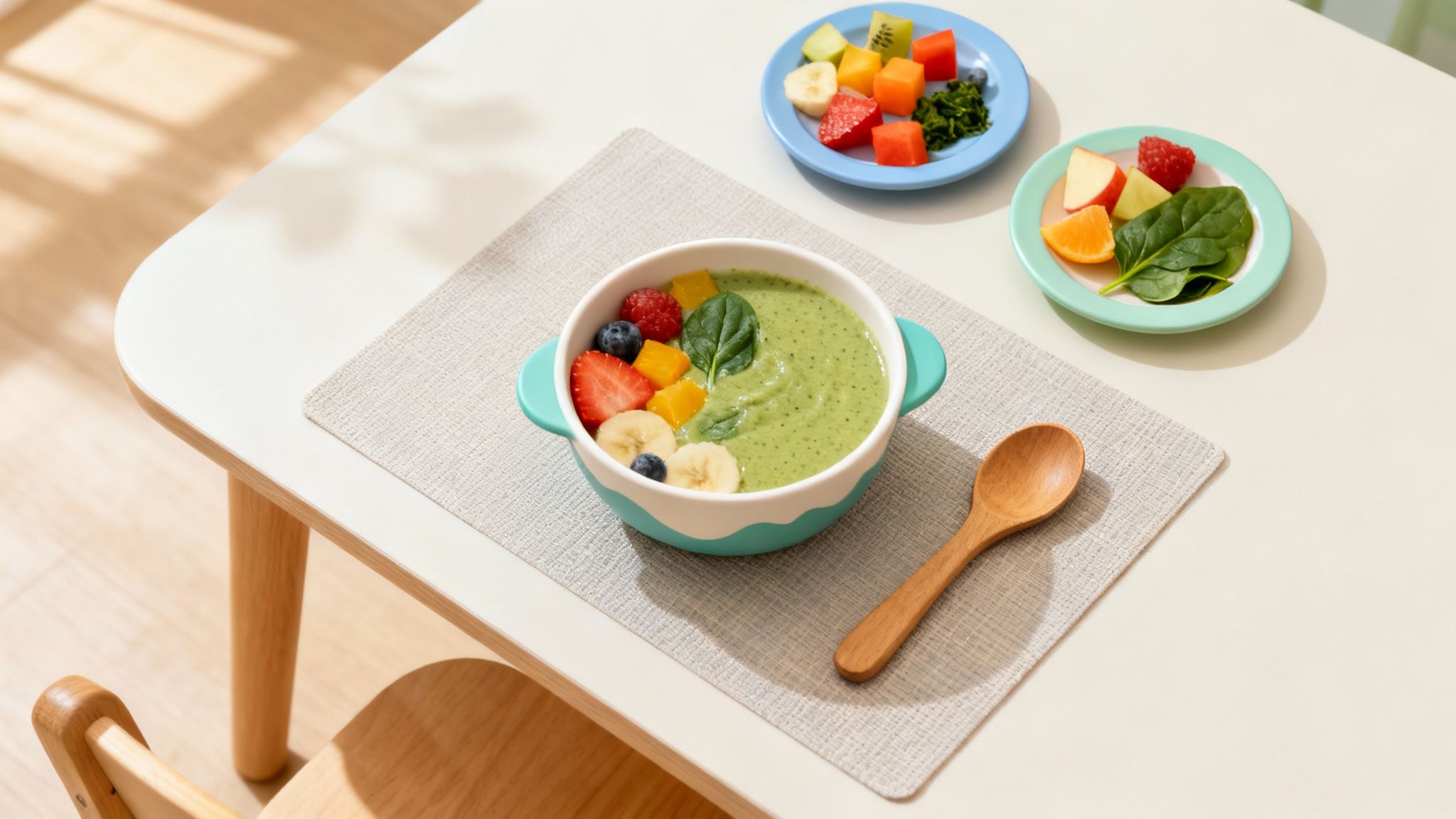
Smoothies are a fantastic way to pack in nutrients. To a toddler, they’re a treat, but you can load them with fruits, vegetables, and seeds. The sweetness of fruit easily masks the flavor of greens like spinach.
This focus on quality and well-being is seen across all aspects of parenting, including the clothes we buy. The growth of the toddler wear market, where e-commerce has transformed how we shop for sizes like 2T, is a testament to this. You can find more insights on the toddler wear market here.
Kid-Approved Smoothie And Meal Ideas
You don’t need to be a chef to create nutritious meals for your toddler. These simple, picky-eater-approved recipes are packed with immune-boosting goodness.
The "Green Monster" Smoothie
- Ingredients: 1 ripe banana, ½ cup frozen pineapple or mango, a large handful of fresh spinach, ½ cup of milk (or yogurt), and 1 teaspoon of chia seeds for extra fiber and omega-3s.
- Why it works: The sweet, tropical fruit completely hides the taste of the spinach, making it an easy way to serve up iron and vitamins.
Rainbow Veggie "Fries" with Yogurt Dip
- Ingredients: Sweet potato, carrots, and zucchini sliced into fry shapes.
- Why it works: Toss the veggie sticks in a little olive oil, bake until tender, and serve with a simple Greek yogurt dip. Toddlers love finger foods, and this is a fun, nutritious alternative to traditional fries.
Once they're fueled and ready to play, you'll want the right clothes to keep up with their adventures. For inspiration, check out our guide to stylish toddler boy summer outfits.
Remember, the goal is progress, not perfection. Introducing healthy foods in a fun, low-pressure way helps build positive eating habits that can last a lifetime.
Your Top Toddler Sizing Questions Answered
If you're trying to keep up with a growing toddler, you know the feeling—it seems like you're constantly swapping out one clothing size for the next. Trying to figure out what size 2T even is can be a puzzle. Let's break down the most common questions to help you shop with a little more confidence.
What Is The Difference Between 2T And 24 Months?
This is probably the number one question parents have, and the answer comes down to one thing: diapers. The biggest difference is the fit, which is designed for two totally different stages of a little one's development.
24 Months sizing is really just an extension of baby sizes. It's cut with a baby's proportions in mind, so it’s often rounder and has extra room in the seat to accommodate a bulky diaper.
On the other hand, 2T is designed specifically for a toddler's body. Toddlers are usually walking (or running!), which means they're starting to slim down and their proportions are changing. So, 2T clothing is typically longer and leaner. It's built for a more active kid who might be on their way to potty training. That's why if you have a tall, slim child, 2T is often a much better fit, even if they aren't quite two yet.
Speaking of big steps, just as you're figuring out clothing sizes, you might be thinking about other milestones. You can learn more about when to start potty training to get ready for that next big adventure.
Should I Buy A Size Up For My Toddler?
Yes and no. Sizing up can be a really smart way to get more mileage out of certain clothes, but you have to be strategic about it. It works great for things like jackets, hoodies, and pajamas where a roomier fit is totally fine and even cozy.
But for clothes that need a good fit for safety and comfort, it’s best to stick with their current size. Think pants that are too long and could be a tripping hazard, or swimwear that needs to stay put. Toddlers have a knack for growing in unpredictable spurts, so having a few slightly larger items on hand is a great way to be prepared for their next growth phase without compromising safety.
Parenting Tip: When you buy a size up, make sure the sleeves can be rolled up easily and that pant legs aren't so long they get tangled in your toddler's feet. Comfort and safety should always be the priority, even when you're planning ahead.
When Should My Child Move From 2T To 3T?
The best guide here isn't the number on the tag—it's how the clothes actually fit your child. It's time to make the jump from 2T to 3T when their current outfits start looking visibly snug or restrictive.
Keep an eye out for a few tell-tale signs:
- T-shirts that ride up and expose their belly.
- Pants that are starting to look more like capris.
- Sleeves that are obviously too short.
If the seams look strained when they move or if your child just seems uncomfortable while playing, that's your cue. It’s definitely time to size up and give them the room they need to run, jump, and explore freely.
At Yarafly, we get it. Finding the perfect fit is just as important as finding styles your kids will love. Our toddler collection is designed with real, active kids in mind, giving them the comfort and durability they need for every adventure. Come explore our fun and playful outfits today! https://yarafly.com