

on November 26, 2025
Figuring out how to dress your baby for sleep can feel like a nightly puzzle. As a parent, you're constantly second-guessing: Are they too warm? Too cold? A great starting point I always share with new parents is to dress your baby in one more layer than what you'd be comfortable wearing in the same room. It's a simple, practical rule that cuts through the confusion.
Baby Sleepwear: Getting It Right for Safe and Sound Slumbers
Dressing your baby properly for sleep is about more than just keeping them cozy—it’s a crucial part of safe sleep practices. The main goal is to keep them comfortably warm without any risk of overheating.
A core principle of safe sleep is keeping the crib completely bare. That means no blankets, no pillows, and no bumpers. This is where wearable blankets, like sleep sacks, become indispensable. They offer all the warmth of a blanket without the danger of coming loose and covering your baby's face.
Creating a safe sleep space is non-negotiable. According to a recent U.S. Consumer Product Safety Commission (CPSC) report, unsafe sleep environments are a leading cause of infant injuries and deaths. Between 2019 and 2021, an average of 126 infant deaths annually in the U.S. were linked to soft bedding.
What Is a TOG Rating?
If you've ever felt a sleep sack and wondered how warm it actually is, the TOG rating is your best friend. TOG stands for Thermal Overall Grade, and it's a simple, standardized system that tells you how much insulation a garment provides.
Think of it this way: a higher TOG number (like 2.5) is like a winter duvet, perfect for colder rooms. A lower TOG (like 0.5) is like a light summer sheet, great for warmer nights. Using TOG ratings takes all the guesswork out of the equation.
Match the TOG to Your Room's Temperature
Forget about the weather forecast. What matters is the actual temperature inside your baby's room. The sweet spot for a baby's nursery is generally between 68-72°F (20-22°C). Once you know the room temperature, you can easily pick the right sleepwear.
This chart is a fantastic visual guide to help you match the right layers to the temperature.
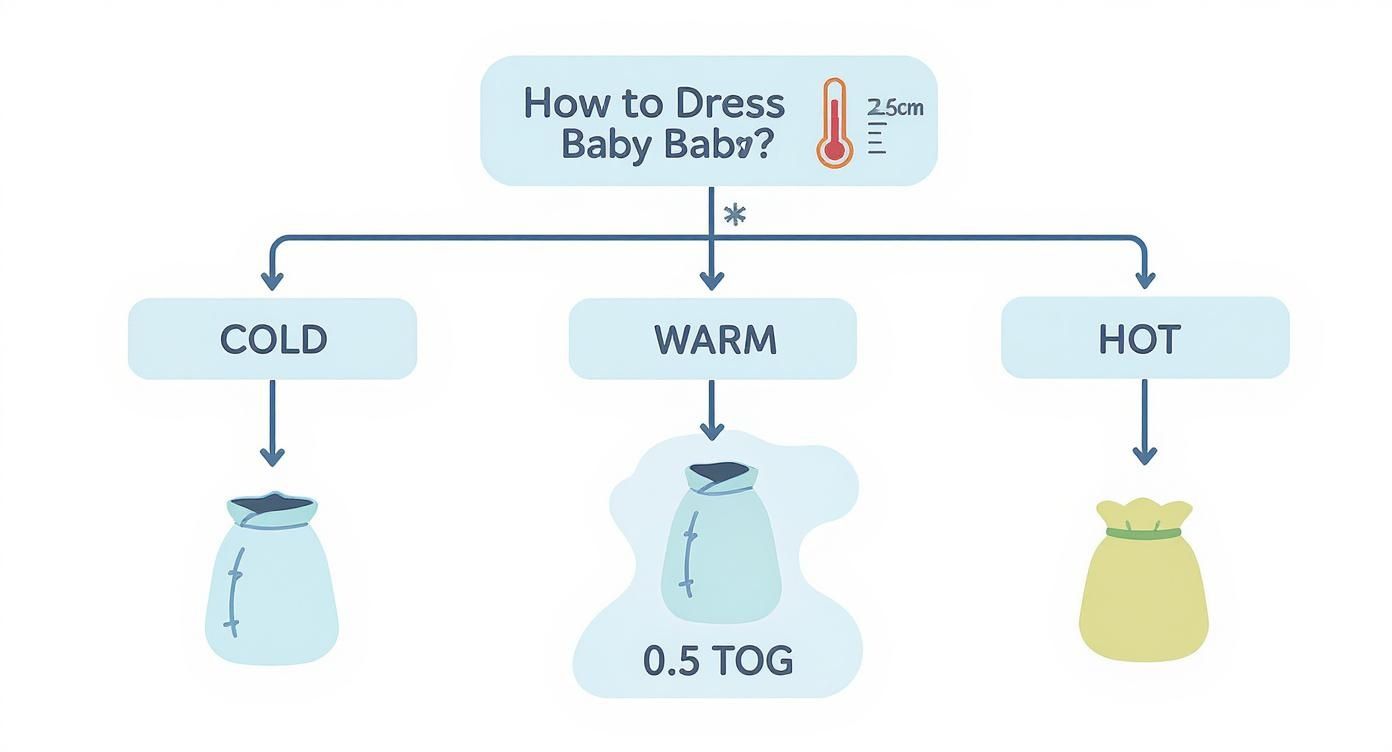
To make it even easier, here’s a quick reference table.
Quick Guide to Dressing Baby Based on Room Temperature
This table breaks down exactly what your baby can wear based on the temperature in their room. Just find your room's temperature to see the recommended TOG and layering suggestions.
| Room Temperature (°F / °C) | Recommended TOG | Example Sleepwear Layers |
|---|---|---|
| Below 68°F / 20°C | 2.5 TOG | Long-sleeved onesie + fleece or cotton pajamas + 2.5 TOG sleep sack. |
| 68-72°F / 20-22°C | 1.0 TOG | Long-sleeved onesie or cotton pajamas + 1.0 TOG sleep sack. |
| 73-77°F / 23-25°C | 0.5 TOG | Short-sleeved onesie or just a diaper + 0.5 TOG sleep sack. |
| Above 77°F / 25°C | 0.2 TOG / Muslin | Just a diaper + a light muslin swaddle or a 0.2 TOG sleep sack. |
It really is that straightforward. Matching the TOG to the room temperature helps ensure your baby stays comfortable and safe all night long.
If you have a newborn, swaddling is also a great option. For tips on doing it correctly, you can check out our guide on how to swaddle a newborn safely.
By focusing on the room's temperature and using the TOG system, you eliminate confusion and create a consistently safe and comfortable sleep environment. This approach allows you to confidently dress your baby for sleep, knowing they are just right—not too hot, not too cold.
Layering Sleepwear for Every Age and Season
Getting the hang of TOG ratings is a great start, but how does that actually look on a tiny newborn versus a wiggly six-month-old? Or on a crisp autumn night compared to a summer heatwave? The truth is, dressing your baby for sleep is an art that changes with every growth spurt and season. It’s all about creating a flexible system that keeps them safe and snug.
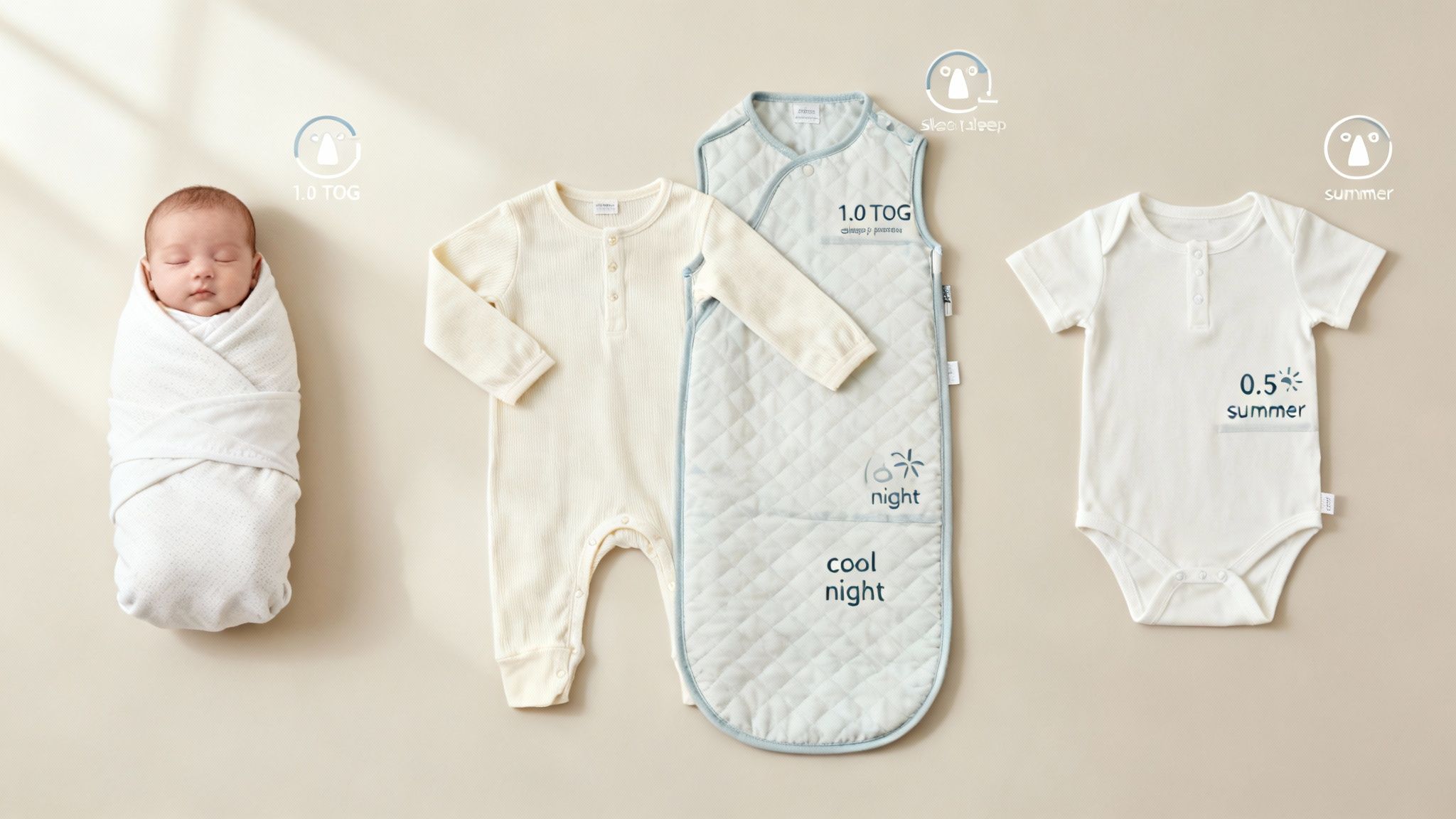
Dressing Your Newborn for Sleep
For those first few months, many newborns sleep best when swaddled. A good swaddle mimics the comforting, snug feeling of the womb and can work wonders on that startle reflex that jolts them awake.
The key is to do it safely. You want the swaddle snug around their torso but loose enough around the hips and legs to allow for natural movement and healthy hip development.
But what goes underneath? This is where your new knowledge of TOG ratings and room temperature comes into play.
- Warm Room (73-77°F / 23-25°C): A lightweight swaddle (around 0.5 TOG) over just a diaper or a short-sleeved bodysuit is usually perfect.
- Standard Room (68-72°F / 20-22°C): Try pairing a 1.0 TOG swaddle with a long-sleeved cotton onesie.
- Cool Room (Below 68°F / 20°C): You’ll probably need a warmer swaddle layered over a long-sleeved bodysuit or even footed pajamas.
A quick check on the back of their neck is the best way to tell if they're comfortable—it should feel warm and dry, not sweaty.
Transitioning from Swaddle to Sleep Sack
The moment you see your baby showing signs of trying to roll, it’s time to ditch the swaddle. This can happen as early as two months, and it’s a critical safety milestone. A baby who rolls onto their stomach while swaddled is at a significantly higher risk of suffocation.
This is your cue to switch to a wearable blanket, better known as a sleep sack.
Sleep sacks offer the warmth and security of a blanket without any of the risks. They’re designed to be worn over pajamas, so they can’t be kicked off or accidentally cover your baby’s face.
The move away from loose bedding is a cornerstone of safe sleep. Pediatric guidelines strongly recommend dressing infants in appropriate layers rather than using traditional blankets. A 2014 study highlighted the dangers, finding that nearly 70% of swaddling-related infant deaths involved additional risks like loose blankets in the crib. You can review the full study about these sleep safety findings.
Layering Strategies for Older Babies and Toddlers
As your baby grows, the principles stay the same, but the execution changes a bit. Sleep sacks will likely be your go-to until they’re well into their toddler years and ready for a blanket.
Here are a few real-world examples to help you visualize how to dress your baby for sleep throughout the year:
- Cool Spring Night (Room temp: 69°F / 21°C): Start with a soft, long-sleeved cotton bodysuit. A 1.0 TOG sleep sack on top adds a comfortable layer of warmth without being too heavy.
- Hot Summer Evening (Room temp: 76°F / 24°C): Keep it simple. A short-sleeved onesie under a lightweight 0.5 TOG sleep sack made from breathable muslin or bamboo is perfect. On really hot nights, just a diaper and the 0.5 TOG sack might be all they need.
- Crisp Autumn Day (Room temp: 66°F / 19°C): As the air gets colder, layering becomes more important. A great combination is a long-sleeved pajama set (top and bottom) under a warmer 2.5 TOG sleep sack.
- Cold Winter Night (Room temp: 64°F / 18°C): For maximum coziness, try footed fleece pajamas as a base layer, covered by a toasty 2.5 TOG sleep sack. Just remember, never add loose blankets to the crib for extra warmth.
Of course, dressing your little one for daily comfort and play presents its own set of challenges. For more tips, you might find our ultimate guide to choosing the right clothes for your child's age helpful for navigating sizes, fabrics, and styles as they grow.
Picking the Right Fabrics for Sleep
The number of layers is just one piece of the puzzle. The fabric that rests against your baby’s sensitive skin is just as important for keeping them safe and comfortable all night long. The right material helps your little one regulate their body temperature—a skill they're still figuring out.

Stick with Natural, Breathable Materials
When you're browsing for pajamas or a sleep sack, always put natural fibers at the top of your list. These materials are your best friend because they allow air to flow freely and pull moisture away from your baby's skin, preventing that clammy, uncomfortable feeling.
Here are my go-to choices for baby sleepwear fabrics:
- Cotton: It's a classic for good reason. Cotton is soft, breathable, and incredibly gentle on delicate skin, making it a fantastic all-around option for most room temperatures.
- Bamboo: Known for its buttery-soft feel, bamboo is also a powerhouse when it comes to temperature regulation. It's wonderfully breathable, helping to keep your baby cool when it's warm and cozy when it's cool.
- Merino Wool: This stuff is like magic. Merino wool is amazing at wicking moisture away from the skin and is a natural temperature regulator. It’s a premium choice that keeps babies comfortable across a huge range of climates.
If you're curious about why so many parents are making the switch, you can dive deeper into the world of soft organic baby clothes and see what makes them such a great option.
Why You Should Avoid Synthetic Fabrics
You'll see a lot of fleece pajamas made from synthetic materials like polyester, and while they feel warm, they come with a major catch. These fabrics don't breathe. They trap heat and moisture right against your baby’s skin.
This lack of airflow is a big deal because it can lead to overheating, which is a known risk factor for SIDS. If you’re worried about a chilly night, it's much safer to reach for a higher TOG-rated sleep sack made from natural fibers or simply add another light cotton layer underneath.
Choosing breathable, natural fabrics isn't just about comfort; it's a key part of creating a safe sleep environment. Materials that allow air to circulate help prevent overheating, giving you peace of mind while your baby sleeps soundly.
It's All About a Safe, Snug Fit
Okay, you've picked the perfect fabric. Now, let's talk about fit. This is a critical safety checkpoint. Your baby’s sleepwear should be snug—not tight—allowing them to move freely without any loose fabric that could become a hazard.
A poor fit can be dangerous. For instance, if a sleep sack has a neckline that’s too wide, it can easily ride up and cover your baby's face, posing a serious suffocation risk.
How to Check for a Good Fit
- The Two-Finger Neck Check: You should be able to slide two fingers comfortably between the fabric and your baby's neck. The material should never be loose enough to be pulled up over their chin or mouth.
- Secure Armholes: Check the armholes on a sleep sack. They need to be snug enough that your baby’s arms can’t slip back inside the sack, which could cause tangling or bunching near their face.
- No Baggy Business: The body of the sleep sack or pajamas should give their legs and hips plenty of room to move, but there shouldn't be tons of extra, baggy material that could bunch up.
By carefully choosing the right fabrics and obsessing a little over the fit, you're setting your baby up for a sleep that's not just cozy, but also as safe as possible. This attention to detail is truly the key to mastering how to dress your baby for sleep.
Reading Your Baby's Comfort Signals
Babies can't tell you if they're too hot or too cold, but they absolutely send signals. Learning to read their non-verbal cues is one of the most important skills you'll develop as a parent. Instead of guessing and worrying, you can become an expert at knowing exactly how they feel.
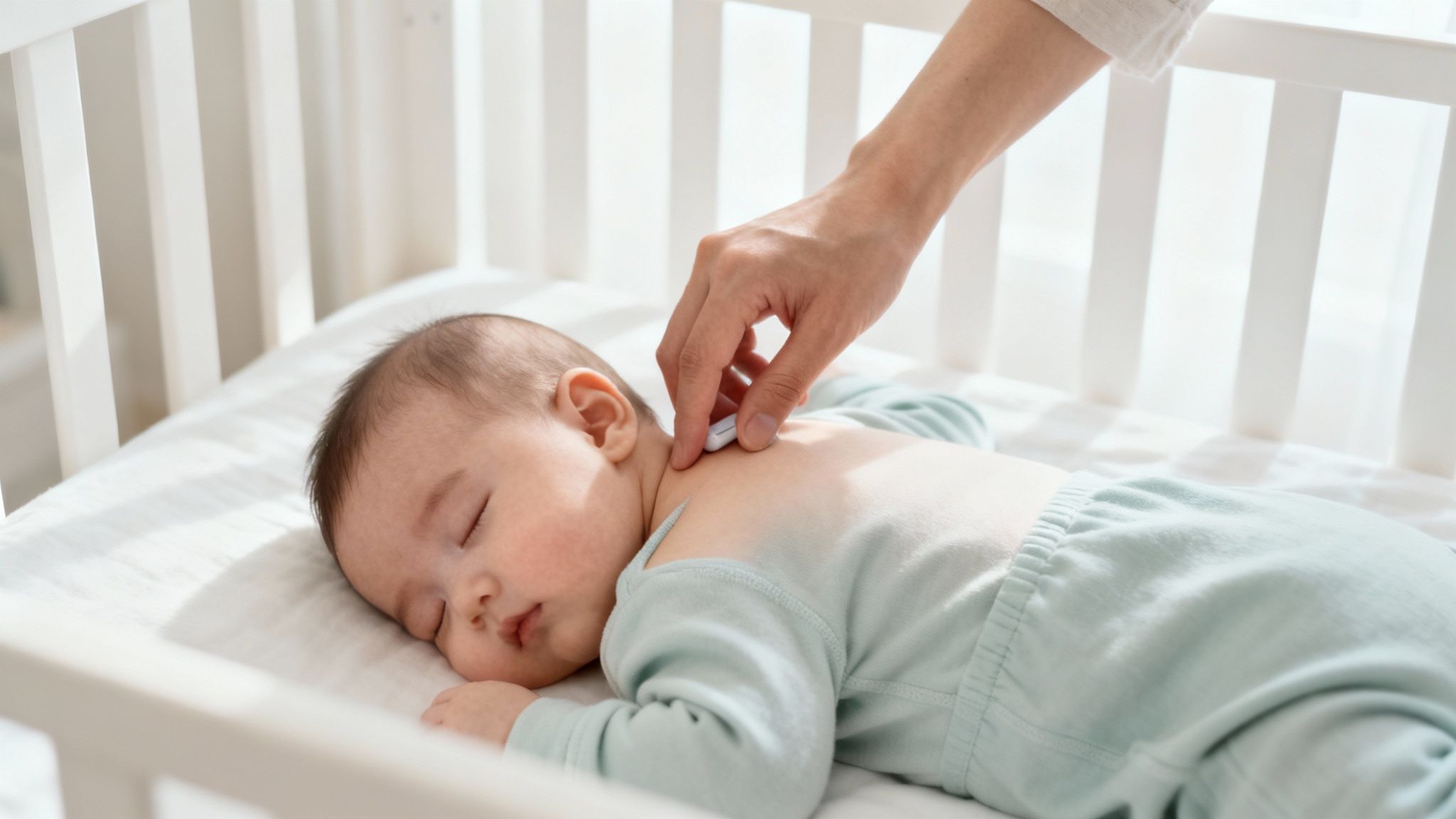
The Best Way to Check Your Baby's Temperature
It’s a natural reflex to feel your baby's hands or feet, but this can be misleading. A baby’s circulatory system is still a work in progress, so their little hands and feet are often cooler than the rest of their body. Cold hands don't necessarily mean you have a cold baby.
For a much more accurate read, gently place your hand on the back of their neck or their tummy. This gives you a true sense of their core body temperature. If their skin feels warm and dry, they're likely just right.
Signs Your Baby Is Too Hot
Overheating is a serious safety concern for babies and is a known risk factor for Sudden Infant Death Syndrome (SIDS). Learning the signs is a critical part of figuring out how to dress baby for sleep safely.
Keep an eye out for these signals:
- Flushed Cheeks: Rosy cheeks can be cute, but they can also mean your baby's body is working hard to cool down.
- Damp Neck or Hair: Any sweat or dampness around the nape of their neck or in their hair is a clear sign they are too warm.
- Rapid Breathing: If their breathing seems quicker or more shallow than normal, it might be a response to being too hot.
- Fussy and Restless: A baby who is too warm will often struggle to settle down, waking up more frequently and seeming irritable.
Expert Tip: If you think your baby is overheating, act immediately. The fix is simple: remove one layer. Unzip their sleep sack or take off a layer of clothing. If your baby has a fever, never add extra layers—dress them for the room’s temperature so their body can cool itself naturally.
How to Tell if Your Baby Is Too Cold
While overheating is the bigger safety issue, being chilly can also ruin a good night's sleep. A cold baby has to burn precious energy just to stay warm, which can lead to more frequent wake-ups.
Here’s what to look for if you think your little one is too cool:
- A Cool Core: When you do the neck or tummy check, their skin will feel slightly cool to the touch.
- Early Morning Waking: Are they suddenly waking up between 3 and 5 AM? This is often when the room temperature drops to its lowest point, and a chilly baby will let you know.
- Unusually Still: A baby who is too cold might seem a bit lethargic or less responsive than you're used to.
If their core feels cool, the solution is easy. Add a light layer, like swapping a short-sleeved bodysuit for a long-sleeved one under their sleep sack, or double-check that their sleepwear's TOG rating is right for the room temperature.
Making Nighttime Changes a Little Easier
Middle-of-the-night diaper changes are a given. The goal is to get them done as quickly and quietly as possible so everyone can get back to sleep. The right pajamas can be a lifesaver here.
Look for sleepwear with features designed for stealthy diaper changes:
- Two-Way Zippers: These are a game-changer. You can unzip from the bottom to access the diaper while their chest and arms stay warm and cozy.
- Sleep Gowns: Especially for newborns, an open-bottom sleep gown is the fastest option—no snaps or zips to fumble with in the dark.
By learning to read these simple cues and choosing the right gear, you can take the guesswork out of dressing your baby for bed. A comfortable baby is a safer baby, and that means a more restful night for the whole family.
A Few Non-Negotiable Rules for Safe Sleep
Getting your baby's sleep outfit just right is a fantastic start, but it's really just one piece of the puzzle. To create a truly safe space for your little one to rest, we have to look beyond the layers and swaddles. These life-saving guidelines are the bedrock of safe sleep, and they apply to every single nap and every single night.
These rules aren't complicated, and they’re backed by decades of research aimed at keeping babies safe while they sleep.
Always, Always Put Baby on Their Back to Sleep
If you only remember one rule, make it this one: back to sleep. This simple mantra, promoted tirelessly by the American Academy of Pediatrics (AAP), is the single biggest reason we've seen a dramatic drop in Sudden Infant Death Syndrome (SIDS).
It doesn't matter if it's a quick 20-minute nap or a long overnight stretch—always start your baby on their back. They should be in their own separate sleep space, like a crib or bassinet. Now, once a baby is strong enough to roll over on their own, you don't have to go in and flip them back. But you must always place them on their back to begin with.
Keep the Crib Totally Bare
Think of your baby’s crib as a minimalist retreat. The only things that belong inside are a firm mattress, a tightly fitted sheet, and your baby. That's it. Anything extra is not just clutter; it's a genuine safety hazard.
That means a hard "no" to all of the following:
- Loose blankets: These can easily get tangled or cover a baby's face, making it hard to breathe. A wearable blanket or sleep sack is the only safe way to go.
- Pillows: Babies simply don't need them, and they are a serious suffocation risk.
- Crib bumpers: This includes both the traditional padded bumpers and the newer mesh ones. They've been linked to infant deaths and serve no real purpose.
- Stuffed animals and toys: All soft objects should stay out of the crib until your child is much older.
Remember this simple phrase: if it's soft, it's out. A bare crib is a safe crib. The layers you dress your baby in are all the warmth and comfort they need.
Don't Fall for Dangerous Sleep Product Trends
The baby product market is flooded with new gadgets that promise better sleep. But just because something is for sale doesn't mean it's safe. It's so important to trust expert medical guidance, not clever marketing.
For example, the AAP's 2022 safe sleep update specifically warns against using weighted blankets, weighted sleepers, and swaddles with weights for infants. They pose a very real suffocation risk. The updated guidance also advises against putting hats on babies indoors once you're home from the hospital, as it can lead to overheating. For more details, you can dig into these crucial safety regulations for infant sleep.
The Bottom Line on Safe Sleep
- Room-share, don't bed-share: The AAP recommends having your baby sleep in your room—in their own crib or bassinet—for at least the first six months. Never in your own bed.
- Offer a pacifier: Studies have shown that offering a pacifier at bedtime and naptime can help reduce the risk of SIDS.
- Stick to a firm surface: Your baby’s sleep surface should be completely firm and flat, with no recline or soft spots.
Following these essential rules, on top of dressing your baby correctly for the temperature, is how you create the safest possible sleep environment. These aren't just suggestions; they are the foundation for a peaceful night's rest for your baby—and for your own peace of mind.
Quick Answers to Your Top Questions About Dressing Baby for Sleep
Even with all the charts in the world, you'll still have those middle-of-the-night moments where you second-guess everything. When it comes to knowing how to dress baby for sleep, some very specific questions always seem to pop up. Let's tackle the most common ones I hear from parents.
Should My Baby Wear a Hat to Sleep?
The short answer here is no. I know those little hospital beanies are impossibly cute, but once you're home, hats are not safe or necessary for indoor sleep. A baby’s head is one of their main tools for releasing extra body heat.
Covering their head with a hat can quickly trap that heat and lead to overheating, which is a significant risk factor for SIDS. Focus on layering their body correctly and always leave their head uncovered so they can regulate their temperature naturally.
Are Cold Hands a Sign That My Baby Is Too Cold?
This is probably the number one thing new parents worry about, but it’s usually not a problem! It’s completely normal for a baby to have chilly hands and feet. Their little circulatory systems are still a work in progress and aren't great at getting blood all the way out to their extremities yet.
Their hands and feet just aren't a good gauge of their core temperature. The best way to check if they're comfortable is to feel the back of their neck or their chest. If that area feels warm and dry, they're perfectly fine, even if their fingers feel a bit cool to the touch.
The Neck Check: The back of the neck or the tummy is your go-to spot for a quick temperature check. If it's warm and dry, you've dressed them perfectly. Sweaty? Take a layer off. A little cool? Time to add one.
When Is It Time to Stop Swaddling?
This is a huge safety milestone, so you’ll want to be watching for it. You absolutely must stop swaddling as soon as your baby shows any signs of trying to roll over. For some babies, this can happen as early as two months old.
A swaddled baby who can roll is in a very dangerous situation. If they manage to get onto their stomach, their arms are pinned, and they can’t push themselves up or reposition their head. This creates a serious risk of suffocation. The moment you see those first wiggles and rolling attempts, it’s time to switch to a sleep sack or wearable blanket for every single sleep.
Is It Okay to Use a Sleep Sack That’s a Little Too Big?
A proper fit is non-negotiable when it comes to sleep sacks. It can be tempting to buy a size up so they can grow into it, but a sleep sack that’s too large is a major safety hazard.
If it's too loose, the fabric around the neck can easily slide up and cover your baby’s nose and mouth, which can obstruct their breathing.
Here’s what to look for to ensure a safe fit:
- The Neckline: It should be snug, not tight. You shouldn't be able to pull the fabric up over their chin or mouth. A good rule of thumb is being able to fit two fingers between the sleep sack and your baby's neck.
- The Armholes: Make sure the armholes are also snug enough that your baby can't slip their arms back inside the sack. This prevents the fabric from bunching up around their face.
Always stick to the correct size based on your baby’s current weight and height. It ensures they’ll be safe and snug all night long.
At Yarafly.com, we know that soft, breathable fabrics are the foundation of a good night's sleep. Take a look at our collection of cozy pajamas and sleepwear, all designed with your baby's safety and comfort as our top priority. You can find the perfect layers for any season right here: https://yarafly.com.