

on December 29, 2025
When the sun comes out and the days get longer, summer brings endless opportunities for play. But it's also a time when a strong immune system is crucial for keeping kids healthy and active. A child's immunity relies heavily on the right balance of vitamins and minerals, which they should ideally get from a wholesome diet. Think vibrant fruits, colorful vegetables, lean proteins, and healthy fats. These foods provide the essential building blocks their growing bodies need to fight off germs and thrive all season long.
Your Guide to Essential Nutrients for a Strong Immune System
As temperatures climb, it’s time to focus on a diet that's not only refreshing but also packed with immune-boosting power. Picking the right foods is about more than just filling their tummies; it’s about fortifying their natural defenses. The secret is to focus on a variety of whole foods rich in key vitamins and minerals that support a robust immune response.
It’s no surprise that summer sees a huge demand for fresh produce. This shift towards healthier, natural foods is part of a larger wellness trend. The global market for outdoor activities and the gear associated with it, like durable clothing, is valued at a whopping USD 34.74 billion in 2025 and is expected to grow to USD 51.57 billion by 2032. This reflects a broader parental focus on a healthy, active lifestyle for their children. You can dig into more details about the outdoor clothing market in this detailed report.
Key Nutrients to Look For
Sorting through nutritional advice can feel overwhelming, but a few key nutrients are the superstars of immune support. Think of them as your child's personal team of bodyguards. You're looking for foods rich in vitamins C, D, and A, as well as minerals like zinc and iron. Whether it's a juicy orange for a snack or a handful of spinach blended into a smoothie, every bite can contribute to their well-being.
To make your grocery trips a little easier, we’ve put together a quick guide to these immune-boosting heroes.
Immune-Boosting Nutrients at a Glance
This little cheat sheet breaks down what really matters for your child's immune health, so you can quickly spot the best foods when you're shopping.
| Nutrient | Why It Matters for Immunity | Food Sources |
|---|---|---|
| Vitamin C | An antioxidant that helps produce white blood cells, which fight infection. | Oranges, strawberries, bell peppers, broccoli, kiwi. |
| Vitamin D | Crucial for activating immune defenses. Often called the "sunshine vitamin." | Fatty fish (salmon), fortified milk and yogurt, egg yolks. |
| Zinc | Helps the immune system fight off invading bacteria and viruses. | Lean meat, beans, nuts, whole grains, dairy products. |
| Vitamin A | Supports the health of the skin and tissues in the mouth, stomach, and intestines. | Carrots, sweet potatoes, spinach, kale, mangoes. |
| Iron | Important for helping red blood cells carry oxygen, vital for immune cell function. | Red meat, poultry, beans, lentils, fortified cereals. |
Think of these nutrients as your go-to checklist. If you can incorporate a variety of these foods into your child's diet, you'll know you're supporting their immune system for whatever summer fun they have in mind.
Why a Balanced Diet Matters for Kids' Immunity
Building a strong immune system for your child is about more than just one "superfood." The real secret to a happy, healthy kid is a consistent, balanced diet filled with a rainbow of nutrients. Think of it like this: their immune system is a complex army, and each vitamin and mineral is a different type of soldier. You need all of them working together to mount a strong defense against germs.
For busy, growing kids, a diet lacking in essential nutrients can leave their immune systems vulnerable. It can lead to more frequent colds, longer recovery times, and general fatigue. While processed foods and sugary snacks are convenient, they often lack the powerful vitamins and antioxidants found in whole foods.
The goal is to provide a diet that works with your child's body, not against it, giving them the fuel they need to stay resilient and energetic, no matter what the season brings.
The Power of Vitamins and Minerals from Food
When it comes to your child's health, whole foods are the absolute MVP. Getting vitamins and minerals directly from fruits, vegetables, and proteins is far more effective than relying on supplements alone. The nutrients in food come packaged with fiber, enzymes, and other compounds that help the body absorb and use them properly.
Foods rich in Vitamin C, like citrus fruits and bell peppers, are parent's best friends—they help the body produce more infection-fighting white blood cells. Zinc, found in beans and nuts, is another fantastic choice, known for its role in developing and activating immune cells. These natural sources are gentle on a child's system and provide a broad spectrum of benefits.
A balanced diet is the other half of the immunity equation. It ensures your child gets a wide range of micronutrients that work in synergy.
A diet filled with a variety of colorful foods is like giving your child a full toolkit for their immune system. Each color provides different antioxidants and phytonutrients that support overall health.
From the beta-carotene in bright orange carrots (which the body converts to Vitamin A) to the anthocyanins in deep purple berries, this diversity is key. Aiming for a plate that looks like a rainbow is a simple and effective strategy for ensuring a well-rounded nutritional intake.
This little flowchart breaks down what we're looking for in an immune-supporting diet.
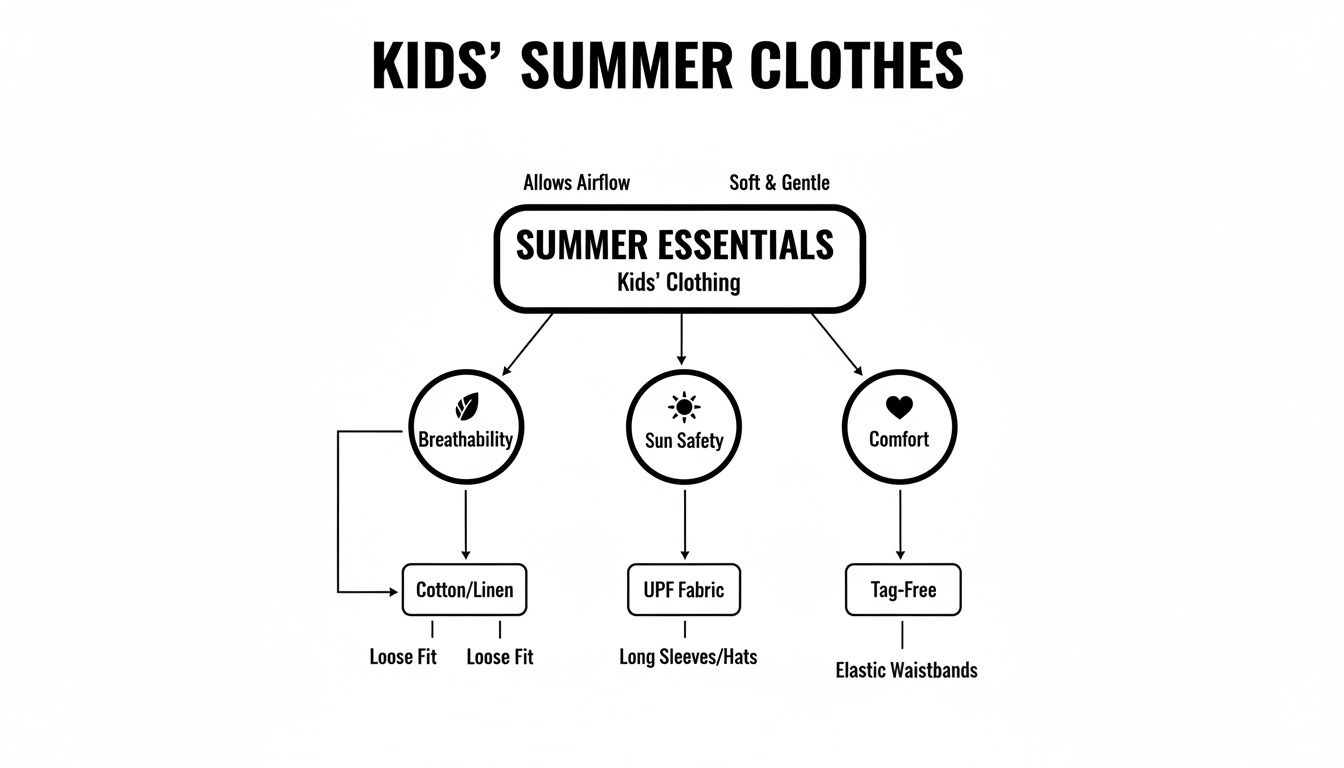
As you can see, a strong immune system is built on a foundation of balanced nutrition, hydration, and healthy lifestyle habits—all working together to keep kids feeling good all season long.
Probiotics and Gut Health
While vitamins and minerals are critical, don't overlook the gut! A healthy gut microbiome is a cornerstone of a strong immune system. This is where probiotics come in. Probiotics are the "good" bacteria that live in the digestive tract and help keep the "bad" bacteria in check.
A healthy balance of gut bacteria is essential for:
- Properly digesting food and absorbing nutrients.
- Supporting the gut lining, which acts as a barrier against pathogens.
- Regulating the immune system's response to infection.
You can boost your child's probiotic intake with fermented foods. Look for yogurt with "live and active cultures," kefir (a drinkable yogurt), and other fermented items like sauerkraut or kimchi if your child has an adventurous palate. These foods introduce beneficial bacteria directly into their system, supporting both digestive health and overall immunity. Just check the label for those live cultures, and you can feel confident you're making a great choice for their gut health.
Combining Healthy Eating with Summer Fun
Keeping your child healthy during the summer is non-negotiable, but it doesn't have to mean battling over broccoli. The real secret is making nutritious food fun and delicious, weaving it right into their daily summer activities. When you find the right recipes and presentation, healthy eating stops feeling like a chore and just becomes part of the delicious summer experience.
Think of nutrient-dense foods as a super-powered shield that works from the inside out. A smoothie packed with Vitamin C-rich berries or a veggie-loaded pasta sauce provides powerful antioxidants that support their immune system. That's serious peace of mind for those long, active afternoons at the park or pool.

Making Healthy Food Fun and Fuss-Free
Here’s a little parenting win: kids are actually excited to eat healthy food when it looks and tastes amazing. Smoothies, an absolute must for summer, can be blended into awesome, vibrant colors—think a "Hulk Green" spinach smoothie or a "Princess Pink" strawberry-beet blend. When your child is thrilled with the name and color, getting them to drink their veggies is suddenly a breeze.
Next, you get them involved. A complete healthy lifestyle isn't just about what they eat; it's about building positive habits around food.
A healthy diet is your child's first line of defense, but getting them involved in the kitchen and making food fun creates a foundation for lifelong wellness. It’s how you make sure every meal is as nourishing as it is enjoyable.
Let them help wash berries, tear lettuce for a salad, or press the button on the blender. If you need some help finding the perfect baby sun hat for outdoor food prep picnics, we have you covered there too. And don't forget fun shapes! Use cookie cutters to make melon or sandwiches into stars and hearts.
Integrating Healthy Habits into Daily Routines
The key to making healthy eating second nature is consistency. By making these nutritious foods a normal part of their summer routine, you’re teaching them that eating well is just what we do to feel strong and have energy to play.
- Make it Accessible: Keep a bowl of fresh fruit on the counter and pre-cut veggies with dip in the fridge. It makes it so easy for them to grab a healthy snack.
- Let Them Choose: Give them a couple of healthy options. "Do you want an apple with peanut butter or yogurt with berries?" This little bit of control makes them far more likely to eat it without a fuss.
- Lead by Example: When your kids see you enjoying a big salad or sipping a green smoothie, they'll want to copy you. It’s a simple monkey-see, monkey-do.
Turning healthy eating into a family habit makes it feel positive and normal. To really drive the point home in a playful way, you can check out some engaging sun safety activities for kids that pair perfectly with a healthy picnic.
Beyond the Plate: Other Immune-Boosting Strategies
While a good diet is your best friend in the fight against summer sniffles, a layered approach is always the smartest way to go.
- Prioritize Sleep: During sleep, the body produces proteins called cytokines that are crucial for fighting infection and inflammation. Ensure your child gets age-appropriate rest.
- Stay Active: Regular, moderate exercise can boost the production of immune cells. Encourage plenty of outdoor play, bike rides, and running around.
- Stay Hydrated: Make sure they're sipping water all day long. Water helps transport nutrients to cells and flush out toxins.
By mixing delicious, nutrient-dense foods with these simple habits, you can let your kids enjoy every bit of summer magic while keeping their immune systems strong and ready for anything.
How to Build a Healthy Summer Meal Plan
Building a healthy summer meal plan for your little one shouldn't feel like you need to become a gourmet chef overnight. Trust me, the secret is all in the strategy: simple, kid-friendly recipes packed with immune-boosting ingredients. The idea is to have a core collection of fantastic, easy meals that you can rotate to create a diverse and delicious menu.
Think of it like a simple recipe for success: a few great breakfast ideas + a few great lunch/dinner options = endless healthy possibilities. When you have go-to recipes that you know your kids will love, you’ll find mealtimes are less frantic, you reduce food waste, and you ensure they're getting the nutrients they need. The goal is a simple but mighty meal rotation that’s ready for anything, from a quick post-pool snack to a satisfying family dinner.
This smart approach to meal planning is getting more popular as parents look for ways to promote health without adding stress. The global apparel market, which includes children's clothing, is valued at USD 1.9 trillion in 2025 and is expected to grow to USD 2.6 trillion by 2035, showing how parents invest in all aspects of their children's well-being. With e-commerce projected to hit $779.30 billion globally by 2025, it's easier than ever to get fresh groceries delivered right to your door. For a deeper dive into market trends, you can check out a full report on futuremarketinsights.com.
Smoothie Recipes for Babies, Kids, and Toddlers
The real magic of a smoothie is its beautiful simplicity. It's the perfect vehicle for packing in fruits, veggies, and healthy fats. Here are some kid-approved recipes.
-
Sunshine Smoothie (6+ months):
- 1/2 ripe banana
- 1/4 cup mango chunks (fresh or frozen)
- 2 tbsp plain whole-milk yogurt
- A splash of water or breastmilk/formula to thin.
- Blend until perfectly smooth.
-
Green Monster Smoothie (Toddlers & Kids):
- 1 large handful of fresh spinach
- 1/2 cup pineapple chunks
- 1/2 banana
- 1/2 cup milk (dairy or non-dairy)
- 1 tbsp chia seeds
- Blend until creamy. The pineapple completely masks the taste of the spinach!
-
Berry Blast Smoothie (All Ages):
- 1 cup mixed berries (strawberries, blueberries, raspberries)
- 1/2 cup plain yogurt or kefir
- 1/4 cup orange juice (for a Vitamin C boost)
- Blend until smooth. This is a classic for a reason!
You can find even more ideas for trendy yet comfy looks to wear while enjoying these treats in our complete children’s summer fashion guide for 2025.
Food Recipes for Picky Eaters
Okay, I know "picky eater" can be a challenge. Let’s make it real with some practical, immune-boosting recipes they'll actually eat.
Here's a simple blueprint for creating meals that are both nutritious and appealing to little ones.
| Meal Idea | Why It Works for Picky Eaters | Immune-Boosting Ingredients |
|---|---|---|
| "Hidden Veggie" Pasta Sauce | The familiar taste of pasta sauce masks finely grated zucchini and carrots. | Carrots (Vitamin A), Tomatoes (Vitamin C), Zucchini (Antioxidants). |
| Chicken & Veggie Skewers | Food on a stick is fun! Kids love the novelty and dipping them in sauce. | Chicken (Protein, Zinc), Bell Peppers (Vitamin C), Zucchini. |
| Mini Turkey Meatballs | Small, easy to handle, and perfect for dipping in marinara sauce. | Turkey (Iron, Zinc), Oats (instead of breadcrumbs for fiber), Garlic. |
| Sweet Potato "Fries" | A familiar shape with a slightly sweet taste. A healthy alternative to regular fries. | Sweet Potatoes (Vitamin A, Vitamin C), baked instead of fried. |
| Broccoli "Tots" | A cheesy, tot-like snack made with broccoli and whole-wheat breadcrumbs. | Broccoli (Vitamin C), Cheese (Calcium, Protein), Eggs (Vitamin D). |
When you use a framework like this, you can be sure your child is getting the nutrients they need for a strong immune system without the mealtime battles. This smart system makes feeding kids healthy, easy, and even fun.
Feeding Kids for Summer Vacations and Events
Summer is packed with memory-making moments, from beach trips and family reunions to backyard barbecues that stretch late into the evening. When feeding kids during these special days, it’s all about hitting that perfect balance between fun, festive food and genuine nutrition. You want snacks and meals that feel like a treat but still provide the energy and immune support they need to run, play, and just be kids.
Think of it as offering "elevated basics." A colorful fruit platter, homemade popsicles made with real fruit and yogurt, or mini whole-wheat pizzas all fit the bill. These kinds of foods feel special but are still packed with vitamins and are easy for little hands to manage, which means your child stays happy and well-fueled even when they’re on the go. Yarafly’s playful spirit extends beyond clothes, reminding us that every aspect of childhood, including food, should be joyful.
Packing Smart Snacks for Summer Getaways
Let’s be honest—it’s incredibly easy to fall back on processed snacks during a family vacation. We’ve all been there, trying to manage hungry kids on the road. A little bit of planning, though, goes a long way. The secret is to think about portable, nutrient-dense options that don't require refrigeration.
To keep things organized and stress-free, using a checklist from a resource like an ultimate family vacation packing list can be a real sanity-saver, and you can apply the same logic to your snack bag.
A few simple snack-packing tricks can make a world of difference:
- Prep Ahead: Wash and chop fruits and veggies at home. Portion out things like trail mix or crackers into individual bags.
- Think Protein: Include snacks with protein to keep them fuller longer, like cheese sticks, hard-boiled eggs, or single-serving packs of nut butter.
- Use an Insulated Bag: A small cooler or insulated lunch bag is a game-changer for keeping things like yogurt, cheese, and fruit fresh on warm days.
Packing for a family trip isn’t just about clothes; it’s about having the right food. A few well-chosen, healthy snacks will always beat a bag full of sugary, processed items that lead to energy crashes.
Embracing Healthy and Hydrating Treats
You’ve probably noticed the trend towards healthier, homemade treats for kids taking off lately, and for good reason. As more families focus on wellness, this style has become the go-to for capturing that relaxed-yet-healthy summer vibe. It’s all about using whole ingredients, bright colors, and naturally sweet flavors that work just as well for an afternoon snack as they do for a party treat.
This isn’t some niche trend, either—it’s part of a massive industry. The global resort wear market, which caters to vacationing families, is expected to reach USD 25.98 billion in 2025 and is projected to soar to USD 45.19 billion by 2034. This growth reflects a holistic approach to family travel, where health and well-being are prioritized alongside fun and relaxation.
Think homemade fruit popsicles, frozen yogurt bark with berries, and "nice cream" made by blending frozen bananas. These are treats designed to be both delicious and hydrating—the kind of snacks that become part of the summer memories. They’re satisfying enough to feel special but are packed with nutrients, perfectly capturing the carefree spirit of a great summer vacation.
Keeping Your Kitchen Routine Simple and Healthy
From sticky popsicle drips on the counter to a constant demand for snacks, summer fun can be pretty tough on your kitchen routine. Keeping your family fed with healthy, immune-boosting meals doesn't have to be a chore, though. With a few simple tricks, you can streamline your process and make sure nutritious options are always within reach.
The real secret? A little bit of prep. Most classic summer meals—think salads, grilled proteins, and fresh fruit—are so much easier to assemble when the components are ready to go. A quick Sunday afternoon chopping session can be the difference between a stressful weeknight and a relaxed, healthy dinner.
Tackling Common Mealtime Challenges
Let’s be honest, summer adventures often come with a side of chaos. Whether it's kids who are "too busy playing to eat" or the challenge of getting a balanced meal on the table after a long day at the pool, prompt action and planning are your best friends. Don't let a busy schedule sideline healthy eating.
Here’s how to handle the most frequent offenders:
- The "I'm Not Hungry" Kid: Instead of a big meal, offer smaller, nutrient-dense "mini-meals" or snacks throughout the day. A smoothie, a cheese stick with fruit, or a small bowl of yogurt can keep their energy up.
- The Sugar Craving: Keep naturally sweet and hydrating options front and center. A big bowl of chilled watermelon, frozen grapes, or homemade fruit popsicles can satisfy a sweet tooth without the sugar crash.
- The Time Crunch: Rely on batch cooking. Grill extra chicken breasts for salads later in the week, make a big pot of quinoa, and wash and chop all your veggies at once. This makes throwing together a healthy meal in minutes a breeze.
For a deeper dive into keeping things clean and organized, we've got more washing and maintenance tips for your child's clothes that can also apply to kitchen linens.
Preserving Nutrients and Storing for Later
Fresh produce is the star of summer, but it needs a little love to stay that way. Proper storage is key to preserving those vital vitamins and minerals.
After every grocery trip, take a few minutes to store your produce correctly. This simple step is the most effective way to prevent waste and ensure your family gets the maximum nutritional benefit from their food.
A quick word of advice: don't wash berries until you're ready to eat them, as moisture can lead to mold. Store leafy greens with a paper towel in the bag to absorb excess moisture. When you have an abundance of summer produce, a freezer is your best friend. Wash, chop, and freeze fruits like peaches and berries on a baking sheet before transferring them to a bag. This "flash freezing" prevents them from clumping together and makes them perfect for smoothies all year long.
When summer finally winds down, these frozen goodies will be a healthy reminder of the season's bounty. A little effort now means you'll have immune-boosting ingredients ready for all your family's adventures.
Got Questions About Kids' Summer Nutrition? We've Got Answers.
When it comes to feeding your kids for optimal health, a few questions always seem to pop up. Between growth spurts and picky eating, it’s easy to feel a little lost. Let's tackle some of the most common concerns parents have so you can feel confident building your little one's immune-boosting summer menu.
How Do I Handle a Picky Eater Who Won't Touch Vegetables?
We’ve all been there—it's tempting to give in and just serve pasta again. But for a strong immune system, veggies are a big deal. The key is to be patient, creative, and persistent. Hiding veggies is a great start, but also continue to offer them in their whole form.
For picky eaters, try shredding zucchini or carrots into meatballs or pasta sauce. Smoothies are another fantastic way to sneak in a handful of spinach. But don't give up on exposure! Serve a tiny piece of broccoli alongside a favorite food with no pressure to eat it. Sometimes it can take 10-15 exposures before a child will try something new. Most brands, including Yarafly, encourage a playful approach to all aspects of childhood.
Are Supplements Necessary to Boost My Child's Immunity?
If your child eats a reasonably varied diet, they likely don't need a general multivitamin. The vitamins and minerals from whole foods are always better absorbed and utilized by the body.
The golden rule here is food first. Focus on a diet rich in a rainbow of fruits and vegetables, lean proteins, and whole grains. These foods provide a complex synergy of nutrients that can't be replicated in a pill.
However, some pediatricians may recommend a Vitamin D supplement, as it's difficult to get enough from food alone. Always talk to your child's doctor before starting any supplements. They can assess your child's individual needs and recommend the right course of action.
How Much Food Does My Child Really Need to Eat?
Honestly, you probably need to worry less than you think. A child's appetite can vary greatly from day to day based on their growth, activity level, and even the weather. The smartest strategy is to trust their internal hunger cues.
For a toddler or young kid, here’s a solid guiding principle:
- The Parent Provides: Your job is to offer a variety of healthy foods at regular meal and snack times.
- The Child Decides: Their job is to decide what to eat from the options provided and how much.
- Offer Small Portions: Start with small servings and let them ask for more. This is less overwhelming than a huge plate.
- Focus on the Weekly Average: Don't stress over one "bad" eating day. Look at their overall intake over the course of a week.
This simple approach reduces mealtime power struggles and helps them build a healthy relationship with food. The goal is to provide consistent opportunities for healthy eating, keeping things simple and totally manageable.
Ready to build that perfect summer menu? Take a peek at the Yarafly collection for durable, playful clothes for all their healthy summer adventures. Shop now for cheerful and wallet-friendly styles at https://yarafly.com.