

on December 09, 2025
Picking out the right clothes for your baby boy is less about fashion and more about comfort, practicality, and safety. Honestly, the best strategy is to build a simple, versatile wardrobe from the ground up. Start with foundational pieces like soft bodysuits and cozy sleepers that make those constant daily changes as quick and painless as possible.
Keeping things simple means your little guy stays comfortable, and you get to navigate the wonderful chaos of new parenthood with one less thing to worry about.
Building Your Baby Boy's First Wardrobe
Welcome to the sweet (and sometimes overwhelming) world of dressing your new baby boy! Putting together his first wardrobe might feel like a huge project, but it really doesn't have to be. The secret is to focus on the absolute essentials that will see you through those first few precious months.
Think of it like creating a "capsule wardrobe." You're aiming for a core collection of pieces that are easy to mix, match, and layer. Forget those complicated, multi-piece outfits for now—they're a nightmare during a 2 a.m. diaper change. Opting for simple, functional clothes will save you time and make sure your baby is always comfortable while he wiggles, naps, and explores his brand-new world.
The Foundation of a Practical Wardrobe
To build a truly functional collection, you have to get back to basics and think about what a newborn actually needs day-to-day. The goal is to choose pieces that serve a real purpose.
- Comfort is King: A baby's skin is incredibly sensitive. Stick with soft, breathable fabrics like cotton to keep irritation at bay.
- Practicality for Parents: This is huge. Look for clothes with easy-on, easy-off features. Zippers and envelope necklines are absolute lifesavers during those never-ending changes.
- Safety First: Steer clear of clothes with small, detachable parts like buttons or decorative beads. These can be serious choking hazards.
This practical-first approach is more than just a smart idea; it's a major trend. The global market for baby boy clothing is expected to grow substantially, potentially hitting between USD 10.5 billion and USD 13.8 billion by 2033. What's driving this? Parents are increasingly looking for well-made, premium infant wear that blends great style with top-notch safety and comfort. You can explore more about the baby apparel market trends and see just how much this mindset is shaping the industry.

To get you started, here’s a straightforward checklist of the must-have items for your baby boy’s first three months.
Quick-Start Checklist for a Baby Boy's Wardrobe
| Garment Type | Recommended Quantity (0-3 Months) | Key Features |
|---|---|---|
| Bodysuits (Onesies) | 7-10 | Envelope necklines, snap closures at the crotch |
| Sleepers (Footie Pajamas) | 5-7 | Zippers (especially two-way) for easy changes |
| Pants/Leggings | 4-6 pairs | Soft, stretchy waistbands that won't dig in |
| Shirts (Long & Short Sleeve) | 4-5 | Side-snaps or wide neck openings |
| Hats & Socks | 2-3 hats, 5-7 pairs of socks | Soft, breathable fabric; socks that stay on |
| Swaddles/Sleep Sacks | 2-3 | Secure closures (Velcro or zipper) for safe sleep |
This list gives you a solid foundation to build upon. You can always add more specialized or stylish pieces later, but these basics will ensure you’re prepared for anything.
Boosting Your Child's Immunity Through Nutrition
While the right clothes for your baby boy keep him comfortable and safe on the outside, what you feed him builds his strength from the inside. A strong immune system is your child’s best defense against common illnesses. Nutrition plays a vital role, as a well-fed immune system is better equipped to fight off germs.
A child’s immunity develops over time, and a diet rich in essential vitamins and minerals provides the building blocks for a robust defense system. Key nutrients like Vitamin C, Vitamin D, zinc, and iron are crucial for immune cell function and overall health.
Key Nutrients for a Strong Immune System
Focusing on a variety of whole foods is the best way to ensure your little one gets the nutrients they need.
- Vitamin C: Found in citrus fruits, berries, bell peppers, and broccoli, Vitamin C helps stimulate the formation of antibodies.
- Vitamin D: Often called the "sunshine vitamin," it's also found in fatty fish and fortified milk. It's essential for activating our immune defenses.
- Zinc: This mineral, found in lean meat, beans, nuts, and whole grains, helps the immune system work properly and may help control inflammation.
- Iron: Found in red meat, poultry, beans, and spinach, iron is crucial for helping immune cells mature and multiply.
- Probiotics: Healthy gut bacteria, found in yogurt and other fermented foods, play a significant role in immune health.
Introducing a rainbow of fruits and vegetables into your child's diet ensures they get a wide array of these powerful nutrients.
Immune-Boosting Smoothie Recipes
Smoothies are a fantastic and often "stealthy" way to pack nutrients into a child's diet, especially for picky eaters. They are easy to digest and can be tailored for babies, toddlers, and older kids.
"Sunshine" Orange Smoothie (6 months+)
- 1/2 cup plain whole milk yogurt (probiotics)
- 1/2 peeled orange (Vitamin C)
- 1/4 cup cooked carrots (Vitamin A)
- 1 tablespoon mango chunks (Vitamins A & C)
- Blend until smooth. For younger babies, you can thin with a little water or breast milk.
Green Power Smoothie (Toddler+)
- 1 cup spinach (Iron & Vitamin C)
- 1/2 banana (Potassium)
- 1/2 cup pineapple (Vitamin C & enzymes)
- 1/4 cup unsweetened almond milk
- 1 tablespoon hemp seeds (Omega-3s)
- Blend until creamy. The pineapple and banana sweeten it naturally, masking the spinach flavor.
Fun Food Ideas for Picky Eaters
Getting a toddler to eat a balanced meal can be a challenge. The key is to make food fun and appealing without turning mealtimes into a battle.
- "Dippy" Plates: Kids love to dip! Serve small strips of chicken, bell peppers, cucumbers, and whole-grain crackers with a side of hummus or yogurt dip.
- Food Art: Use cookie cutters to make fun shapes out of sandwiches, fruits like melon, or cheese. Create a smiley face on their oatmeal with berries.
- Mini "Muffins": Bake mini egg muffins loaded with finely chopped veggies like spinach, bell peppers, and zucchini. They are perfectly portioned and easy for little hands to hold.
- "DIY" Pizza: Use a whole-wheat pita bread as a base. Let your child spread the tomato sauce (rich in Vitamin C) and sprinkle on cheese and their choice of finely diced veggies.
By focusing on nutrient-dense foods and presenting them in a creative way, you can support your child's developing immune system and set them up for a lifetime of healthy eating habits.
How to Navigate Baby Clothing Sizes and Fit
Trying to figure out baby clothes sizes can feel like you're solving a puzzle, and half the pieces are from a different box. You'll see "3-month" on a tag from one store, and it will fit completely differently from another. It's a universal frustration for parents, but here's the secret: that age on the tag is just a ballpark guess, not a hard-and-fast rule.
The most reliable way to get the right fit is to go by your baby’s actual measurements. His current weight and length are your best friends here. Think of these numbers as your personal shopping guide, ensuring every little outfit you pick is both comfortable and safe for him.
Look Beyond the Age on the Tag
Almost every brand has a size chart that matches their sizing to specific weight and height ranges. Before you add anything to your cart, take a quick look at that chart. It’s the single best way to cut through the confusion and choose clothes that will fit your little one right now.
And don't forget—babies grow at a truly astonishing speed. A great rule of thumb, especially for everyday staples like bodysuits, is to buy one size ahead. This simple trick gives your baby room for those sudden growth spurts and helps you get more mileage out of his wardrobe, saving you from constant, last-minute shopping trips. For a deeper look into this, check out our complete parent's guide to understanding children's clothing sizes.
To help you get started, here is a general reference chart that shows how standard US baby sizes typically line up with age, weight, and height.
Standard Baby Boy Clothing Size Chart
| Size Label | Typical Age Range | Weight (lbs/kg) | Height (in/cm) |
|---|---|---|---|
| Preemie (P) | Before birth | Up to 5 lbs / 2.3 kg | Up to 17 in / 43 cm |
| Newborn (NB) | 0–1 month | 5–8 lbs / 2.3–3.6 kg | Up to 21.5 in / 55 cm |
| 0-3 Months | 0–3 months | 8–12.5 lbs / 3.6–5.7 kg | 21.5–24 in / 55–61 cm |
| 3-6 Months | 3–6 months | 12.5–16.5 lbs / 5.7–7.5 kg | 24–26.5 in / 61–67 cm |
| 6-9 Months | 6–9 months | 16.5–20.5 lbs / 7.5–9.3 kg | 26.5–28.5 in / 67–72 cm |
| 9-12 Months | 9–12 months | 20.5–24.5 lbs / 9.3–11.1 kg | 28.5–30.5 in / 72–78 cm |
| 12-18 Months | 12–18 months | 24.5–27.5 lbs / 11.1–12.5 kg | 30.5–32.5 in / 78–83 cm |
| 18-24 Months | 18–24 months | 27.5–30 lbs / 12.5–13.6 kg | 32.5–34 in / 83–86 cm |
Remember, this is just a starting point. Always defer to the specific brand’s chart when you can, as their sizing might vary slightly.
How to Tell When Clothes Are Too Tight
Knowing when an outfit has run its course is crucial for your baby's comfort and safety. A good fit allows him to kick, wiggle, and explore his world without being restricted.
Keep an eye out for these tell-tale signs that it’s time to move up to the next size:
- Red Marks on Skin: When you undress your baby, check for little indentations or red marks around his wrists, ankles, thighs, or neckline. These are a dead giveaway that the fabric is digging in and getting too tight.
- Straining Snaps or Zippers: If you have to stretch the fabric to get the snaps on a bodysuit to close, or if a zipper is tough to pull up, the item is officially too small.
- Limited Movement: Watch how he moves. If his clothes seem to be holding his arms or legs back, making it hard for him to stretch out or crawl, it's definitely time for a bigger size.
This flowchart can be a lifesaver when you're trying to make a quick outfit decision based on what your day (or night) looks like.
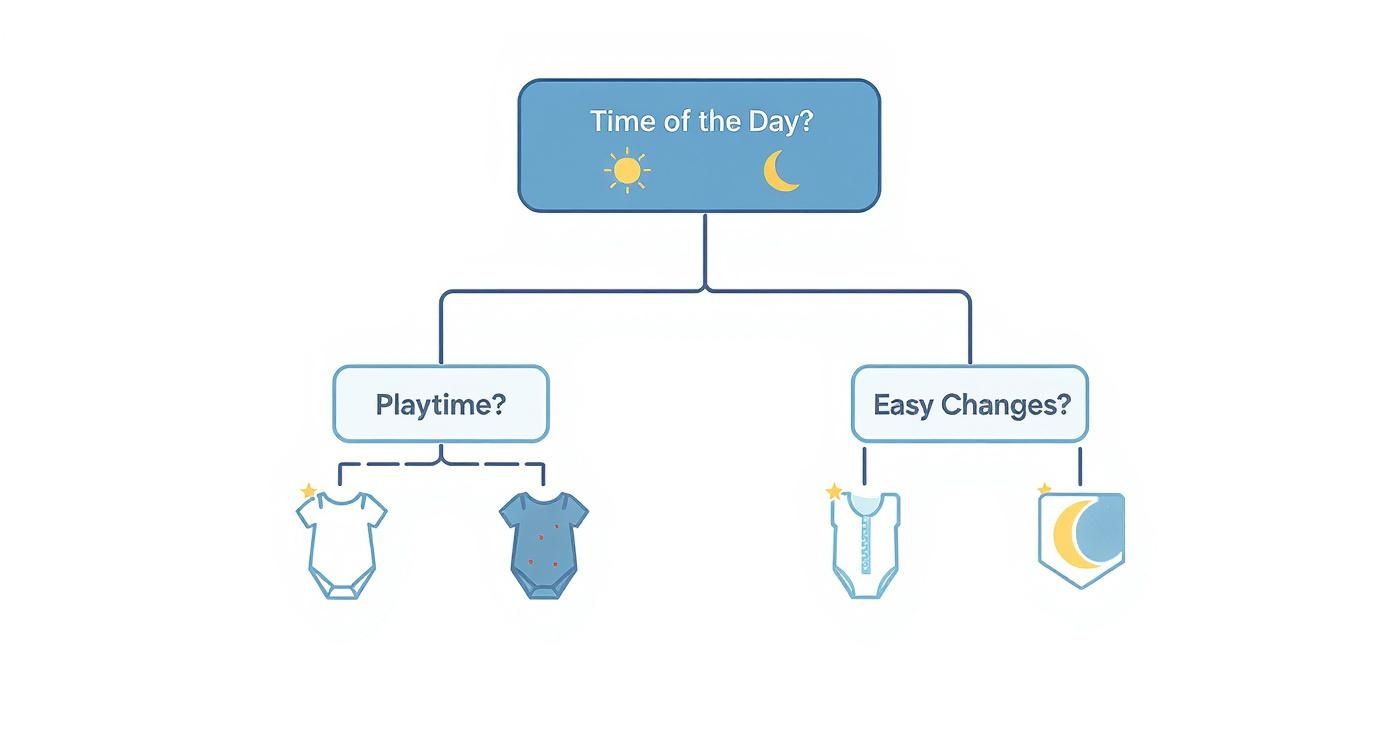
It helps you quickly narrow down your choices, pointing you toward practical things like rompers for playtime or zippered sleepers when you know you'll be doing a diaper change in the middle of the night.
The baby apparel market is huge, with an estimated value of USD 67.47 billion in 2024 and a forecast to hit USD 70.86 billion in 2025. All those options are great for parents, but it also makes understanding sizing that much more important for making smart buys.
Ultimately, by focusing on weight and height instead of just the age on the tag and keeping an eye out for signs of a poor fit, you can confidently dress your baby boy in clothes that will keep him happy, comfy, and ready for whatever adventure comes next.
Choosing the Best and Safest Fabrics
A baby’s skin is incredibly delicate—in fact, it’s about five times thinner than an adult’s. That's why the fabric you choose for his clothes is one of the most important decisions you'll make. Think of his outfits as a second skin; they need to be soft, breathable, and gentle enough to prevent any irritation.
When you’re shopping for clothes for a baby boy, the fabric tag is just as crucial as the size or style. Focusing on natural, high-quality materials is the best way to keep his skin healthy and happy.
The Best Fabrics for a Baby's Sensitive Skin
Not all fabrics are created equal, especially when it comes to baby clothes. Some are champions of comfort and breathability, while others can trap heat and lead to a fussy, unhappy baby. Natural fibers are always the best place to start.
Here are the top-tier choices for your little guy’s wardrobe:
- Organic Cotton: This is really the gold standard. It’s grown without harsh pesticides or synthetic fertilizers, making it exceptionally soft and perfect for sensitive skin. Plus, it’s highly breathable, helping to regulate your baby’s body temperature naturally.
- Bamboo Rayon: Famous for its silky-smooth feel, bamboo is another fantastic option. It’s naturally hypoallergenic and wicks moisture away from the skin, keeping your baby dry and comfortable even on warmer days.
- Muslin: You’ll often see this used for swaddles, and for good reason. Muslin is a lightweight, loosely woven cotton with an open weave that allows for incredible airflow, significantly reducing the risk of overheating.
Organic options, like these stylish organic children's T-shirts, are always a great bet for their pure, gentle feel.
Why Certifications Like GOTS Matter
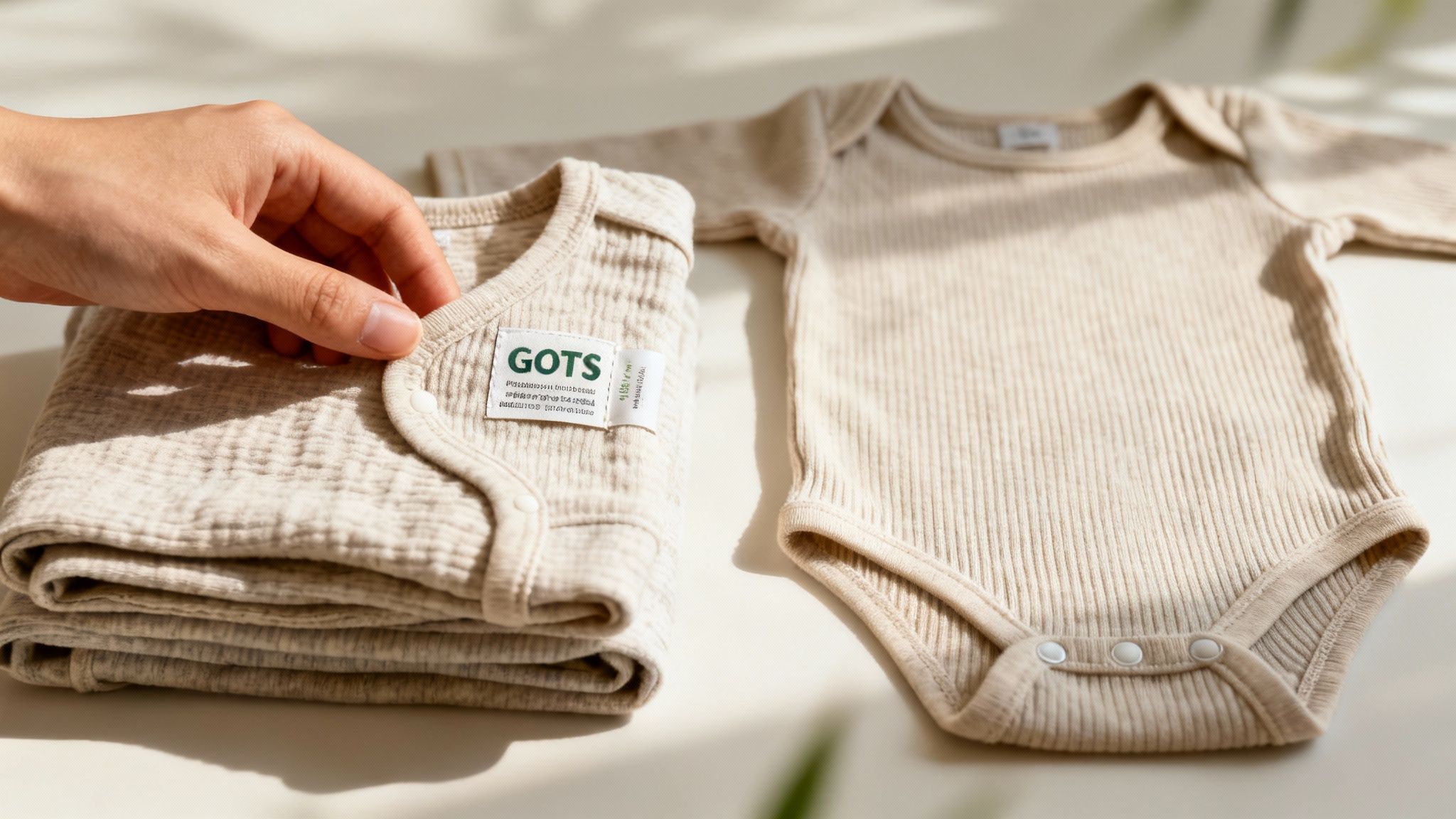
Ever seen a GOTS (Global Organic Textile Standard) label on a clothing tag and wondered what it meant? It’s basically a seal of approval you can trust. This certification isn't just a buzzword; it’s a guarantee that the fabric meets strict criteria from farm to finished product.
A GOTS certification means every single step—from harvesting raw materials to the final stitching—is vetted. It ensures the clothing is free from harmful chemicals and was produced ethically.
Choosing GOTS-certified clothing offers real peace of mind. You know what you’re putting on your baby is genuinely pure and safe. You can learn more about the incredible benefits of soft organic baby clothes and why they are simply a better choice.
Fabrics to Use with Caution
While natural fibers are ideal, some common fabrics are best avoided for everyday, next-to-skin wear. They can often trap heat and moisture, leading to discomfort or rashes.
Be mindful of these materials:
- Polyester and Nylon: These synthetic fabrics just don't breathe well. They can trap sweat against the skin, which is a perfect recipe for heat rash, especially in warm weather.
- Fleece: It feels cozy, but most fleece is made from polyester. It’s fine as an outer layer on a cold day, but you’ll want to avoid using it as a base layer right against your baby’s skin.
- Rough or Heavily Dyed Fabrics: Stiff materials like conventional denim, or anything with glitter and heavy dyes, can be abrasive. They might also contain chemicals that could cause a skin reaction.
Ultimately, by sticking with soft, breathable, and certified organic fabrics, you're creating a comfortable, safe little world for your baby boy to grow and explore in.
Dressing Your Baby Boy Through the Seasons
A baby's internal thermostat is still a work in progress, which means they count on you to keep them comfortable when the weather shifts. Dressing your little guy for the seasons is a skill you'll pick up quickly, and it's mostly a mix of common sense and a few smart layering tricks. The goal is simple: keep him from getting too hot or too cold, so he’s happy and safe no matter the forecast.
Thinking about seasonal wardrobes isn't just some modern parenting trend; it's a huge deal. Historically, the baby clothing market has always moved with cultural shifts, and outerwear has been a massive part of that. By 2019, the baby outerwear segment alone was valued at an eye-popping USD 34.8 billion globally. That number says a lot about how much parents prioritize seasonal dressing. You can read the full analysis on the baby clothing market to see how these trends have played out over time.
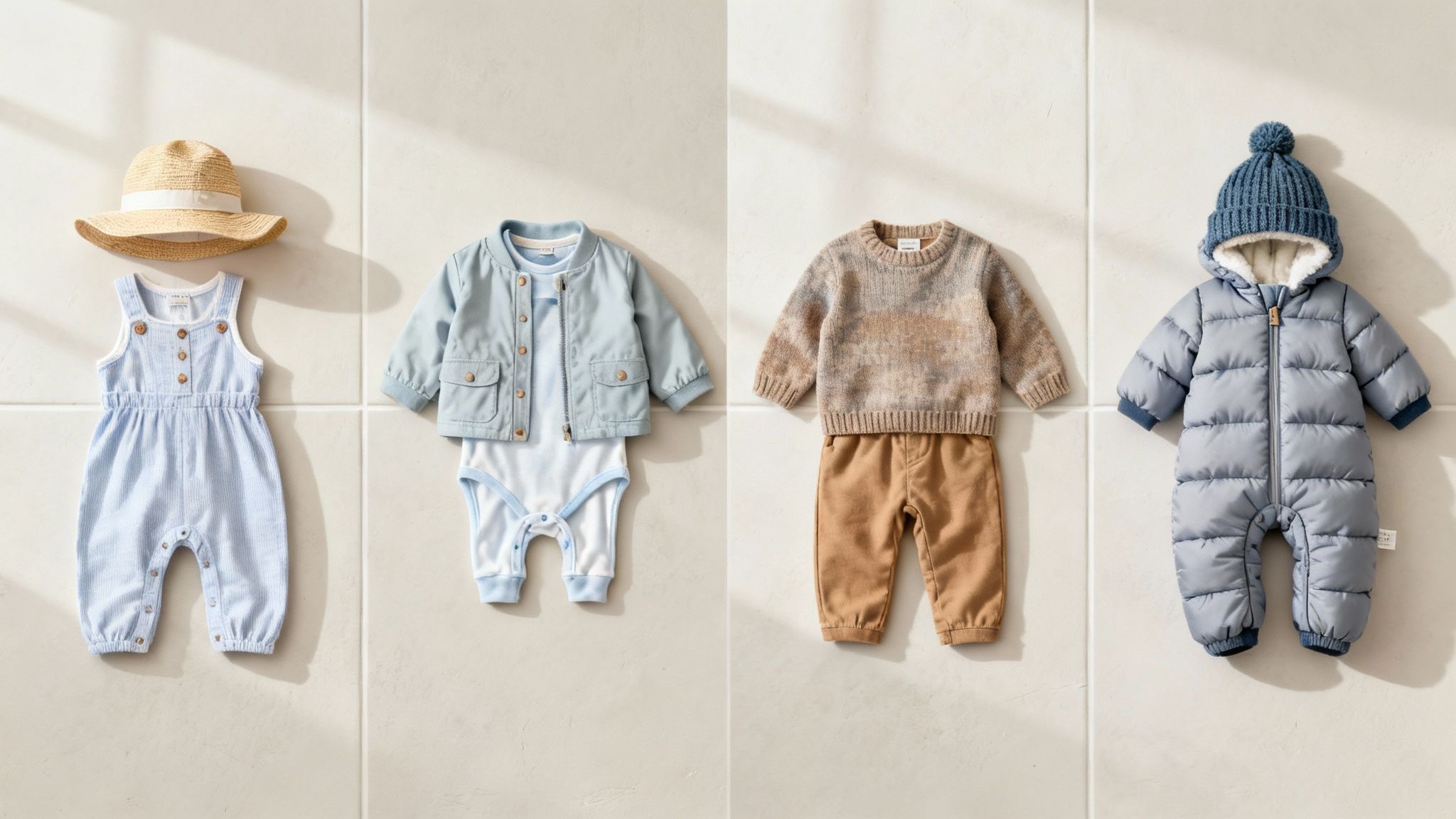
Summer Sunshine Essentials
When temperatures start climbing, your main job is to prevent overheating. Babies can get uncomfortably warm much faster than we do, so think light, airy, and simple. Stick to single layers made from breathable fabrics that let the air flow.
Here are the non-negotiables for his summer wardrobe:
- Lightweight Cotton Rompers: These are the perfect one-and-done outfits for playtime. A loose fit keeps air moving and stops the fabric from sticking to his skin on humid days.
- Short-Sleeve Bodysuits: The ultimate summer base layer. He can wear one all by itself on super hot days or pair it with some soft shorts for a quick, cute look.
- Wide-Brimmed Sun Hat: A baby’s scalp is incredibly sensitive to the sun. A good hat is a must-have to shade his face, neck, and ears during any outdoor adventures.
A good rule of thumb for hot weather is to dress your baby in one light layer. Often, it’s about the same as what you’d be comfortable in—or maybe even one less layer if you’re hanging out indoors.
Winter Warmth: The Art of Layering
Winter dressing is all about mastering the art of the layer. Instead of one super-thick, puffy outfit (which can actually make him overheat the second you step inside), using several thinner layers is much more effective. This approach traps heat while giving you the flexibility to adjust as you go.
Think of it as a simple three-part system:
- The Base Layer: This is what’s right against his skin. A soft, long-sleeved cotton bodysuit is ideal because it’s breathable and pulls any moisture away.
- The Middle Layer: Here’s your insulation. A cozy fleece sleeper, a warm sweater, or a footed pajama set works perfectly to hold in his body heat.
- The Outer Layer: When you head outside, this is his shield. A padded snowsuit, a bunting bag, or a winter coat will protect him from wind, snow, and biting cold.
This method puts you in total control. As you move from the chilly outdoors to a warm car or store, you can just peel off the outer layer to keep him from getting sweaty and fussy.
Parenting Pro-Tip: The easiest way to check if your baby is too hot or cold is to feel the back of his neck or his tummy. If it feels sweaty, take off a layer. If it’s cool to the touch, it might be time to add one. Don't go by his hands and feet—they often feel cool and aren't a reliable temperature gauge.
Navigating Spring and Fall Transitions
Spring and fall are famous for their unpredictability. A morning might start off chilly and end up surprisingly warm, so versatile outfits are your best friend. This is where those layering skills you picked up in winter really shine.
For these in-between seasons, focus on pieces that are easy to add or remove. A light jacket, a soft cardigan, or a cozy hoodie will get you through almost anything. You can start with a long-sleeved bodysuit and pants, then have a jacket ready to go. This approach means you're prepared for whatever the day throws at you, keeping your little guy perfectly comfortable through every temperature swing. Building a wardrobe with these essential clothes for a baby boy makes dressing for any season a total breeze.
Clothing Safety Checks and Laundry Tips
It's easy to get caught up in picking the softest fabrics and the cutest designs, but the physical safety of your baby boy's clothes is just as important. Think of it as a quick "safety audit" before he gets dressed—it only takes a moment and quickly becomes second nature.
Before you put on that adorable new outfit, take a second to run your fingers over the entire garment. You’re on the lookout for anything that could come loose and cause a problem. This simple habit gives you that extra bit of peace of mind, knowing every outfit is as safe as it is comfortable.
Your Pre-Wear Safety Checklist
A few seconds is all it takes to spot common risks. Making this a routine part of getting dressed helps keep your little guy safe while he's busy exploring his world.
- Check Snaps and Buttons: Give each snap and button a gentle tug. You want to feel that they're sewn on securely, with no signs of coming loose. They can be a serious choking hazard if they fall off.
- Inspect Decorative Items: Any little add-ons, like appliqués or bows, should be firmly attached. If something feels like it's hanging on for dear life, it’s best to just remove it.
- Beware of Drawstrings: Steer clear of any clothes for a baby boy with drawstrings around the neck, hood, or waist. They pose a significant strangulation risk and just aren't worth it.
- Look for Loose Threads: Keep an eye out for long, dangling threads and snip them off. They have a sneaky way of wrapping around tiny fingers and toes, especially inside socks or at the cuffs.
Laundry Tips for Baby Clothes
When it comes to washing baby clothes, a gentle approach is everything. Your little one’s skin is incredibly sensitive and can easily react to the harsh chemicals and strong fragrances in many regular laundry detergents.
The trick is to get stains out without irritating his skin or wearing out the fabric. A mild, baby-specific detergent is almost always your best bet. If you notice your baby's skin is particularly sensitive, you might also look into using the best moisturizer for baby eczema to help keep it calm and happy.
Pro Tip: Always, always wash new clothes before your baby wears them. Garments often have chemicals on them from the factory to keep them looking fresh in the store. A quick wash gets rid of that residue and any dust they picked up along the way.
For those inevitable (and impressive) stains from spit-up or diaper blowouts, pre-treating is your best friend. Just dab a little baby-safe detergent or stain remover directly on the spot and let it work its magic before tossing it in the wash. For a deeper dive, check out our guide on how to care for your child's clothes with washing and maintenance tips.
Common Questions About Baby Boy Clothes
Shopping for a new baby boy can feel like entering a whole new world, and it's totally normal to have a few questions. Getting a handle on the basics will help you feel more prepared and let you focus on what really matters—enjoying those newborn snuggles. Let's tackle some of the most common questions new parents ask.
How Many Outfits Does a Newborn Boy Need?
Here's a little secret from experienced parents: plan on at least two to three outfit changes per day. Between spit-up, drool, and the occasional diaper blowout, newborns can go through clothes surprisingly fast.
A great starting point for the first month or two would look something like this:
- 7-10 Bodysuits: Think of these as the base layer for everything. They're the real MVPs of a baby's wardrobe.
- 5-7 Sleepers: For bedtime, naps, or just lounging around, you'll want plenty of these cozy one-pieces.
- 4-5 Pairs of Soft Pants: These are perfect for pulling on over a bodysuit to create a quick, comfy outfit.
Remember, babies grow in the blink of an eye. It's smart to have just a handful of "newborn" sized items and a bigger supply of "0-3 months" clothing ready and waiting for that first growth spurt.
What Is the Best Way to Organize Tiny Clothes?
Trust me on this: drawer dividers are your new best friend. They're an absolute lifesaver for keeping those tiny clothes from becoming one giant, jumbled pile. You can create specific zones for bodysuits, pants, sleepers, and socks, so you always know where everything is.
Another pro tip is to organize by size. Keep the clothes your baby is wearing right now in the top, most accessible drawers. Any larger sizes can be stored in labeled bins or on a higher shelf in the closet. When you're fumbling around for a clean outfit after a middle-of-the-night diaper change, you'll be glad you did.
Do I Really Need to Wash New Baby Clothes?
Yes, one hundred percent. It’s a step you really shouldn't skip. Brand-new clothes often have chemicals and finishes on them from the factory to keep them looking fresh in the store. That stuff, plus any dust picked up during shipping, can be harsh on a newborn's incredibly sensitive skin.
Before anything touches your baby’s skin—clothes, blankets, burp cloths, bedding—give it a wash with a gentle, baby-friendly detergent. It’s a simple way to prevent rashes and irritation.
What Are the Biggest Mistakes to Avoid?
One of the classic first-time parent mistakes is going overboard on "newborn" sized clothes. Most babies outgrow them in a matter of weeks, sometimes even days! Another common pitfall is choosing style over comfort and convenience. That adorable outfit with ten tiny buttons might look cute, but it's a nightmare during a diaper change.
And finally, try not to buy seasonal items too far ahead of time. It's tempting to snag that cute winter snowsuit on summer clearance, but you can't predict your baby's size months from now. You could easily end up with a perfect little coat that's way too small by the time the first snowflake falls.
At Yarafly.com, we get it. We design our clothes to be as practical for parents as they are adorable on little ones. Our collections are all about soft, durable fabrics and easy-to-wear designs that can handle all of life's little messes. Explore our baby boy collection at Yarafly.com and discover everyday essentials built for comfort and play.