

on January 06, 2026
Let's be honest, finding a good winter coat for a kid who's growing like a weed is a yearly battle. You're hunting for something that can stand up to snowball fights and playground adventures, but the idea of dropping a ton of cash on something they'll outgrow by spring is just painful. This guide is for parents who know that finding cheap winter coats for kids doesn’t have to mean settling for less on quality or warmth.
Keeping Kids Warm Without Breaking the Bank
Turning that stressful annual shopping trip into a smart investment for your child's comfort is all about striking the right balance. Before we get into the nitty-gritty of fabrics and sizing, let's talk about the bigger picture. A warm coat is your first line of defense, but building a strong internal defense system is just as crucial for getting through the cold months.
A child’s immune system is still a work in progress. Think of it as a superhero in training—it needs the right tools to build up its strength and fight off all those seasonal bugs. Good nutrition provides those "superpowers," and without the right fuel, their defenses can get a little shaky.
Building Immunity from the Inside Out
Vitamins and minerals are the essential building blocks for a tough immune system. The heavy hitters are Vitamin C (think oranges, bell peppers, and strawberries), Vitamin D (from sunlight and fortified milk), Zinc (found in lean meats, beans, and seeds), and antioxidants (abundant in berries and leafy greens). They all work as a team to help the body's germ-fighting cells do their job.
But what about picky eaters? We've all been there. The trick is to make healthy food fun.
- "Ants on a log" (celery sticks with peanut butter and raisins) is a classic for a reason.
- Making a "rainbow" on their plate with colorful fruits and veggies can work wonders.
- For a savory twist, try "hidden veggie" meatballs by grating carrots or zucchini into the mix.
Smoothies are another secret weapon for packing in nutrients, perfect for babies, toddlers, and kids alike.
- Green Monster Smoothie: A simple blend of spinach, a banana, a scoop of yogurt, and a splash of milk creates a tasty green drink that even toddlers often love.
- Sunshine Smoothie: Mix up some mango, orange, and a carrot for a vibrant, Vitamin C powerhouse that tastes like a treat.
- Berry Blast Baby Smoothie: For the little ones, blend blueberries, half a banana, and a tablespoon of plain yogurt until smooth.
Parents everywhere share this dual concern: keeping their kids both healthy and warm. It's a big deal, and the market reflects it. The global kids' winter clothing industry is expected to jump from $56.027 billion in 2021 to a massive $70.2 billion by 2025. This explosion shows a clear trend: families are focused on value, often choosing practicality and price over big brand names. You can learn more about the kids winter clothing market trends to see just how big this shift is.
What Makes a Winter Coat Warm and Durable?
Stepping into the coat aisle can feel a bit like decoding a secret language. You're bombarded with terms like "down fill," "synthetic insulation," and a whole slew of waterproof ratings. It’s enough to make any parent's head spin. But figuring out what these features actually mean is the key to finding a fantastic, affordable coat that will last the whole season.
Choosing the right one usually boils down to three things: your budget, your local climate, and of course, your kid's personal style. This little flowchart can help you find your starting point.
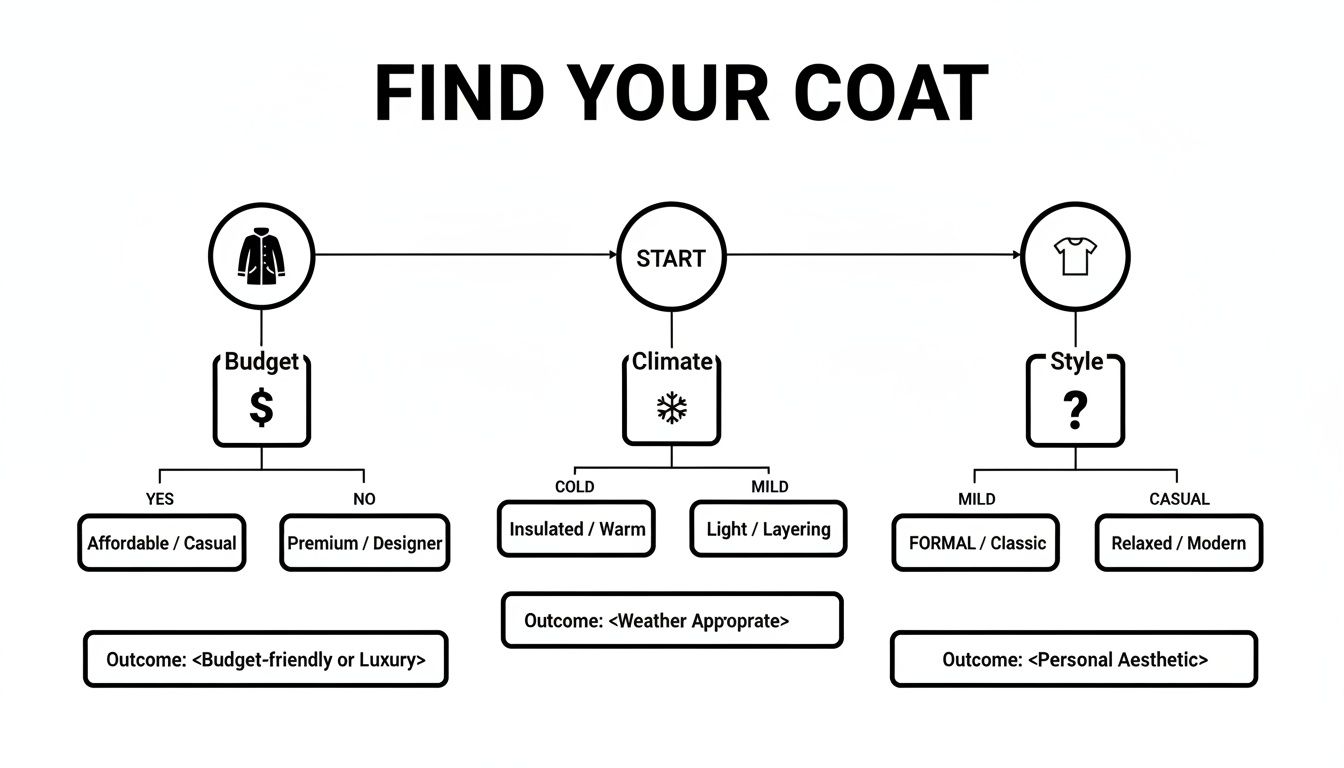
As you can see, your perfect coat is a blend of these three factors. Thinking about them first helps cut through the noise and narrow down your options right away.
The Heart of the Coat: Insulation Explained
At its core, insulation is all about trapping your child's body heat to keep them toasty. You can think of it as the cozy filling in a quilt—some are light and fluffy, others are dense and heavy-duty, but they all serve the same purpose.
The two main players you'll see on the tags are down and synthetic.
- Down Insulation: This is the super soft, fluffy stuff from the underbelly of ducks or geese. It's famous for being incredibly lightweight while offering amazing warmth. It also squishes down to almost nothing, which is great for packing. The big downside? It loses its power to insulate when it gets wet.
- Synthetic Insulation: This is a human-made alternative, usually polyester, crafted to copy the warming superpowers of down. Its biggest plus is that it keeps working even when it's damp and dries out way faster. That makes it a champion for snowball fights, sledding adventures, and slushy winter days.
For most kids, especially the ones who play hard or live where winters are wet and snowy, synthetic insulation is usually the most practical and budget-friendly option. It's tough, easy to wash, and you can count on it to keep them warm.
This simple comparison can help you decide which insulation type best fits your child's needs, your climate, and your wallet.
A Parent's Quick Guide to Coat Insulation
| Feature | Down Insulation | Synthetic Insulation |
|---|---|---|
| Warmth | Excellent warmth-to-weight ratio; very light. | Good warmth, even when damp. Slightly heavier. |
| Wet Weather | Loses insulating ability when wet; slow to dry. | Stays warm when wet; dries quickly. |
| Cost | Generally more expensive. | More budget-friendly and widely available. |
| Best For | Cold, dry climates; kids who don't sweat much. | Wet, snowy climates; active kids; messy play. |
| Care | Requires special washing and drying. | Easy to machine wash and dry. |
Ultimately, both are great options, but for the rough-and-tumble reality of childhood, synthetic often pulls ahead in practicality and price.
Decoding Fabrics and Weatherproofing
The outer shell of a coat is its armor against the elements—the first line of defense against wind, rain, and snow. A tough fabric like ripstop polyester is a parent's best friend because it's designed to resist the rips and scrapes that come with playground adventures.
The demand for great kids' jackets is on the rise. The market is expected to grow from $1,086 million in 2021 to over $1,344.8 million by 2025. What's driving this? Parents are looking for affordable coats that don't compromise on coziness. In fact, 65% of families are now specifically seeking out jackets under $50 that feature soft insulation and fun designs—a sweet spot where brands like Yarafly really shine.
Inside, soft linings like fleece are what add that "ahh, cozy" feeling. Getting familiar with the materials makes all the difference. For a closer look, it's worth understanding different fabric types like fleece and plush fleece to see how they contribute to both warmth and durability.
How to Get the Right Fit for Growing Children
Buying a winter coat for a kid is a tricky business. You're trying to predict a growth spurt that could happen any day, but a coat that’s way too big isn't just awkward—it can be a real safety issue. It’s about more than just "sizing up." Let's walk through how to get the fit just right.

The sweet spot is a coat with enough "room to grow" that doesn't completely swallow your child. Think sleeves that can be cuffed once at the beginning of winter, not ones that flop over their hands and get in the way when they’re trying to build a snowman.
Simple Steps for an Accurate Fit
You don’t need to be a professional tailor to get this right. A soft measuring tape and a few quick checks at home can make all the difference in finding a coat that fits well from the first frost to the final thaw.
- Measure Over Their Clothes: Get your child to wear what they’d normally have on under a coat, like a long-sleeved shirt or a thin sweater. This helps you account for layering so the coat isn’t too tight.
- Check Key Areas: Jot down three main measurements: chest, waist, and sleeve length. Every brand's sizing is a little different, so always compare your numbers to their specific size chart.
- Perform the "Hug Test": After they put the coat on, have them give themselves a big hug. Does it pull tightly across the back and shoulders? If so, it's too small and will restrict all the running and playing they're about to do.
If you want to get really savvy about navigating the maze of kids' clothing sizes, our complete parent's guide is a great resource. You can find it here: https://yarafly.com/blogs/news/understanding-childrens-clothing-sizes-a-complete-parents-guide.
Smart Features That Extend a Coat's Life
Sometimes the best value isn't the price tag but the thoughtful little features that help a coat last longer. Keep an eye out for adjustable elements that let you tweak the fit as the season goes on.
- Adjustable Cuffs: Velcro tabs or elastic cuffs are a parent's best friend. They let you shorten the sleeves early on and then let them out as your child's arms inevitably get longer.
- Internal Drawstrings: A hidden drawstring at the waist is a game-changer. It can pull in the fabric on a slightly-too-big coat for a snugger fit, which does a much better job of trapping heat and keeping cold drafts out.
A quick but critical note on safety: puffy winter coats and car seats don't mix. In an accident, the fluffy insulation can compress, creating a dangerous amount of slack in the harness straps. Safety experts always recommend taking off bulky coats before buckling your child in.
Knowing how to choose baby clothes for the right size is a skill that pays off, especially when dealing with rapid growth spurts. It ensures kids are not just warm, but also safe and comfortable, whether they’re at the park or in the car. Armed with these tips, you can feel confident you're buying a coat that will actually last the whole winter.
Smart Shopping Strategies to Find the Best Deals
Finding a great deal on a high-quality kids' winter coat isn’t about luck. It’s all about strategy. When you know when to look and what to look for, you can turn a potentially big-ticket purchase into a serious bargain.
The biggest secret? Timing. The best prices on winter gear almost never pop up right when the first chill hits the air. If you plan ahead and shop during the off-season, you'll be amazed at the discounts you can find.
Mastering the Sales Cycles
The real key to saving big is understanding how retail seasons work. If you shop at specific times of the year, you can lock in some incredible value.
- End-of-Season Sales: As winter starts to wrap up in January and February, stores are desperate to clear out their remaining inventory. This is the absolute best time to find a fantastic coat for 50% off or more.
- Off-Season Clearances: Don't be afraid to browse the clearance racks in spring and summer. It might feel a little strange buying a winter coat when it's warm outside, but this is when you'll find prices at their absolute lowest.
A little bit of forward-thinking goes a long way. Grabbing a coat a size up during an end-of-season sale means you’ll have a perfectly fitting, deeply discounted coat waiting for them next winter. Finding these kinds of deals is more important than ever as family budgets get tighter. For more tips, check out our guide on finding the best baby clothes sale.
The global kids' wear market is set to grow from $187.1 billion in 2023 to a staggering $304.1 billion by 2032. But even with all that growth, 55% of parents in the U.S. are focused on finding budget-friendly clothes, and 60% of families are actively hunting for seasonal deals—like Yarafly's 50% off Fall Collection. You can find more insights about the global kids wear market on dataintelo.com.
Spotting True Value Beyond the Price Tag
A low price tag is great, but real value lies in the details that make a coat last. When you find a promising deal, take a minute to really look at how it’s made.
A truly affordable kids' winter coat is one you don't have to replace halfway through the season. Look for sturdy zippers, reinforced seams in high-stress areas like the shoulders and pockets, and versatile features.
Features like a 3-in-1 design with a removable fleece liner are a game-changer. You’re essentially getting three jackets for the price of one: a heavy-duty winter coat, a light fleece for fall, and a rain shell for spring. It’s those thoughtful details that turn a good deal into a brilliant investment.
Hidden Features That Make a Coat a Great Value
A low price tag is tempting, but the real value in a kids' winter coat is often hidden in the details. These are the thoughtful little touches that turn a budget-friendly find into a smart investment—one that lasts longer, keeps your child safer, and gives you a bit more peace of mind.
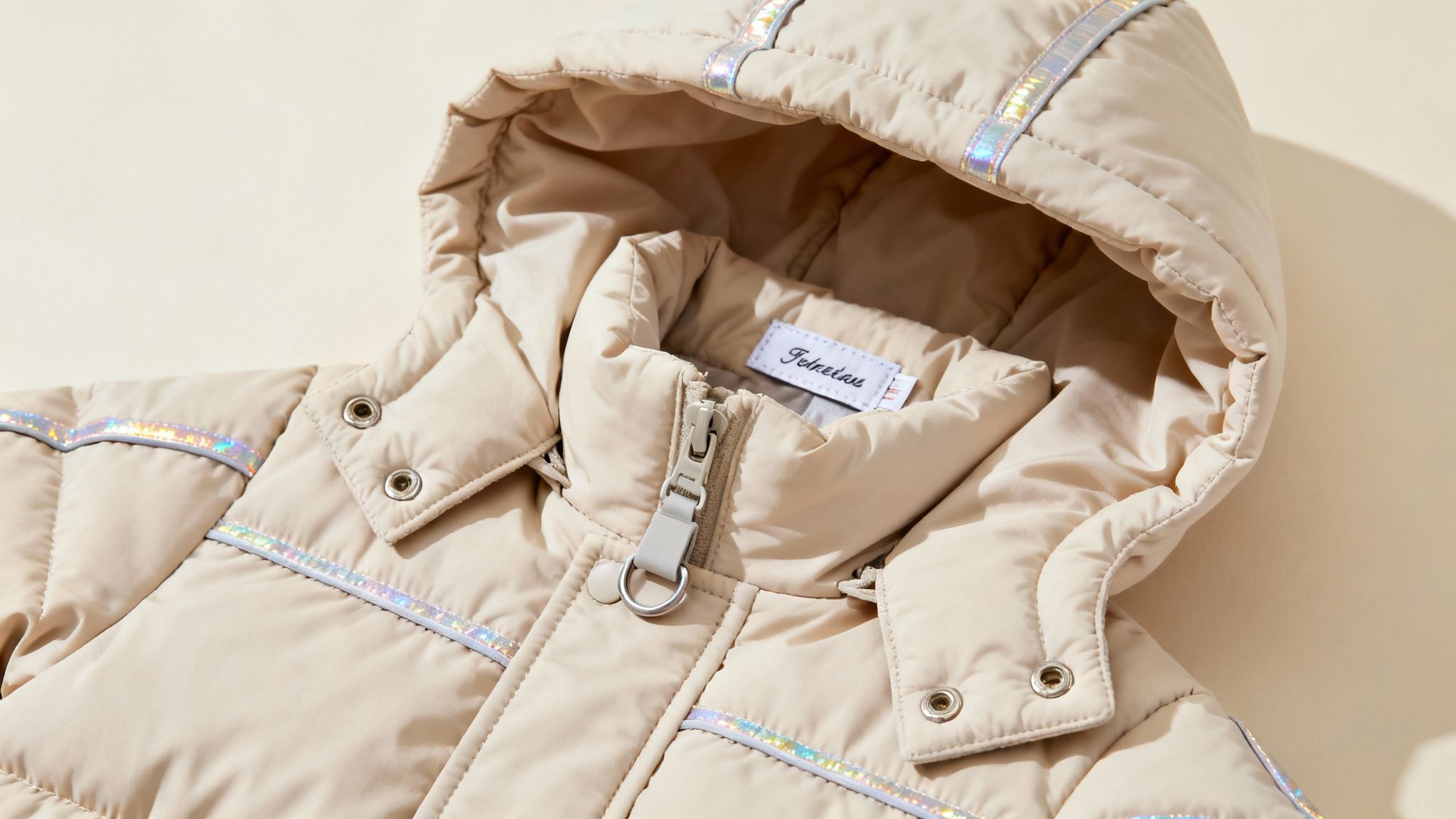
Think of it like being an inspector. Once you know what to look for, you can quickly tell the difference between a coat that’s just cheap and one that’s a genuinely great deal.
Safety Features You Should Never Overlook
Winter means shorter days and less daylight. That walk home from the bus stop or the last few minutes on the playground can get dark fast, which makes visibility a huge deal.
- Reflective Accents: Keep an eye out for coats with reflective strips on the sleeves, back, or hood. Even small patches can make a massive difference, catching car headlights and making your kid easy to spot.
- Breakaway Hoods: This one is critical. A hood attached with snaps or weak Velcro will pop right off if it gets snagged on a jungle gym. It’s a simple design that prevents a serious choking hazard.
A breakaway hood is a non-negotiable feature for active kids. It’s a simple design element that addresses a very real playground risk, giving you one less thing to worry about while they play.
These safety elements show that the company didn't just make a coat; they designed it with a real, running-around kid in mind.
Parent-Approved Convenience Features
Beyond the big safety stuff, some features just make a parent's life easier. You might not notice them in the store, but you’ll be thankful for them every single morning.
A good zipper is everything. Look for large, sturdy zippers that a kid wearing clumsy mittens can actually grab and pull. A flimsy zipper that snags or breaks is usually the first thing to go on a coat, making the whole thing useless.
Another lifesaver is a chin guard. It's that little fabric flap at the very top of the zipper. It stops the cold metal from poking and chafing your child’s chin, which means fewer complaints when you’re trying to get out the door.
Spotting High-Value Features in Kids Coats
This little checklist can help you quickly spot the features that add real safety, durability, and convenience to a kid's winter coat.
| Feature Category | What to Look For | Why It Matters |
|---|---|---|
| Safety First | Reflective piping or patches; breakaway hoods. | Increases visibility in the dark and prevents snagging accidents. |
| Parent Helpers | Mitten clips; internal name tag. | Prevents lost mittens and ensures the coat finds its way home. |
| Comfort Details | Chin guard over the zipper; fleece-lined pockets. | Stops zipper irritation and keeps hands extra warm. |
| Durability | Reinforced seams at elbows; sturdy zippers. | Extends the coat's life through rough play and frequent use. |
When you start prioritizing these hidden gems, you’re no longer just buying a cheap coat. You’re finding a smart, safe, and durable piece of gear that delivers fantastic value for every penny.
Simple Care Tips to Make Coats Last Longer
The most budget-friendly coat is the one you don't have to replace every year. Let’s be honest, getting a great deal on a kid's winter coat is only half the battle. With a little bit of care, you can turn that bargain into a long-term win, keeping it in great shape for next season or for a younger sibling.
It all starts with handling messes right when they happen. Kids are magnets for mud, grass stains, and the occasional hot chocolate spill. Letting those stains set is what really does a number on the fabric, so a quick spot treatment can make a world of difference.
Washing and Drying Best Practices
Before you even think about tossing a dirty coat in the wash, take a second to read the care label. This is especially true for waterproof and water-resistant gear. The wrong detergent or a blast of high heat can strip away the very coating that's meant to keep your child dry.
For a deeper dive into making your child's entire wardrobe last, check out our guide on how to care for your child's clothes with washing and maintenance tips.
When wash day comes, these simple steps will protect the coat’s fabric and insulation:
- Empty All Pockets: You’d be amazed what you’ll find—rocks, half-eaten snacks, crayons. Get it all out.
- Zip It Up: Close all zippers and fasten any Velcro or snaps. This stops them from snagging the fabric of the coat or anything else in the wash.
- Use a Gentle Cycle: Stick to a cool, gentle cycle with a mild detergent. If you have it, a detergent made for technical outerwear is even better.
- Tumble Dry Low: Dry the coat on a low heat setting. A great trick is to toss in a few clean tennis balls—they’ll help re-fluff any down or synthetic fill, bringing back its loft and warmth.
Smart Off-Season Storage
How you store the coat during the off-season is just as crucial as how you wash it. Shoving it into a musty basement or a cramped, hot attic is just asking for mildew and damage.
The goal of storage is simple: protect the coat from moisture, pests, and being crushed. Storing it clean and dry means it will be fresh and ready for that first chilly day of fall, saving you from a frantic, last-minute shopping trip.
Make sure the coat is completely clean and dry before you put it away for the summer. A breathable container, like a cotton garment bag, is ideal. Store it somewhere cool and dry, and you’ll be protecting your investment and getting the most out of every dollar you spent.
Got Questions? We've Got Answers.
As you get ready to make a choice, a few common questions always seem to pop up. Let's tackle them head-on so you can shop with total confidence.
Is it Safe for My Child to Wear a Winter Coat in Their Car Seat?
This is a big one, and the answer is a firm no. It's a critical safety issue that every parent needs to know about. Puffy winter coats create a dangerous illusion of a snug fit, leaving a hidden gap between the car seat harness and your child's body.
In an accident, the force of the impact instantly compresses all that fluffy insulation. The harness, which felt tight moments before, suddenly becomes far too loose, putting your child at serious risk.
The Car Seat Safety Test:
- First, put your child in their coat and buckle them into the car seat. Tighten the harness until you can no longer pinch a horizontal fold of webbing at their collarbone (this is the "pinch test").
- Now, take your child out of the seat without loosening the straps at all.
- Remove their coat and buckle them back into the same, un-adjusted harness. Can you now pinch the webbing? If you can, the coat is too bulky and unsafe for car travel.
The safest solution? Buckle your child in securely without their coat, then drape the coat over them backward or cover them with a blanket to stay warm.
How Can I Tell if a Coat Is Actually Warm Enough?
Don't be fooled by sheer puffiness! A coat's warmth really comes down to the quality of its insulation (like down or a synthetic fill) and features designed to trap heat and block the elements.
Look for smart details that make a real difference, like a well-fitted hood that stays put, snug elastic or velcro cuffs to seal out drafts, and a storm flap covering the main zipper. For most kids, a quality waterproof shell packed with good synthetic insulation is the perfect blend of warmth, durability, and value for snowy winter days.
How Often Should a Winter Coat Be Washed?
Good news: not very often! Unlike t-shirts and jeans, winter coats are built to withstand the elements, and over-washing can actually harm their performance. Washing too frequently can break down the waterproof coating and cause the insulation to lose its loft.
As a rule of thumb, aim to wash a winter coat just 2-3 times per season, or only when it's visibly caked in mud or starts to get smelly. For little spills and smudges, spot-treating is your best friend. Always, always check the care tag for specific instructions before you toss it in the machine.
Feeling ready to find a coat that delivers on warmth, safety, and value? Take a look at the thoughtfully designed collections at Yarafly. You’ll find the perfect sidekick for all your little one's winter adventures.