

on January 10, 2026
If you've ever stared at a closet overflowing with clothes your child has already outgrown, you know the feeling. It’s a constant cycle. This guide is all about breaking that cycle by rethinking what "cheap clothes for kids" really means. It's not just about the lowest price tag; it's about making smart, high-value buys that can actually keep up with growth spurts and playground chaos.
Instead of constantly running out for replacements, you'll learn how to spot durable, affordable pieces from the get-go.
The Smart Parent's Playbook for Kids' Clothing
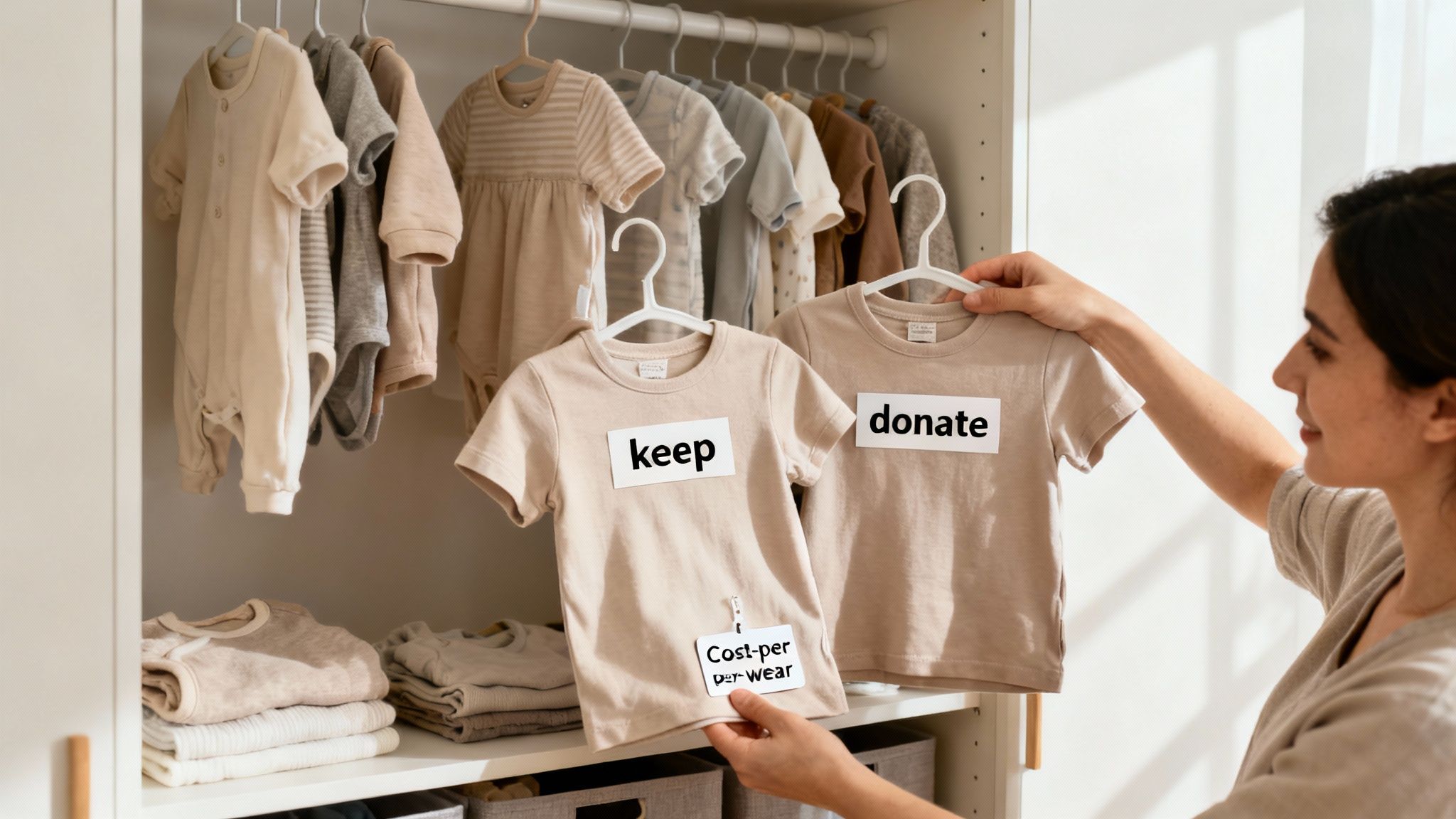
Hunting for affordable kids' clothes can feel like a part-time job. You finally find the perfect outfit, and bam—a growth spurt hits, and you're right back where you started. It’s a frustrating and expensive loop, but a simple change in perspective can make a world of difference. The real secret isn't just snagging the lowest price, but locking in the highest value.
This means looking past the initial sticker price and thinking about how much use you'll actually get out of an item. A slightly pricier t-shirt made from a sturdy fabric might easily outlast three flimsy, cheaper ones, ultimately saving you money and sanity.
Your New Secret Weapon: Cost-Per-Wear
The best way to gauge an item's true value is by looking at its cost-per-wear. This simple little formula tells you what each piece really costs every time your child puts it on.
Cost-Per-Wear = (Total Price of Item) / (Number of Times Worn)
Think about it this way: a $5 t-shirt that gets a hole after two wears has a cost-per-wear of $2.50. On the flip side, a better-quality $15 t-shirt that your kid wears 30 times before outgrowing it has a cost-per-wear of just $0.50. Suddenly, that "expensive" shirt looks like the real bargain. When you start prioritizing durability and versatility, that cost-per-wear number plummets.
The global children's apparel market is massive, valued at around USD 210.9 billion and still growing. The good news for us? The casual wear segment—think everyday tops and bottoms—is set to grab 46% of the market share. That means more competition and better prices on the very essentials we buy most often. You can find more insights about the kids' apparel market and its projected growth online.
Your Roadmap to Smarter Shopping
This guide is your roadmap to finding genuinely great, affordable kids' clothes without compromising on quality. We'll walk through the essential strategies for building a wardrobe that's both budget-friendly and tough enough for childhood.
Here’s a peek at what’s ahead:
- Where to find hidden gems: We’ll go beyond the big-box stores to uncover the best spots for a deal.
- How to choose fabrics that last: Learn to spot the materials that can survive endless tumbles and wash cycles.
- Smart sizing strategies: Get way more mileage out of every piece with a few clever sizing tricks.
- Building a mix-and-match wardrobe: Create a closet full of versatile pieces that make getting dressed a breeze.
By the end, you'll see that dressing your kids well on a budget is not only possible—it’s actually pretty simple.
Where to Find Real Deals on Kids' Clothes
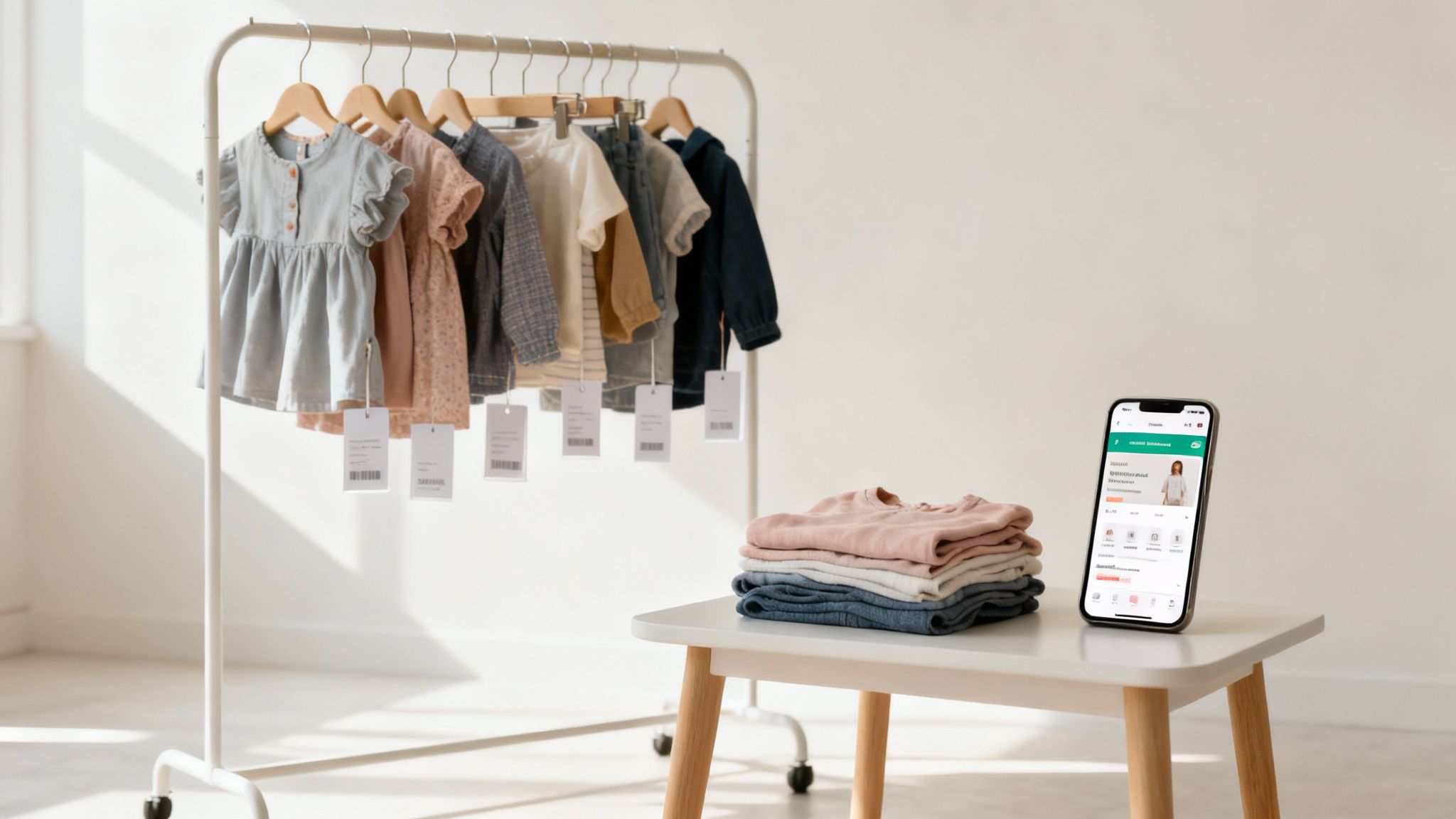
Finding kids' clothes that are both affordable and won't disintegrate after a few spins in the washing machine can feel like a fool's errand. While the big-box stores are convenient, the truly fantastic deals—the ones that make you feel like a genius—are usually hiding just off the beaten path.
The secret? Look beyond the usual suspects. Instead of making a beeline for the mall, start thinking about where quality clothing goes to live its second life. This is where you'll find incredible value, turning another family's outgrown favorites into your child's next great find.
The Power of Pre-Loved and Secondhand
Let's get one thing straight: secondhand shopping isn't what it used to be. Gone are the days of digging through dusty, disorganized bins. Today, it’s a smart, eco-friendly, and incredibly budget-friendly way to dress your kids in top-tier brands for pennies on the dollar.
-
Online Consignment Shops: Websites like ThredUP and Kidizen have completely changed the game, making secondhand shopping as seamless as buying new. You can filter by brand, size, and condition, often finding items that still have the tags on for 50-90% off retail. This is my go-to for scoring durable, cheap clothes for kids.
-
Local Thrift Stores: Don't sleep on your neighborhood Goodwill or charity shop. Here's a pro tip: shop in more affluent areas. You're far more likely to find high-quality, barely-worn donations from brands you already love. Go in with a list, be patient, and you can walk out with a whole season's wardrobe for the price of one or two new outfits.
-
Community Groups: Facebook Marketplace and local parenting groups are absolute goldmines for clothing bundles. Parents often sell an entire size worth of clothes their kids just grew out of, which brings the price-per-item down to almost nothing.
Timing Your Purchases for Maximum Savings
When buying new, timing is everything. Retailers run on a predictable calendar, and learning to shop with the seasons is how savvy parents save a fortune.
Think of it this way: buying a winter coat in March or swim trunks in September is like getting a head start on savings. You're buying when demand is low, so retailers slash prices to clear out inventory. It's a simple trick that pays off big time.
Of course, major sales events are your friend. Black Friday, Cyber Monday, and back-to-school promotions always bring deep discounts on children's clothes. Many online stores also run amazing deals around holidays; it's not uncommon to find a fantastic baby clothes sale with huge markdowns on essentials like onesies and pajamas.
You might also notice that prices can be pretty competitive thanks to global manufacturing. The Asia Pacific region, for example, holds a massive 41.4% market share in the kids' clothing industry. Lower production costs there often mean better prices for us without sacrificing quality.
Comparing Shopping Channels for Kids' Clothes
So, where should you start? The best place to shop really depends on what you're prioritizing—rock-bottom prices, convenience, or guaranteed quality. Each channel has its own strengths and weaknesses. This table breaks it down to help you build a strategy that works for your family.
| Shopping Channel | Average Price | Typical Quality | Best For |
|---|---|---|---|
| Online Consignment | Low to Very Low | Varies (often high) | Brand-name deals and specific items |
| Local Thrift Stores | Very Low | Varies | Treasure hunting and rock-bottom prices |
| Seasonal Clearance | Low | High | Planning ahead and buying off-season |
| Outlet Stores | Medium | Good to High | Brand loyalty and stocking up on basics |
| Big-Box Retailers | Low to Medium | Varies | Convenience and everyday essentials |
By mixing and matching these strategies—embracing secondhand, timing your purchases, and knowing where to look—you can consistently find high-value, durable, and cheap clothes for kids. It's all about shopping smarter, not harder.
Choosing Fabrics and Sizes for Maximum Longevity
Finding truly valuable cheap clothes for kids isn't just about snagging the lowest price tag. The real victory is finding pieces that can survive playground battles, messy art projects, and those sudden, seemingly overnight growth spurts. When you learn to spot durable fabrics and size up strategically, you slash the long-term cost of every single garment.
Think of it this way: a piece of clothing's value isn't just its initial cost, but how long it stays in rotation. The secret lies in clothes that can handle the reality of being a kid.
Decoding Fabric Labels for Durability
When you're out shopping, that little fabric content tag is your secret weapon. Some materials are just built tougher and are way more comfortable for kids who are constantly in motion. Keep your eyes peeled for these fabric power players.
- Cotton and Cotton Blends: Pure cotton is a classic for a reason—it's soft and breathes well. But when you see it blended with a bit of polyester (around 5-10%), you get the best of both worlds: the softness of cotton plus serious strength and wrinkle resistance. It's the perfect formula for everyday essentials like tees and leggings.
- Jersey Knit: This is that wonderfully stretchy, comfy fabric most t-shirts are made from. Because it’s knitted, not woven, it has a natural give that moves with your child, and it bounces back into shape beautifully after washing.
- Denim: You can't beat denim for pure toughness. For kids' jeans and jackets, look for denim with a little spandex or elastane mixed in. That tiny bit of stretch makes a huge difference in comfort, especially for toddlers who need to move freely.
Beyond the label, do a quick hands-on quality check. Tug gently on the seams; they should feel strong, not flimsy. Look for tell-tale signs of quality like reinforced knees on pants or double-stitching around zippers. These are the details that separate a one-month wonder from a year-long favorite.
Smart Sizing Strategies to Extend Wear
We all know kids grow like weeds. But you can get ahead of the game with a few clever sizing tricks. The goal isn't to buy clothes that are huge, but to choose specific items that can be worn a little loose at first to maximize their wearable lifespan.
Think of it like this: You're not just buying for the child you have today, but for the child they'll be in six months. A little extra room in the right places is an investment.
Here are a few practical strategies to try on your next shopping trip:
- Buy a Size Up in Outerwear: Jackets, hoodies, and coats are perfect for sizing up. Just roll the sleeves for the first season. By the time the next cold snap rolls around, it will likely be a perfect fit. You've just scored two seasons of wear from one item.
- Look for Adjustable Features: Smart brands know kids grow. Hunt for pants and skirts with adjustable elastic waistbands. That hidden elastic-and-button system inside the waist is a game-changer, letting you customize the fit as your child grows.
- Embrace Roll-Up Cuffs and Hems: Shirts with button-tabs on the sleeves or pants with styled cuffs aren't just for looks. They're a built-in way to manage length, allowing the garment to essentially "grow" right alongside your child.
Navigating the world of kid sizes can feel like a guessing game, but it gets easier with a little practice. For a much deeper look into how to get it right every time, you can find a ton of helpful info by understanding children's clothing sizes in our complete parent's guide. When you pair smart sizing with durable fabrics, you ensure every piece you bring home delivers incredible value.
Building a Mix-and-Match Wardrobe on a Budget
Imagine a closet where almost every top goes with every bottom. The morning rush is peaceful. Your five-year-old isn't having a meltdown over what to wear. This isn't just a dream—it's the reality of a mix-and-match wardrobe, and it's one of the smartest ways to get maximum value from your kids' clothes.
This approach, sometimes called a "capsule wardrobe," is all about choosing a smaller collection of versatile essentials that can be combined in dozens of different ways. The result? A closet that feels full and functional with fewer items, making dressing a breeze and ensuring every single piece earns its keep.
Start with a Simple Color Palette
The secret to a great mix-and-match wardrobe is a solid color palette. This doesn't mean your kid's closet has to be a sea of beige! The idea is to pick a set of colors that all work together, making it nearly impossible to create a clashing outfit.
A simple way to get started is with the 3+3+1 Rule:
- Three Neutral Base Colors: These are the workhorses. Think classic, versatile shades like navy, gray, khaki, cream, or denim that will make up the core of their pants, shorts, and outerwear.
- Three Coordinating Accent Colors: Here’s where the fun comes in. Pick a few of your child's favorite colors that also look good with your neutrals. Think mustard yellow, soft coral, olive green, or dusty blue.
- One Fun Pattern: To add a bit of spice, choose a single, versatile pattern like classic stripes, a simple floral, or a cool geometric print that works with the other colors.
When you stick to a palette like this, that striped shirt will look just as good with the navy shorts as it does with the khaki pants. It’s a simple framework that brings calm to the chaos.
Stock Up on Versatile Basics
Once you have your colors nailed down, it's time to focus on the core pieces. These are the simple, classic items that will get the most wear and tear. You don't need a massive amount of clothing; you just need the right items.
Think in terms of versatile essentials that can pull double or triple duty:
- Solid-colored t-shirts (both long and short-sleeved) in your chosen accent colors.
- Neutral leggings, jeans, or pull-on pants.
- A go-to jacket or hoodie in one of your neutral shades.
- A simple dress or a pair of shorts that can be dressed up or down.
These basics are the building blocks of countless outfits. That single gray hoodie, for instance, can be thrown over a bright t-shirt and jeans for the park or paired with a dress on a cooler evening. The more versatile the piece, the lower its cost-per-wear becomes.
Building a capsule wardrobe is like making a smoothie. You start with a solid base (like yogurt or milk), add your core fruits for flavor, and then toss in a fun extra like a sprinkle of cinnamon. The basics are your base, the accent colors are your fruit, and the patterned pieces add that final touch of personality.
This mindset—focusing on longevity and versatility—is what transforms a cheap piece of clothing into a high-value one.
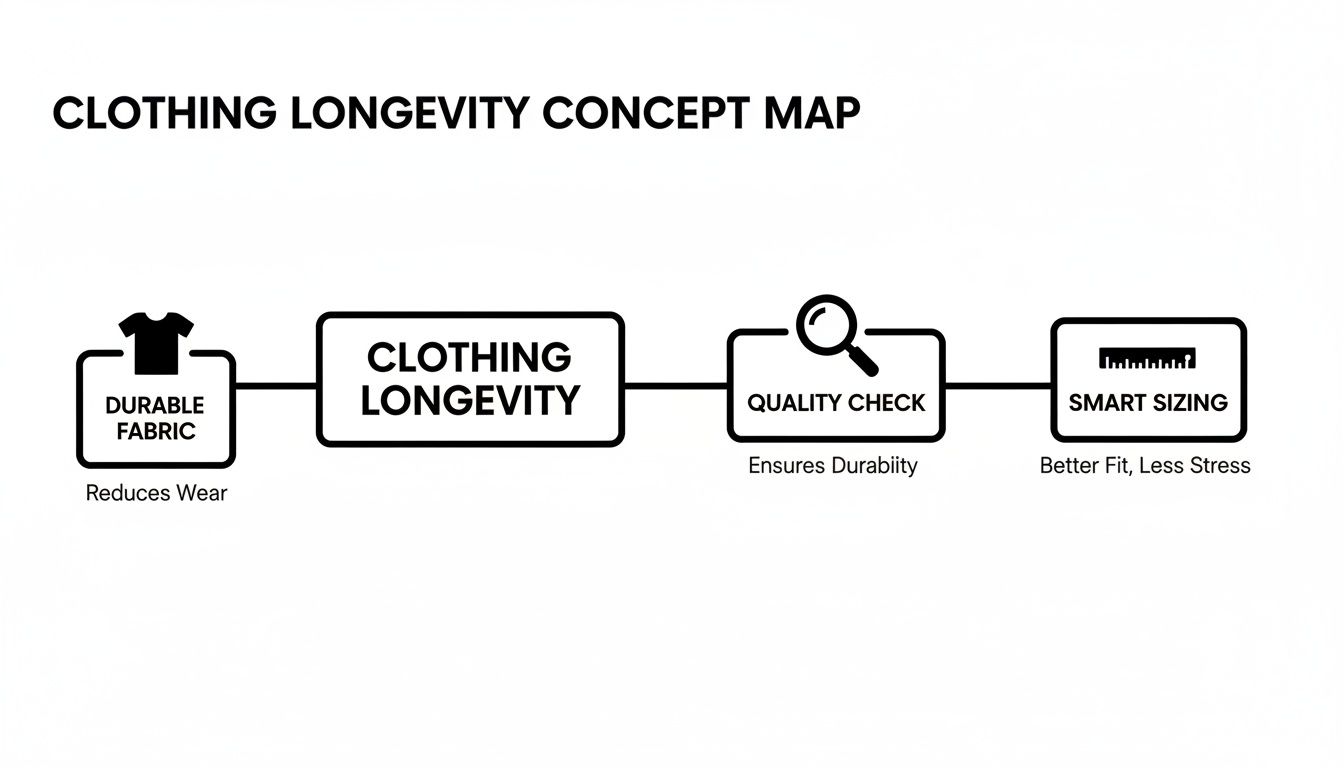
As the map shows, true value comes from a combination of smart choices—fabric, quality, and sizing—not just a low price tag.
Weave in Personality with Inexpensive Accents
With a strong foundation of basics in place, you can bring in a few fun, inexpensive pieces that let your child's personality shine. This is where you can lean into a passing trend or their latest character obsession without breaking the bank.
Look for a pair of patterned leggings, a graphic tee with their favorite dinosaur, or a fun accessory like a colorful hat. Because your core wardrobe is so cohesive, these playful items will fit right in. It’s the perfect strategy: you get a functional, budget-friendly wardrobe that still feels fun and expressive for your child.
To help you get started, here is a simple checklist for a 15-piece capsule wardrobe that can create dozens of unique outfits.
Kids' Capsule Wardrobe Checklist (15 Pieces)
| Clothing Category | Item Example | Quantity |
|---|---|---|
| Tops | Short-Sleeve T-Shirt | 3 |
| Long-Sleeve T-Shirt | 2 | |
| Bottoms | Pants (Jeans or Khakis) | 2 |
| Leggings or Joggers | 2 | |
| Shorts or Skirt | 1 | |
| Layers | Hoodie or Cardigan | 1 |
| Lightweight Jacket | 1 | |
| One-Pieces | Dress or Jumpsuit | 1 |
| Shoes | Everyday Sneakers | 1 |
| Sandals or Boots | 1 |
This list serves as a great starting point. You can easily adjust the quantities or item types based on your climate and your child’s daily activities.
Making Good Clothes Last Even Longer
Snagging a great deal on cheap clothes for kids feels like a victory, but the real win is making those pieces last. True value comes from outfits that can survive countless playground adventures, sudden growth spurts, and the inevitable messy meal.
By adopting a few simple care habits and learning some basic repair tricks, you can dramatically extend the life of every garment. This is how you lower the "cost-per-wear" and keep more money in your wallet. Think of it less like a chore and more like a long-term investment in your child's wardrobe.
Smart Laundry Habits for Longevity
How you wash and dry your kids' clothes has a massive impact on how long they last. Heat is the number one enemy—it causes colors to bleed, fibers to shrink, and elastic to lose its snap. A few small tweaks to your laundry routine can make all the difference.
- Wash in Cold Water: Unless you're tackling some serious, set-in grime, cold water is the way to go. It’s much gentler on fabrics, helps prevent fading, and saves energy. Today's detergents are formulated to work just as well in cold temperatures, so you're not sacrificing cleanliness.
- Air-Dry When Possible: That high-heat dryer might be fast, but it's one of the quickest ways to wear out clothing. It shrinks cotton, wrecks elastic, and breaks down fibers over time. Hanging clothes to dry might take a bit longer, but you’ll be amazed at how much longer they’ll last.
- Treat Stains Immediately: A little spaghetti sauce or grass stain can become a permanent fixture if you let it sit. Keep a good stain remover handy and treat spots as soon as they happen. For gentle yet effective options, you can look into natural stain removers for kids' clothes.
For a deeper dive, our complete guide on how to care for your child's clothes is packed with tips to get the most out of every piece.
Simple Fixes That Save Money
Before you toss that shirt with a missing button or those jeans with a tiny hole, think again. You don't need to be a sewing expert to handle most common clothing mishaps. A few basic skills can save you a surprising amount of money on replacements.
The world of children's fashion is dominated by fast fashion and seasonal sales. In fact, these channels now make up 42% of the market share, with big promotions often offering discounts up to 50%. While these deals are fantastic for your budget, knowing how to mend minor damage is what makes these finds truly last.
Learning a few basic mending techniques is like having a superpower. It empowers you to turn a small problem into a creative opportunity, saving money and reducing waste at the same time.
Here are a few easy fixes anyone can master:
- Sewing on a Button: This is probably the most useful five-minute skill you can learn. All it takes is a needle, some matching thread, and the button. A quick video tutorial online is all you need to get the hang of it.
- Using Iron-On Patches: Ripped knees are a rite of passage for active kids, but they don't have to mean the end for a great pair of pants. Iron-on patches come in tons of fun shapes and characters, instantly turning a flaw into a cool, personalized detail.
- Fixing Small Seams: When a seam starts to pull apart, a simple running stitch can save the day. It’s a quick, discreet way to reinforce a weak spot before it becomes a big, unfixable tear.
Fueling a Healthy Childhood: Immunity-Boosting Nutrition for Kids
While finding durable, affordable clothes is key to managing a family budget, a child's health and well-being are always the top priority. A strong immune system is their best defense against the germs they encounter daily, and building that strength starts with the right nutrition. Feeding your kids a diet rich in essential vitamins and minerals is one of the most powerful things you can do to keep them healthy and thriving.
Think of their immune system as a team of tiny superheroes. The food they eat provides the power-ups this team needs to fight off villainous viruses and bacteria. When their diet is lacking, their defenses can weaken, making them more susceptible to every bug that goes around.
The Power Players: Key Vitamins and Minerals for Immunity
Certain nutrients are champions of immune support. Ensuring your child's diet includes a variety of foods rich in these vitamins and minerals can make a significant difference in their overall health.
- Vitamin C: A well-known immune booster, Vitamin C helps the body produce more infection-fighting white blood cells. You can find it in abundance in oranges, strawberries, kiwi, bell peppers, and broccoli.
- Vitamin D: Often called the "sunshine vitamin," Vitamin D is crucial for activating the body's immune defenses. Fatty fish like salmon, fortified milk and yogurt, and eggs are excellent sources.
- Zinc: This essential mineral helps build and activate immune cells, known as T-cells. Serve up zinc-rich foods like lean meats, beans, lentils, nuts, seeds, and whole grains.
Beyond these key nutrients, a healthy gut plays a vital role in immunity. You can explore the role of prebiotics and probiotics in nurturing a strong immune system to learn more.
Deliciously Sneaky Smoothie Recipes
Smoothies are a parent's best friend for packing a nutritional punch into a delicious, kid-friendly treat. They are a fantastic way to serve fruits and even vegetables to toddlers and picky eaters who might otherwise turn them away.
With a smoothie, you can turn a powerful blend of nutrients into a simple, slurpable snack that feels like a special treat. It's a win-win.
Immune-Boosting Smoothie Ideas:
- For Babies (6+ months): The "Green Pear" is perfect for little ones. Blend half a ripe pear (peeled), a small handful of fresh spinach, and a few tablespoons of plain, full-fat yogurt. Add a splash of water to reach a smooth, easy-to-swallow consistency.
- For Toddlers: The "Orange Sunrise" is a guaranteed hit. Combine half a cup of frozen mango chunks, one small carrot (steamed and cooled), and a quarter cup of Greek yogurt. It's packed with Vitamin C and beta-carotene.
- For Kids: A "Berry Power" smoothie is always a favorite. Blend one cup of mixed frozen berries (strawberries, blueberries, raspberries), half a frozen banana, and a splash of milk or almond milk. Add a teaspoon of chia seeds for extra fiber and omega-3s.
Fun Food Strategies for Picky Eaters
Navigating mealtime with a picky eater can be challenging. The key is to make food fun, approachable, and low-pressure.
One effective strategy is the "snack platter" or "deconstructed meal." Instead of a mixed dish, arrange small portions of different foods on a plate: cheese cubes, rolled-up turkey, cucumber slices, bell pepper strips, and whole-grain crackers. This gives your child a sense of choice and control, encouraging them to try new things.
Another great tactic is to "hide the health." Finely grated zucchini or carrots can be stirred into pasta sauce, meatballs, or even baked goods like muffins and brownies. They add moisture and a boost of vitamins without altering the taste or texture in a way that picky eaters will notice.
At Yarafly.com, we’re all about supporting happy, healthy families from the inside out. While our fun and affordable outfits keep your kids looking great on the outside, we hope these simple recipes help keep them feeling strong on the inside. Come see our latest collections of durable, playful, and budget-friendly styles at https://yarafly.com.