

on November 14, 2025
If you've ever stared at a newborn's surprisingly sharp fingernails, you know the feeling. It’s a mix of awe and a little bit of fear. That's where baby onesies with mitten cuffs come in—they're a small detail that makes a massive difference.
These clever all-in-one outfits have built-in mittens you can't lose, creating a soft, protective layer between those tiny nails and your baby’s delicate skin. They are the perfect blend of safety, warmth, and pure convenience, all wrapped up in one essential piece of clothing.
The Genius of Built-In Baby Mittens

Newborns don't have much control over their movements yet. That involuntary startle reflex (also known as the Moro reflex) can send their little arms flying, often resulting in accidental scratches right on their own faces. Sure, separate baby mittens exist, but they have a magical ability to disappear just when you need them. They also have a knack for falling off, leaving your baby unprotected.
A onesie with built-in mitten cuffs is a smart, two-in-one design that solves this problem for good. The cuffs are part of the long sleeves themselves. You just fold them over your baby’s hands when it’s nap time. When they're awake and ready for some sensory play or a feeding, you can flip the cuffs back to free up their tiny fingers. It's one less thing to worry about during those hectic first few months.
Beyond Scratch Prevention
While preventing self-scratching is the main event, the benefits don't stop there. Newborns, especially premature babies, aren't great at regulating their own body temperature. Their little hands can get cold fast, and keeping them covered helps your baby stay warm and comfortable all over.
A great onesie with mitten cuffs tackles several newborn needs at once: safety from scratches, warmth, and convenience for parents. It’s a small feature that delivers huge peace of mind.
This simple design just makes a parent's life easier by solving a few common problems in one go. You get:
- Reliable Protection: Unlike regular mittens that can be kicked off in seconds, these cuffs stay put.
- Convenient Versatility: You can switch from covered to uncovered hands in a flash, with no extra accessories to track down.
- Enhanced Comfort: Keeping a baby's hands warm contributes to their overall feeling of security and coziness.
In the end, baby onesies with mitten cuffs aren't just another cute outfit. They're a thoughtfully designed tool that helps you create a safe, cozy world for your newborn while making your own life just a little bit simpler. They are a true must-have for any baby's first wardrobe.
Why Mitten Cuff Onesies Are a Nursery Essential
Sure, preventing scratches is the most obvious perk, but the real genius of baby onesies with mitten cuffs is so much bigger than that. These aren't just about safety—they're about simplifying your life, keeping your baby comfortable, and making those first few months a little more peaceful for everyone.
Newborns are terrible at regulating their body temperature. Their tiny circulatory systems are still getting up to speed, which means their hands and feet get cold in a snap. The built-in cuffs on these onesies are like permanently attached socks for their hands, helping them stay warm and cozy, especially while they sleep.
The Ultimate Parental Convenience
Let's face it: being a new parent involves a lot of fumbling around, often in the dark. We’ve all been there—it's 3 AM, the baby is fussy, and you realize one of their little mittens has disappeared into the black hole of the crib. Mitten cuff onesies put an end to that frantic, half-asleep search. The mittens are always there, right where they're supposed to be.
This simple, built-in design makes everything easier, especially those middle-of-the-night diaper changes. You don’t have to pull off and then try to put back on a pair of tiny, separate mittens. Just flip the cuffs back, get the change done, and fold them right back over. It’s a small thing, but it saves time and sanity when you’re running on empty.
The genius of the mitten cuff onesie lies in its simplicity. It eliminates the need for a separate, easily lost accessory, combining warmth, safety, and convenience into a single, indispensable piece of clothing.
Promoting Better Sleep and Security
A comfortable baby is a sleepy baby. A little scratch on the cheek can be just enough to wake them up, leading to a fussy, overtired infant and a very tired parent. By keeping their hands gently covered, these onesies help cut down on those little disruptions, which can lead to longer, more peaceful sleep for the whole family.
This simple feature also adds to a baby’s sense of security. Being snug and warm reminds them of the womb, and keeping their hands covered prevents the cold air from startling them. It all adds up to a consistently cozy environment that supports their well-being. Adding a few of these to your registry is one of the smartest moves you can make—you can find more tips in our complete baby shopping list for first-time moms.
It’s no surprise these have become so popular. Parents today are looking for practical solutions that just plain work. In North America, mitten-cuffed styles now make up 28% of all baby bodysuit sales, which is a huge leap from just 19% a few years back. This trend shows that parents are voting with their wallets for smart, problem-solving gear. In the end, baby onesies with mitten cuffs have earned their spot as a true nursery staple.
How to Choose the Perfect Mitten Cuff Onesie
Picking out a onesie isn't just about finding the cutest pattern on the rack. It’s about wrapping your little one in something that's safe, comfy, and makes your life just a tiny bit easier. Let's walk through what really matters when you're choosing baby onesies with mitten cuffs, starting with the absolute most important factor: the fabric.
Think about it—this material is going to be against your baby’s brand-new, delicate skin all day and night. Getting the fabric right is the foundation of a happy, comfortable baby.
Material Matters Most
A baby's skin is incredibly sensitive, so the fabric you choose is a huge deal. Different materials have their own perks, and what's best often depends on the weather and your baby's specific needs.
Here's a quick rundown of what you'll find out there:
- Organic Cotton: This is the gold standard for a reason. It's breathable, super soft, and grown without any harsh chemicals or pesticides, which is a lifesaver for babies with sensitive skin or eczema. If you want to learn more, we have a whole guide on the benefits of soft organic baby clothes.
- Bamboo Rayon: You'll know bamboo by its silky, almost cool-to-the-touch feel. It’s amazing at wicking away moisture and naturally helps regulate body temperature, keeping your baby cool when it’s hot and cozy when it’s not.
- Fleece: This is your go-to for serious warmth. Perfect for chilly nights or winter outings, fleece is a fantastic insulator. Just remember it's a synthetic material and doesn't breathe as well as natural fibers, so save it for when you really need to bundle up.
As this little chart shows, mitten cuffs are a simple solution for two of the biggest newborn challenges: those surprisingly sharp fingernails and keeping their tiny hands warm.

It really is that straightforward. Whether you’re worried about face scratches or cold fingers, these built-in mittens have you covered.
It’s no surprise that most parents lean towards natural, gentle fabrics. In fact, a whopping 72% of parents prefer cotton for baby clothing. It’s soft, it’s breathable, and it’s trusted—which is why you’ll find most mitten cuff onesies are made from it. This preference is a big reason why practical, thoughtful garments like these are becoming so popular.
To help you decide what's best for your little one, here’s a look at how these common fabrics stack up against each other.
Comparing Mitten Cuff Onesie Fabrics
| Fabric Type | Key Benefits | Best For | Potential Downsides |
|---|---|---|---|
| Organic Cotton | Hypoallergenic, breathable, ultra-soft, and free from chemicals. | Everyday wear, all seasons, and babies with sensitive or eczema-prone skin. | Can take longer to dry than synthetics; may be pricier than conventional cotton. |
| Bamboo Rayon | Silky-smooth, moisture-wicking, and naturally temperature-regulating. | Warmer climates or babies who tend to get hot. Great for layering. | Can be less durable over time than cotton; requires gentle washing cycles. |
| Fleece | Excellent insulation, lightweight, and very warm. | Cold weather, winter nights, or as an outer layer for chilly days. | Not very breathable; synthetic material may irritate very sensitive skin. |
Ultimately, having a mix of fabrics in your baby's wardrobe is a smart move. That way, you're prepared for a sudden heatwave or a surprisingly cold snap.
Closures: Zippers vs. Snaps
Ah, the great debate. Ask any parent, and they’ll have a strong opinion on zippers versus snaps.
When you're fumbling through a 3 AM diaper change, a zipper is your best friend. They're quick, easy, and get the job done with minimal fuss. A two-way zipper is even better—you can zip up from the bottom to change a diaper without exposing your baby's whole chest to the cold air.
Snaps, however, have their place. They offer a bit more wiggle room for adjusting the fit around a bulky diaper. They're also the star of the show on kimono-style onesies, which are fantastic for newborns because you don't have to pull anything over their fragile head.
Pro-Tip: For those first few weeks, side-snap or kimono-style onesies are a game-changer. They open up completely, so you can lay your baby down and wrap it around them. No more wrestling a floppy newborn into a garment!
Finding the Right Fit and Function
A onesie that fits well is a onesie that's safe. You want it to be snug enough that there's no loose fabric bunching up, but roomy enough for your baby to kick their legs and wave their arms freely. My advice? Ignore the age on the tag and always check the brand’s size chart—using your baby’s weight and height is a much more accurate way to get the right fit.
Finally, take a close look at the mitten cuffs themselves. The best ones fold over easily and actually stay put over your baby’s hands. They shouldn't be too tight on the wrist, and the fabric should be just as soft as the rest of the onesie to keep those little fists cozy and comfortable.
Styling and Caring for Your Baby’s Wardrobe
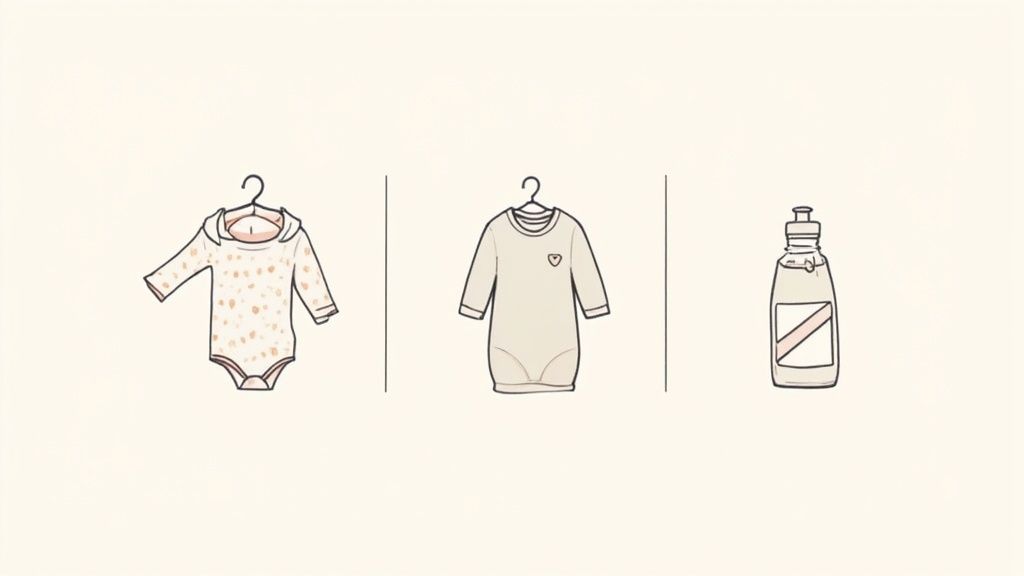
One of the best things about baby onesies with mitten cuffs is just how versatile they are. They aren't just for bedtime! Think of them as the perfect starting point for all sorts of adorable, practical outfits, no matter the season.
The onesie is truly a blank canvas. On cooler days, it’s a soft base layer that fits perfectly under a sleep sack, a cozy sweater, or a fleece bunting. This layering strategy keeps your baby snug and warm without making them feel bulky or restricted.
When the weather warms up, a single lightweight cotton or bamboo onesie is often all your baby needs. It's breathable, comfortable, and provides just enough coverage for playtime, tummy time, or a walk in the park. The simplicity is hard to beat.
Keeping Your Onesies Soft and Safe
Since these onesies are in constant rotation, knowing how to care for them properly is key. The right laundry routine will keep them soft, extend their lifespan, and ensure they stay safe for your baby's delicate skin. It's all about being tough on messes but gentle on the fabric.
The secret to long-lasting baby clothes is a gentle routine. Using the right detergent and avoiding harsh additives preserves the fabric’s integrity and protects your baby from potential skin irritants.
Here’s a simple checklist to make laundry day a little easier:
- Choose a Gentle Detergent: Always reach for a hypoallergenic, fragrance-free detergent made for babies. Standard detergents often contain chemicals and perfumes that can easily irritate sensitive skin.
- Wash in Cold Water: A cold, gentle cycle is your best friend. It helps prevent the delicate fibers from shrinking or breaking down and keeps colors and cute prints from fading.
- Avoid Fabric Softeners: While they promise extra softness, liquid softeners and dryer sheets can leave a residue on clothes that may cause rashes. They can also reduce the effectiveness of flame-retardant properties in some baby sleepwear.
- Tumble Dry on Low Heat: High heat is the enemy of soft cotton. To keep your onesies in top shape, tumble dry them on the lowest heat setting. Better yet, line-dry them whenever you can.
For a deeper dive into maintaining your little one's wardrobe, check out our post with more tips on how to care for your child’s clothes. Following these simple steps will help every onesie stay just as soft and cozy as the day you brought it home.
Why Are Mitten Cuff Onesies Suddenly Everywhere?
If you've shopped for a newborn recently, you've probably noticed that onesies with built-in mitten cuffs are no longer a niche item—they’re a staple. This isn't just some passing fad. It’s a genuine shift in what today's parents are looking for in baby clothes.
We're talking about a generation of caregivers who are all about safety, practicality, and making life just a little bit easier. The fold-over mitten cuff is a perfect example of a small design tweak that has a huge impact, moving from a "nice-to-have" feature to an absolute nursery must-have.
The Numbers Don't Lie
This isn't just a hunch; the data backs it up. Parents are actively buying clothes that solve real-world problems, and the built-in mitten is a brilliant solution. It gets rid of the age-old frustration of trying to keep track of tiny, separate mittens while making sure your baby's face is always protected from those surprisingly sharp little nails.
The demand for these specialized onesies has skyrocketed, especially online. Overall searches for 'baby onesie' recently shot up by 33%, and you see huge spikes for 'onesie with mitten cuffs' during prime shopping seasons. Market research reveals that mitten-cuffed styles now make up a whopping 35% of all baby onesie sales on major e-commerce sites. That’s a significant leap from just 27% two years ago.
Long-sleeve versions, which are the most likely to have the cuffs, really own the market because they're useful all year long. You can dig deeper into this data by checking out this analysis of onesie market trends on Accio.com.
This growth shows just how much a simple, clever design can resonate with families everywhere.
The rise of the mitten cuff onesie isn't about fashion; it's about function. Its dominance in the market shows that parents are investing in products that genuinely make their lives easier and their babies safer.
What’s the Big Deal for Parents?
So, what’s really behind this trend? It all comes down to the realities of life with a new baby. Those first few months are a whirlwind of feeding, changing diapers, and desperately trying to catch a little sleep. Any product that simplifies even one small task feels like a lifesaver.
The mitten cuff onesie is a champion of simplicity. It bundles two essential items into one, which not only saves a bit of money but also clears up mental clutter. That’s one less thing to buy, one less thing to wash, and one less thing to search for in the middle of the night.
Its popularity really boils down to a few core benefits:
- It Solves a Real Problem: It directly prevents newborns from scratching their delicate faces.
- It’s Incredibly Convenient: The fold-over cuff is always right there when you need it. No more playing hide-and-seek with a lost mitten.
- It Gives Peace of Mind: Parents can relax a little more, knowing their baby is safe from scratches and cozy, especially during overnight sleeps.
At the end of the day, the success of the mitten cuff is proof that smart, parent-focused design wins. It shows that sometimes, the best innovations aren't flashy—they're the simple ones that solve an everyday challenge for families.
Got Questions About Mitten Cuff Onesies? Let's Talk.
It’s totally normal to have questions. When it comes to our babies, every little detail matters, and we want to get it right. So, let's go through some of the most common things parents ask about onesies with built-in mitten cuffs.
Think of this as your quick-start FAQ. We'll cover everything from developmental milestones to safety, so you can use them with complete peace of mind.
When Is It Time to Say Goodbye to Mitten Cuffs?
This is the big one, and the answer is less of a hard-and-fast rule and more of a developmental guideline. Most pediatric experts agree that somewhere between 3 and 4 months old, babies are ready to have their hands free more often. This is right around the time their involuntary startle reflex (you might know it as the Moro reflex) starts to fade and they begin making more deliberate movements.
Letting their hands out at this stage is huge for their sensory development. They get to feel different textures, bring their hands to their mouth to self-soothe, and start building the early skills needed to grasp objects.
That said, you know your baby best. If your little one is still a master face-scratcher, especially if they struggle with eczema or sensitive skin, it's perfectly fine to continue using the cuffs when needed. The trick is to strike a balance: protection during sleep, but plenty of hands-on exploration when they're awake and you're nearby.
Are Mitten Cuffs Safe to Wear All Day?
Absolutely, mitten cuff onesies are designed with your baby's safety in mind—but like most things in parenting, moderation is key. While it’s perfectly safe to keep their hands covered, your baby also needs lots of supervised "hand-free" time during the day to learn about their world through touch.
A simple, practical routine works wonders: use the fold-over cuffs during naps and overnight. That's when they're most likely to scratch themselves accidentally and when you can't be watching their every move.
Think of the cuff as a helpful tool, not a permanent glove. The beauty is its flexibility—it offers protection in an instant and folds back just as quickly to allow for sensory play and exploration.
When it's tummy time or they're kicking around on their play mat, just fold the cuffs back. This lets them grab their toys, feel the rug beneath them, and develop those crucial fine motor skills.
Could Mitten Cuffs Interfere With Motor Skill Development?
This is a really smart question, and it's something many parents worry about. The short answer is no, not when you use them thoughtfully. A baby's hands are their first tools for learning, so keeping them covered 24/7 could definitely limit important sensory feedback and slow down the development of their grasp.
But the strategic use of mitten cuffs poses virtually no risk. As long as you're using them mainly for sleep while giving them plenty of uncovered playtime, you’re creating a perfect balance. That’s the genius of the fold-over design—you can switch between protected hands and free hands in a second.
Just be sure to create lots of opportunities for them to:
- Grab things: Offer them rattles, soft blocks, and textured rings.
- Feel different surfaces: Let them touch a soft blanket, a crinkly book, or a smooth wooden toy.
- Learn to self-soothe: Allowing them to find their thumb or hands is an important milestone.
How Do I Find the Right Size Mitten Cuff Onesie?
Getting the fit right isn't just about comfort; it's also about safety. A onesie that's too snug can be restrictive, but one that’s too baggy can be a hazard if the extra fabric bunches up near your baby's face.
Your first step should always be to check the brand's size chart. These charts almost always go by a baby's weight and height, which are much more reliable guides than age alone. When you try the onesie on, make sure they have plenty of room to wiggle their arms and legs freely.
The cuffs themselves should fold over their hands easily, without being tight on their wrists or so loose that they flop around. When in doubt, it’s usually better to size up. This gives you a little extra room for those sudden growth spurts. A well-fitting onesie keeps your baby comfortable, safe, and secure.
Ready to find the perfect blend of comfort, safety, and style? Explore the adorable and practical collection of baby essentials at Yarafly.com. Our thoughtfully designed onesies are made to keep your little one cozy and make your life easier. Shop now at https://yarafly.com and discover your new favorites.