

on December 31, 2025
Picking out baby girl pajamas is a delightful part of parenting, focused on comfort, safety, and ensuring your little one gets the best sleep possible. But what fuels those peaceful nights and happy mornings goes beyond the crib. A strong immune system, built from the ground up with great nutrition, is the secret ingredient to a healthy, well-rested child. The right PJs provide external comfort, while the right foods provide internal strength.
This guide will walk you through the essentials of building your child's immunity through diet. We'll cover everything from key vitamins and minerals to delicious, kid-approved recipes that make healthy eating fun. Consider this your go-to resource for nourishing your baby from the inside out, complementing the cozy comfort of her favorite pajamas.
Why a Strong Immune System Matters for Growing Kids
A child's immune system is a powerhouse in training. From birth, it's constantly learning and adapting, building a defense system against common colds, flu, and other bugs. Proper nutrition is the fuel for this critical development. A diet rich in vitamins and minerals helps build a resilient immune response, meaning fewer sick days and more energy for playing, learning, and growing.
When kids feel their best, they sleep their best. A strong immune system can help prevent the restless nights that often come with illnesses, ensuring that the cozy, safe environment you create with the perfect pajamas leads to truly restorative sleep.
The Building Blocks of Immunity: Key Vitamins and Minerals
A balanced diet provides the essential nutrients your child's body needs to thrive. While all vitamins and minerals play a role, some are particularly crucial for immune function. Let's look at the A-listers of immune support and where to find them.
- Vitamin C: The classic immune booster. It stimulates the formation of antibodies and is found in citrus fruits (oranges, clementines), berries, bell peppers, broccoli, and tomatoes.
- Vitamin A: Helps protect against infections by keeping the skin and tissues in the mouth, stomach, intestines, and respiratory system healthy. Look for it in carrots, sweet potatoes, spinach, and mangoes.
- Vitamin D: The "sunshine vitamin" is a powerful modulator of the immune system. While sunlight is a primary source, you can also find it in fortified milk, yogurt, and fatty fish like salmon.
- Zinc: This mineral is vital for developing and activating white blood cells. It's abundant in lean meats, beans, nuts, and whole grains.
- Iron: Essential for helping red blood cells carry oxygen throughout the body, which is crucial for immune cell function. Find it in red meat, poultry, lentils, and fortified cereals.
Quick Guide to Immune-Boosting Foods
This table summarizes key nutrients and food sources to help you build a strong foundation for your child's health.
| Nutrient | What It Does | Best Food Sources |
|---|---|---|
| Vitamin C | Fights infection and helps heal wounds. | Oranges, strawberries, bell peppers, kiwi, broccoli. |
| Vitamin A | Maintains healthy tissues and mucous membranes. | Carrots, sweet potatoes, kale, mangoes, eggs. |
| Vitamin D | Regulates the immune response. | Fortified milk/yogurt, salmon, tuna, egg yolks. |
| Zinc | Helps immune cells function properly. | Lean meat, chickpeas, lentils, pumpkin seeds, yogurt. |
| Iron | Essential for oxygen transport and cell growth. | Red meat, chicken, beans, spinach, fortified cereals. |
| Probiotics | Supports a healthy gut microbiome. | Yogurt with "live active cultures," kefir, sauerkraut. |
Ultimately, a colorful plate is a healthy plate. Offering a wide variety of fruits, vegetables, lean proteins, and whole grains ensures your little one gets the full spectrum of nutrients she needs to build a robust immune system.
Delicious and Easy Recipes for a Healthy Start
Knowing which foods are good for your child is one thing; getting them to eat them is another. This is where a little creativity in the kitchen comes in. Making food fun and delicious is the key to building lifelong healthy habits.
From nutrient-packed smoothies for tiny tots to clever recipes that win over the pickiest of eaters, these ideas are designed to be simple, wholesome, and kid-approved.
Smoothies for Babies, Toddlers, and Kids
Smoothies are a fantastic way to pack a ton of nutrients into a tasty, easy-to-consume treat. They are perfect for all ages, from babies just starting solids (with a thinner consistency) to older kids who need a quick, healthy snack.
1. The "Green Monster" Smoothie (Toddler & Kid Friendly)
This one hides the greens like a champ!
- 1 cup spinach (you won't taste it!)
- ½ banana (frozen for creaminess)
- ½ cup mango chunks (frozen)
- ½ cup plain yogurt or kefir
- A splash of milk or water to blend
- Tip for Babies (6m+): Thin with more water or breastmilk/formula and serve in a reusable pouch or with a spoon.
2. Berry Blast Smoothie
A classic that's bursting with Vitamin C.
- 1 cup mixed berries (strawberries, blueberries, raspberries)
- ½ banana
- ½ cup milk (dairy or non-dairy)
- 1 tablespoon of chia seeds or ground flaxseed for an omega-3 boost
- Tip for Toddlers: Let them help! Dropping berries into the blender is a fun job.
"A smoothie is like a magic trick for parents. You can blend in spinach, avocado, or seeds, and all your child tastes is the sweet, delicious fruit. It's a win-win."
Winning Over Picky Eaters
The picky eating phase is a normal part of development. The goal is to offer healthy options in a low-pressure, appealing way. Here are a couple of recipes designed to tempt even the most selective palates.
1. "Hidden Veggie" Turkey Meatballs
These are perfect for little hands and can be packed with finely grated veggies.
- 1 lb ground turkey
- ½ cup finely grated zucchini (squeeze out excess water)
- ¼ cup finely grated carrot
- ¼ cup breadcrumbs
- 1 egg
- A pinch of Italian seasoning
- Bake at 400°F (200°C) for 15-20 minutes. Serve with a favorite dipping sauce.
2. Sweet Potato "Fries"
A healthier, Vitamin A-packed alternative to traditional fries.
- 2 sweet potatoes, cut into fry shapes
- 1 tablespoon olive oil
- A sprinkle of cinnamon or paprika
- Toss to coat and bake at 425°F (220°C) for 20-25 minutes, flipping halfway through. They are naturally sweet and have a fun shape that kids love.
This decision tree helps pull it all together, showing how comfort, safety, and style play a role when choosing the best baby girl pajamas.
By focusing on whole, nutrient-dense foods and presenting them in creative ways, you can build a strong immune system that works hand-in-hand with a safe, comforting sleep environment to help your little one thrive.
2. Choosing the Best Fabric for Your Baby's Skin
A baby’s skin is incredibly delicate and much more porous than our own. This simple fact turns their pajamas into more than just cute outfits—they're the one thing in constant contact with their skin for hours on end. The right material isn't just about comfort; it's about preventing irritation, rashes, and overheating, which is the secret sauce for a good night's sleep.
When you're looking at baby girl pajamas, your top priority should always be how the material feels against that soft skin. You want something that feels like a gentle hug, not a scratchy distraction. It’s a lot like picking out your own favorite cozy sweater—it needs to feel good, breathe well, and keep you at that just-right temperature.
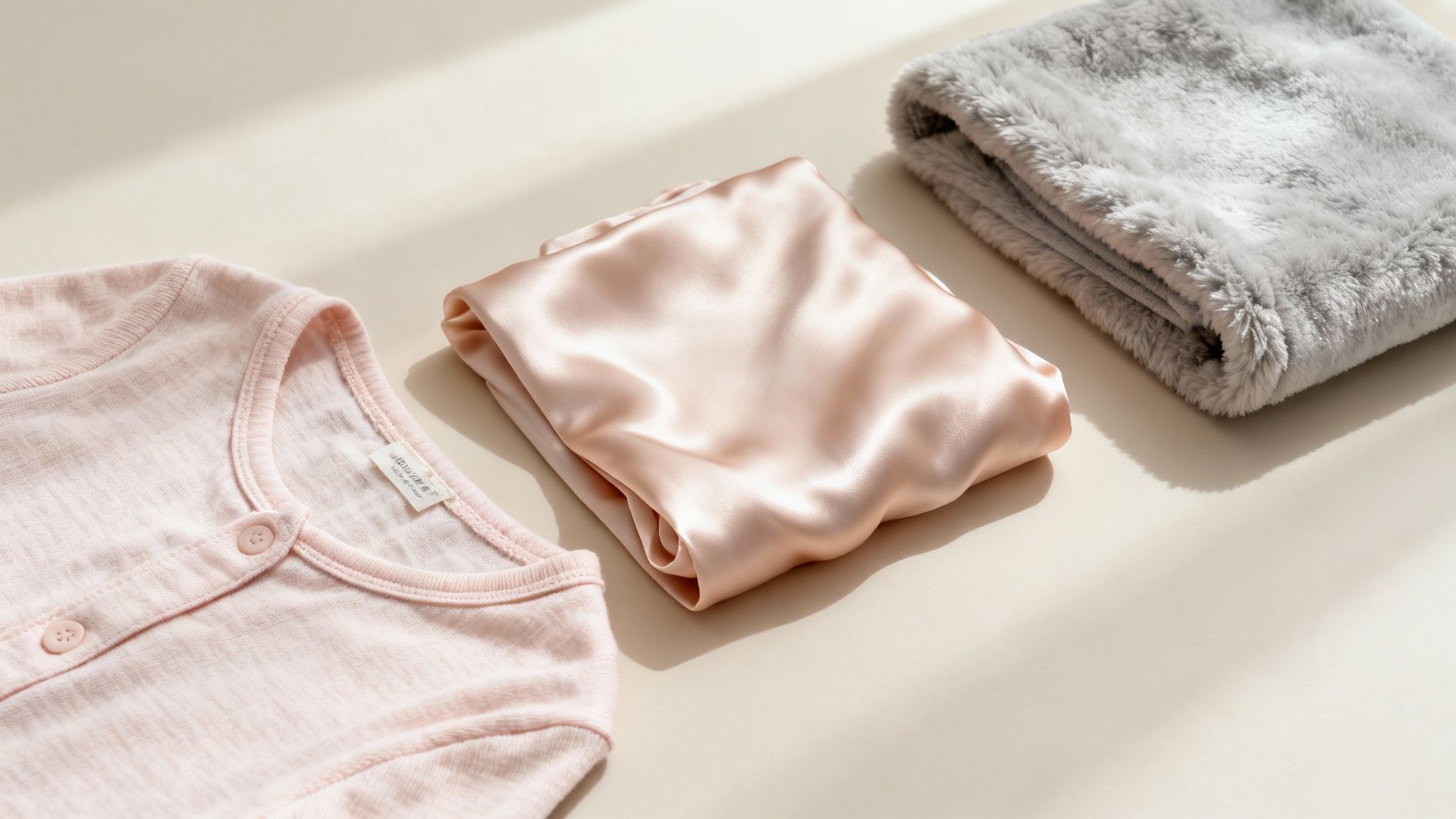
Cotton: The Timeless Gold Standard
There’s a good reason cotton has been the go-to for baby clothes for generations. As a natural fiber, it’s exceptionally soft, absorbent, and, most importantly, breathable. This breathability is a game-changer because it lets air move freely, pulling moisture away from the skin and helping to regulate your baby's body temperature.
This is a huge deal because babies aren't great at managing their own temperature yet. Cotton acts like a personal thermostat, helping them stay comfortable without getting too hot or too cold, which significantly reduces the risk of overheating. On top of that, its hypoallergenic nature makes it a safe bet for sensitive skin.
Parents know this instinctively. Consumer reports show that for the 0-12 month age group, cotton is the top choice for 60% of parents. They prize its softness, which makes sense when you learn that a whopping 85% of parents list skin sensitivity as a primary concern.
Exploring Other Fabric Wonders
While cotton is king, it's not the only great option out there. A few other fabrics bring their own unique perks to the nursery.
- Bamboo: If you're looking for next-level softness, bamboo is it. It has a silky-smooth feel that’s incredibly gentle. Bamboo is also a moisture-wicking powerhouse—even better than cotton—and is naturally hypoallergenic. It's one of the top fabrics ideal for sensitive skin for a reason.
- Fleece: When the temperature really drops, fleece is your best friend for keeping your little one warm and snug. It’s a synthetic material celebrated for its amazing insulation and plush feel. It's perfect for those chilly winter nights, but just be sure the room is cool enough to prevent overheating.
- Organic Options: For parents who want to keep things as pure as possible, organic fabrics are a fantastic choice. Organic cotton, for instance, is grown without any synthetic pesticides or fertilizers, so you can rest easy knowing the material is clean and natural.
Demystifying TOG Ratings
Ever seen a "TOG" rating on a sleep sack and felt a little confused? Don't be—it's much simpler than it sounds.
A TOG rating is just a way to measure how warm a piece of clothing is. Think of it as the warmth guide for your baby's PJs, just like the tog rating on your own duvet. A higher TOG means a warmer garment.
This handy system takes the guesswork out of dressing your baby for bed. Once you know the temperature of your nursery, you can pick sleepwear with the right TOG rating and feel confident your baby is perfectly comfortable—never too hot, never too cold.
Here’s a quick cheat sheet:
| Room Temperature | Recommended TOG Rating |
|---|---|
| 75-81°F (24-27°C) | 0.5 TOG or less |
| 69-74°F (21-23°C) | 1.0 TOG |
| 61-68°F (16-20°C) | 2.5 TOG |
Ultimately, finding the perfect fabric is about balancing softness, breathability, and the temperature of your home. By getting to know these materials and ratings, you can easily choose pajamas that will keep your baby girl safe, sound, and comfy all night long.
When it comes to your baby, nothing matters more than their safety, especially when they're sleeping. Cute prints and soft fabrics are wonderful, but what really lets you rest easy are the safety standards behind your baby’s pajamas. It can feel like a lot to take in at first—what exactly does "snug-fitting" mean? What about "flame-resistant"?
Let’s break it down. Think of these safety regulations not as confusing rules, but as a safety net woven right into the fabric. Organizations like the U.S. Consumer Product Safety Commission (CPSC) set these standards for a reason, and choosing pajamas that meet them is one of the easiest, most important things you can do to create a safe sleep space for your little one.
The Critical Importance of a Snug Fit
You’ve probably noticed the term "snug-fitting" on the tags of most cotton baby pajamas. It's not just a style suggestion; it's a crucial safety feature. Snug-fitting pajamas should fit close to your baby’s body—think of a soft, gentle hug. There shouldn’t be any baggy fabric hanging from their arms, legs, or around their tummy.
This close fit is all about fire safety. Loose clothing has more air between the fabric and your child's skin, which can actually fuel a flame and help it spread faster if it ever comes near a heat source like a candle or space heater.
A snug-fitting design drastically reduces that risk by minimizing the air between the material and your baby’s skin. It’s a simple concept, but it makes the garment significantly less flammable.
On top of that, a proper fit also means no extra fabric can get twisted or bunched up, which could pose a suffocation risk in the crib. It’s all about letting your baby move and breathe freely without any hazards.
Flame-Resistant Fabrics Explained
Now, for sleepwear that isn't snug-fitting (typically in sizes 9 months to 14), CPSC rules mandate that it must be flame-resistant. The term can sound a little alarming, and many parents understandably have questions about chemicals.
So, what does it mean? A fabric is considered flame-resistant if it’s designed to resist catching fire and, more importantly, to self-extinguish if it does. This is usually achieved in one of two ways:
- Inherently Resistant Fibers: Some synthetic materials, like specific types of polyester, are flame-resistant by their very nature. Their chemical makeup makes them hard to ignite; they tend to melt instead of bursting into flame.
- Treated Fabrics: Other materials are treated with flame-retardant chemicals to meet the federal safety standards. Many parents, however, prefer to steer clear of these added treatments.
Here’s the great news: you can completely avoid chemically treated fabrics by simply choosing snug-fitting pajamas made from natural fibers like cotton. The snug fit itself meets the safety requirement, giving you a natural and effective way to keep your baby safe.
For an even deeper sense of security, it's also helpful to look for products that are GREENGUARD Gold Certified. This certification means the item has been tested for low chemical emissions, contributing to a healthier environment where your baby sleeps. Knowing what these standards mean helps you choose pajamas that aren't just adorable, but are fundamentally safe.
Building a Year-Round Pajama Wardrobe
As any parent knows, babies grow at lightning speed, and their needs seem to change with every season. Building a pajama wardrobe for your baby girl can feel like you're constantly shopping, but a little bit of planning goes a long way. The idea is to have a versatile collection that keeps her comfy and cozy, no matter what the weather is doing.
Think of it like a capsule wardrobe, but just for sleep. Instead of buying a ton of things at once, you can be strategic. This way, you'll always have the right baby girl pajamas on hand, whether you're facing a sweltering summer night or a frosty winter morning. You'll shop smarter, feel less stressed, and rest easy knowing your baby is dressed perfectly for a good night's sleep.
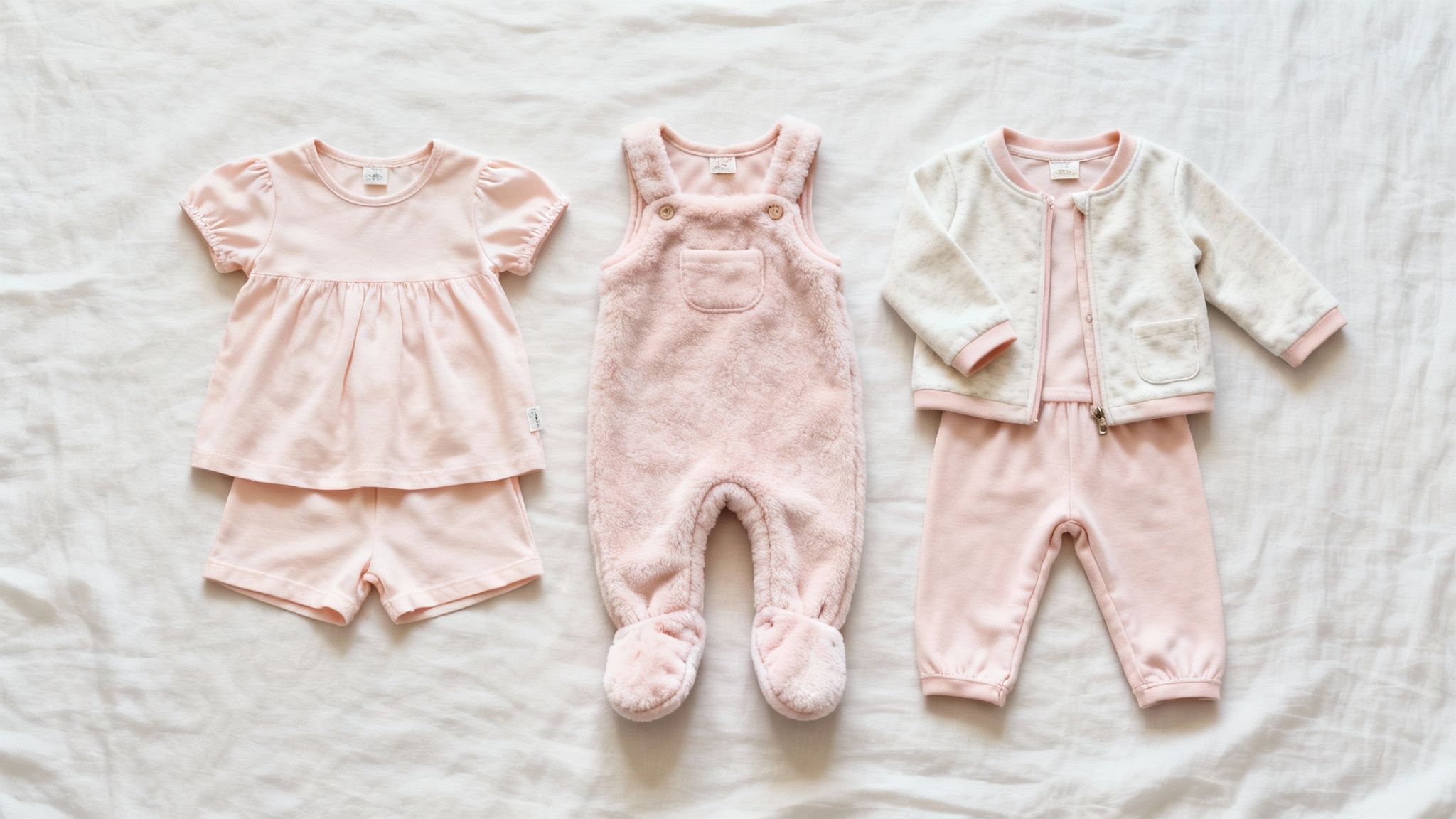
Warm Weather Essentials for Summer
When the air gets thick and humid, the main goal is keeping your baby cool and preventing overheating. This is where lightweight, breathable fabrics become your absolute best friend.
- Fabric Choice: Stick with single-layer 100% cotton or bamboo pajamas. These natural fibers are amazing because they let air flow freely and pull moisture away from your baby's skin, which is key to keeping her dry and happy.
- Ideal Styles: Footless one-pieces, short-sleeved sets, or even a simple bodysuit can be perfect. I’m a big fan of footless designs on warm nights—it just gives those little feet some air and helps with temperature control.
Cold Weather Comfort for Winter
Once the temperature starts to drop, her sleepwear needs to provide warmth without being too bulky. It's all about layering and choosing fabrics that insulate well.
- Fabric Choice: You can't go wrong with cozy materials like microfleece or flannel, which are fantastic for trapping body heat. If you prefer a natural option, a thicker knit cotton is also a great choice.
- Ideal Styles: Footed pajamas are a winter classic for a reason—they keep tiny toes toasty without you having to worry about socks falling off in the crib. On really cold nights, I always add a short-sleeved cotton bodysuit underneath for an extra layer of warmth.
A simple layering trick is a game-changer for fluctuating temperatures. A lightweight cotton bodysuit can be worn under almost any pair of pajamas, allowing you to easily add or remove warmth as needed.
Navigating Transitional Seasons
Ah, spring and fall. These seasons can be all over the place, with chilly mornings that turn into surprisingly warm afternoons. For these in-between months, versatility is everything.
This is where having a mix of pajama styles really pays off. Long-sleeved two-piece cotton sets are my go-to for this time of year because they offer coverage without being too heavy. It's also smart to have a few lightweight sleep sacks ready to go—they make it easy to add a layer of warmth over lighter PJs when a cold snap hits unexpectedly.
To give you a quick cheat sheet, here’s a simple guide to choosing the right PJs for every season.
Seasonal Pajama Guide for Baby Girls
| Season | Recommended Fabric | Ideal Pajama Style | Layering Tip |
|---|---|---|---|
| Summer | Lightweight Cotton, Bamboo | Footless One-Pieces, Short-Sleeve Sets | Use a bodysuit on its own for very hot nights. |
| Fall | Cotton, Jersey Knit | Two-Piece Sets, Long-Sleeve Bodysuits | A light sleep sack adds warmth on cooler evenings. |
| Winter | Microfleece, Flannel, Heavy Cotton | Footed Pajamas, Sleep Gowns | Layer a cotton bodysuit underneath for extra insulation. |
| Spring | Cotton, Interlock Knit | Long-Sleeve One-Pieces, Two-Piece Sets | Keep a cellular blanket handy for fluctuating temps. |
This table is just a starting point, of course. Always check your baby's neck or back to see if they're too warm or cool, and adjust their layers accordingly.
It's clear that parents are deeply invested in their children's comfort. The global market for baby girl clothing was valued at a massive USD 23.5 billion in 2023 and is expected to hit USD 35.8 billion by 2032. What's really interesting is how trends have shifted beyond just cute designs. Today, functionality is king, with 70% of parents actively looking for features like flame-retardant fabrics and tagless labels to ensure their little one is as comfortable as possible. You can dive deeper into the baby girl clothing market trends to see how things are evolving.
Smart Shopping and Care Tips to Make Pajamas Last
Every parent knows the feeling: you blink, and suddenly that adorable pajama set is too small. Getting the most out of your baby girl’s wardrobe isn’t just about saving money—it’s about being smart and practical. With a few tried-and-true tricks, you can make those cute baby girl pajamas last longer and look great wash after wash.
A little forethought goes a long way. Instead of just buying for the here and now, thinking a season or a size ahead will save you from those last-minute, full-price shopping dashes when a growth spurt hits overnight.
How to Shop Smarter, Not Harder
You don't have to break the bank to build a beautiful collection of high-quality sleepwear. It's all about timing your purchases and knowing where the real value is.
Here are a few tricks I’ve learned over the years:
- Shop Off-Season: This is the oldest trick in the book for a reason. Snag cozy fleece pajamas in the spring and grab lightweight cotton sets as summer winds down. Stores are clearing out last season’s inventory, and you can get amazing deals on PJs for the following year.
- Look for Multi-Pack Deals: Brands often bundle essentials, and pajamas are no exception. Buying a pack of two or three almost always gives you a better price per piece than buying them individually. It’s an effortless way to stock up.
- Always Buy a Size Up: Babies grow at lightning speed. Buying pajamas just one size ahead is a classic parent hack that gives you so much more wear out of each garment. Just make sure the fit isn't so loose that it becomes a safety issue—snug is still best.
Keeping Pajamas Looking Like New
Once you’ve found the perfect PJs, a little care will keep them soft, bright, and ready for plenty of sleepy nights. The right laundry routine can be the difference between a pajama set that lasts for months and one that fades or shrinks after a few wears.
Simple changes, like using a gentle detergent and steering clear of high heat, protect both the delicate fabric and your baby’s sensitive skin. For a deep dive into the best practices, check out our complete guide on how to care for your child's clothes.
To keep those pajamas looking their best, just follow these simple steps:
- Zip and Snap Everything: Before tossing them in the wash, fasten all zippers and snaps. This little step prevents them from catching on other clothes and causing snags.
- Turn Them Inside Out: This is the secret to preserving those cute prints and vibrant colors. It protects the design from the wear and tear of the washing machine.
- Wash on Cold: Always opt for a gentle cycle with cold water and a mild, baby-safe detergent. Hot water is the number one enemy of color and can cause fabrics to shrink.
- Tumble Dry on Low: If you use a dryer, keep the heat low. High temperatures are tough on fibers. Better yet, air dry them when you can—it’s the gentlest method of all.
Giving the gift of high-quality pajamas is both thoughtful and genuinely useful. New parents always appreciate practical gifts, and a beautiful, durable pajama set is something they will use every single day.
By shopping smart and caring for your purchases, you ensure your baby girl is always snuggled in comfortable, beautiful pajamas that are truly made to last. It’s a simple way to make a wise investment and get the most out of every adorable piece.
Your Top Questions About Baby Girl Pajamas, Answered
Alright, we've covered the different styles, fabrics, and safety rules. But I know there are always a few lingering questions that pop up when you're actually about to click "buy." Let's tackle some of the most common ones I hear from parents.
Think of this as your quick-reference guide for those practical, "what-do-I-actually-do?" moments. We'll clear up everything from how many pairs you really need to the age-old zippers vs. snaps debate.
How Many Pairs of Pajamas Does a Baby Really Need?
I always tell new parents to aim for 5 to 7 pairs of pajamas. That might seem like a lot, but trust me, it’s a lifesaver. Between spit-up, diaper blowouts, and the occasional midnight mess, having a healthy rotation means you won't be stuck doing laundry at 3 a.m.
Having that cushion ensures a fresh, cozy pair is always waiting. This is especially true in those first few months when messes are a daily (and nightly) occurrence and your energy is better spent elsewhere.
Are Zippers or Snaps Better for Baby Pajamas?
Ah, the great debate! Honestly, there’s no single winner here—it really boils down to what makes your life easier. Both have their pros.
- Zippers: You can't beat them for speed. When you're fumbling through a diaper change in a dimly lit room, a quick zip is a game-changer. Look for two-way zippers that let you unzip from the bottom, which is fantastic for changing a diaper without fully undressing your baby.
- Snaps: Snaps can feel a bit gentler, especially for tiny newborns. Some parents prefer them to avoid anything rubbing against a healing umbilical cord stump. They also give you a bit more flexibility if you just want to unsnap a few for a little extra air circulation.
My advice? Have a few of each. You might find you prefer zippers for nighttime and snaps for daytime lounging.
What Should My Baby Wear Under Her Pajamas?
This one is all about the temperature in your baby's room. Your goal is simple: keep them comfortably warm, but never hot.
If the room is on the cooler side (think below 68°F or 20°C), adding a simple short-sleeve cotton bodysuit underneath their PJs is a perfect way to add a light layer of warmth. For warmer rooms, the pajamas alone are almost always enough.
Here's a pro tip: To check if your baby is comfortable, feel the back of their neck or their tummy. It should be warm and dry. Don't worry if their hands or feet feel a bit cool—that's totally normal and not a good indicator of their core body temperature.
When Is the Right Time to Switch to Two-Piece Pajamas?
Moving from a one-piece sleeper to a "big kid" two-piece set is a sweet little milestone! This usually happens once your little one is more mobile and starts wanting to do things for herself.
Most families make the switch sometime between 18 and 24 months. This timing is perfect because it often lines up with the start of potty training. Two-piece sets make it so much easier for a toddler to manage their own pants, which helps build their confidence and makes those nighttime potty trips a lot less disruptive.
At Yarafly.com, we know that the best sleepwear is a perfect mix of cozy, safe, and cute. We pour that understanding into every piece we design. Come see our full collection of adorable and practical baby girl pajamas, made for sweet dreams and happy mornings.