

on October 24, 2025
Picking out the perfect baby girl dresses is one of the joys of being a parent, but it’s about more than just finding something cute. The real goal is to find that sweet spot between adorable style, everyday comfort, and total safety for your little one. It means choosing soft, breathable fabrics that are kind to delicate skin and designs that make diaper changes a breeze.
This guide is here to walk you through all of it, so you can make choices that are both smart and stylish for every occasion.
A Parent's Guide to Finding the Perfect Dress
Welcome to the wonderful, sometimes overwhelming, world of dressing your baby girl! While rows of tiny, charming dresses are hard to resist, the best choice goes beyond a pretty pattern. It’s really about keeping your baby happy and giving you peace of mind.
A scratchy dress, a tricky-to-button outfit, or one with loose embellishments can quickly turn a sweet moment sour.
Think of this as your friendly roadmap. We'll help you decode everything from confusing sizing charts to picking the safest fabrics, making the whole process simple, fun, and maybe even a little less daunting.
Building a Practical and Beautiful Wardrobe
The world of baby clothes is bigger than you might think. The global market for baby girl clothing hit around USD 23.5 billion in 2023 and is only getting bigger. This growth is all thanks to parents like you who are looking for clothes that are both stylish and comfortable, often inspired by trends popping up on social media. You can dive deeper into these market trends and their drivers in the full report.
With endless options, it's easy to get lost. But if you stick to a few core ideas, you can build a wardrobe that's as practical as it is precious.
The best baby girl dresses are the ones that allow for wiggles, giggles, and naps without any fuss. Prioritizing practical features like snap closures and stretchy necklines ensures both baby and parent are happy.
To help you get started, here's a quick summary of what to keep in mind.
Key Factors for Choosing a Baby Dress at a Glance
This table breaks down the most important things to consider when you're on the hunt for the perfect dress. It’s a handy cheat sheet to keep you focused on what truly matters.
| Consideration | Why It Matters | Quick Tip |
|---|---|---|
| Fabric Softness | A baby's skin is incredibly sensitive and can be easily irritated by rough materials. | Stick with natural fibers like organic cotton, bamboo, or modal. |
| Safety Features | Small, detachable parts like buttons or beads can be choking hazards. | Opt for embroidered details, snap closures, and dresses without long ties or ribbons. |
| Ease of Changing | You'll be changing a lot of diapers, so easy access is non-negotiable. | Look for wide neck openings, full-length snaps, or built-in bodysuits. |
| Sizing and Fit | Babies grow fast! A dress that's too tight is uncomfortable and restrictive. | When in doubt, size up. Check brand-specific size charts, as they can vary widely. |
| Care Instructions | New parents don't have time for high-maintenance laundry. | Choose machine-washable fabrics that can handle frequent cycles without shrinking or fading. |
By keeping these points in mind, you can confidently build a collection of dresses that are perfect for your little one's needs.
To create a well-rounded wardrobe, think about these key areas:
- Everyday Comfort: For daily adventures (even if it's just a nap), focus on soft, breathable fabrics like organic cotton. They're gentle on the skin and tough enough to survive countless washes.
- Special Occasions: For parties, holidays, or photoshoots, it's fun to explore dresses with special touches like soft tulle or delicate lace. Just make sure they don't compromise on comfort or safety.
- Practicality First: Always look for features that make life easier. Dresses that open fully or have snaps at the crotch are a lifesaver during diaper changes.
- Room to Grow: Since babies grow in the blink of an eye, choosing styles with a bit of extra room or stretchy fabric will help you get more wear out of each piece.
Finding the Perfect Dress for Every Occasion
From messy playdates to her very first birthday party, there's a perfect dress for every moment in your baby girl’s life. But picking the right one isn't just about what looks cute—it's about making sure the dress fits the day's plans. Let's walk through the best styles, from everyday playwear to picture-perfect party outfits.
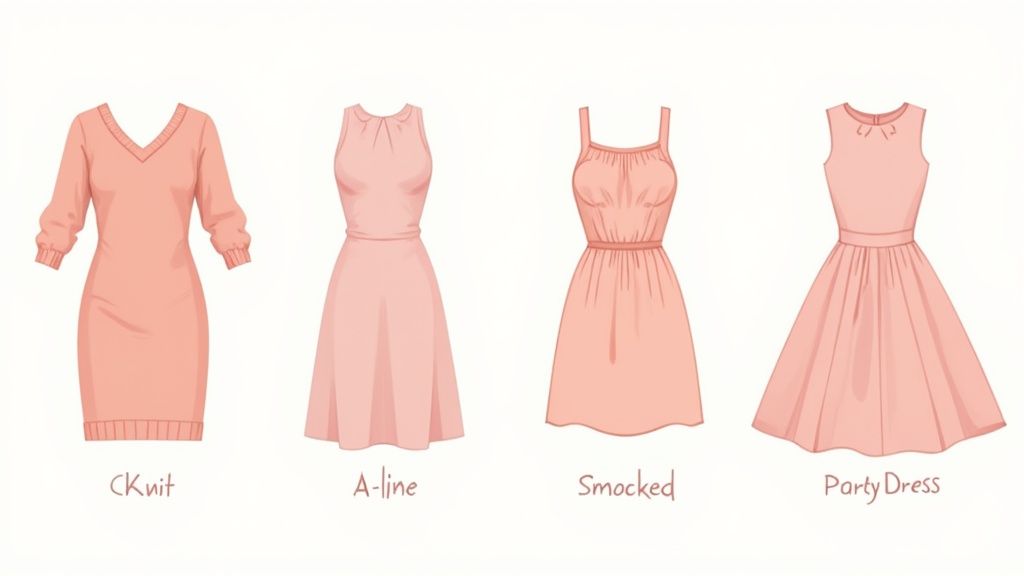
Think of it this way: you wouldn't wear a ballgown to go hiking. A simple, stretchy knit dress is perfect for a day of crawling and discovery, while a beautiful tulle dress is better saved for a special event where she's the star of the show.
Everyday Essentials for Play and Comfort
When it comes to daily wear, comfort and durability are king. You need clothes that can keep up with a busy baby. These styles are designed for wiggles, easy clean-ups, and all-day happiness, making them the real workhorses of her wardrobe.
- Knit and T-Shirt Dresses: Made from soft, breathable cotton, these are the ultimate grab-and-go outfits. Their stretchy fabric gives her total freedom to move, whether it's tummy time or her first wobbly steps.
- A-Line Dresses: This classic cut is fitted at the shoulders and flares out gently, creating a little "A" shape. It gives kicking legs plenty of room and is wonderfully easy to pop over her head.
- Romper Dresses: Genius! You get the sweet look of a dress with the practicality of a romper. Most have snaps at the crotch, which makes for lightning-fast diaper changes. They’re cute and convenient all in one.
These simple styles are often made from fabrics like organic cotton, which is extra gentle on sensitive skin and can handle endless cycles in the washing machine. They truly are the foundation of a practical, adorable wardrobe.
Dressing Up for Special Moments
When a celebration is on the calendar, it's time to bring out the fun, decorative dresses. These are the outfits that make memories, perfect for birthdays, holidays, or family photos.
A special occasion dress should feel as good as it looks. My pro tip? Always look for designs with soft linings under any tulle or lace. This ensures your baby stays comfortable and happy throughout the event, even if she dozes off.
For those unforgettable moments, consider styles with a little extra flair:
- Smocked Dresses: With beautiful, hand-stitched embroidery across the chest, smocked dresses have a timeless, heirloom feel. They're often crafted from high-quality cotton and are just perfect for holidays or formal portraits.
- Party Dresses: This is where you'll find layers of soft tulle, delicate lace, and pretty satin sashes. Just make sure any bows, sequins, or other little details are sewn on securely. If you're looking for inspiration, you can browse a beautiful collection of toddler girl formal dresses to see what styles you love.
In the end, building a great dress collection for your baby girl is all about balance. You need those reliable, comfy options for everyday adventures and a few showstoppers for the moments you’ll cherish forever.
Choosing Fabrics for Comfort and Safety
A baby’s skin is brand new and so much more delicate than ours. It's incredibly soft but also more porous, which means the fabric you choose for her dress isn't just about looks—it’s a critical part of her comfort and health. Think of the material as the first thing that touches her skin all day, a gentle hug that needs to be just right.
The perfect fabric does more than just feel soft. It has to be a real workhorse! It needs to be breathable to keep her from overheating, absorbent enough to handle a little drool or sweat, and tough enough to survive countless cycles in the washing machine. Getting this right means your baby stays comfortable and her adorable dresses actually last.
Natural Fabrics: The Gold Standard
When it comes to dressing babies, natural fibers are the hands-down winner, and for very good reasons. They come from nature, so they have inherent qualities that are perfectly suited for sensitive new skin.
- Organic Cotton: This is the top pick for most parents. Since it's grown without harsh pesticides or chemicals, it's hypoallergenic, wonderfully soft, and lets air flow freely. It’s the ideal all-around fabric for daily play dresses and even for those dressier occasions.
- Bamboo Rayon: If you've ever felt bamboo fabric, you know it's almost silky. It’s a fantastic option that naturally pulls moisture away from the skin and even offers a bit of UV protection, making it a great choice for sunny days.
- Linen: For those hot, humid summer months, nothing beats linen. It's incredibly lightweight and breathable. While it can wrinkle easily, it has a lovely charm and actually gets softer and more comfortable with every wash.
These fabrics are really the cornerstone of a safe and cozy wardrobe for your baby girl.
Understanding Synthetics and Blends
While natural materials are usually the best bet, don't write off synthetics entirely. Some blends offer practical perks like extra durability or a bit of stretch, which can be great for active little ones. Materials like fleece or velour, which are often made from polyester, are fantastic for keeping her warm and snug in winter dresses.
It’s amazing to think how far we've come. Years ago, baby clothes were simple, handmade cloths. Today, we have a huge market full of advanced, ready-to-wear options designed with safety in mind. Modern brands focus on baby-friendly features, steering clear of hazards like loose buttons or long, dangly ties. The market has bounced back in a big way recently, with online shopping and fresh designs leading the charge. You can get a deeper look into the baby dresses market at Allied Market Research.
Here's a great rule of thumb for blends: try to make sure the layer touching your baby's skin is a natural fiber. For example, you can easily layer a cozy polyester velour dress over a soft cotton bodysuit.
Choosing the right material is often a balancing act between the season and the occasion. To help you decide, here’s a quick comparison of the most common fabrics you’ll encounter.
Comparing Common Fabrics for Baby Dresses
| Fabric Type | Best For | Pros | Cons |
|---|---|---|---|
| Organic Cotton | Everyday wear, all seasons | Hypoallergenic, breathable, soft, durable, easy to wash | Can shrink if washed in hot water; not as warm as fleece |
| Bamboo Rayon | Warm weather, sensitive skin | Silky smooth, moisture-wicking, thermo-regulating, UV protective | Can be more expensive; requires gentle washing |
| Linen | Hot and humid climates | Highly breathable, lightweight, gets softer over time | Wrinkles very easily; can feel stiff initially |
| Fleece (Polyester) | Cold weather, winter outings | Very warm, soft, durable, dries quickly | Not very breathable; can cause overheating if overused |
| Blends (Cotton/Poly) | Activewear, frequent use | Wrinkle-resistant, durable, often more affordable | Less breathable than 100% cotton; may irritate very sensitive skin |
Ultimately, the best choice really depends on your needs. A soft, warm fleece dress is perfect for a chilly winter day, but a light and airy organic cotton sundress is exactly what you want for a summer picnic. By sticking with high-quality, gentle materials, you can be sure that every little dress in her closet is just as comfortable as it is adorable.
Getting the Sizing Right Every Time
Trying to buy a baby girl dress can sometimes feel like a guessing game. You grab a "3-6 months" size, and it fits perfectly from one brand, but another brand's version is way too snug. What’s the secret? It’s all about ditching the age on the tag and looking at your baby's actual measurements.
Most brands build their sizing around a baby's weight and height, which are far more reliable guides than their age. Before you start shopping, take a quick moment to measure your baby’s chest, waist, and length from her shoulder down to her knee. Armed with these numbers, those confusing size charts suddenly make perfect sense, and you can find a dress that fits comfortably and looks adorable.
Decoding the Size Chart
Once you have those key measurements, you can match them up against any brand’s sizing chart with confidence. Don't worry if your baby seems to be a different size in every store—that's totally normal in the world of baby clothes.
The biggest mistake parents make is buying based on age alone. If you stick to the height and weight recommendations on the size chart, you'll get a much more accurate fit every time, making sure your baby is comfortable and the dress looks just right.
What if your little one is right between two sizes? The golden rule is to always size up. A slightly bigger dress gives her that all-important room to grow and move without feeling constricted. It’s always better to have a dress she can enjoy for a few months instead of one she outgrows in a flash. For a closer look at this, feel free to check out our complete parent's guide to understanding children's clothing sizes.
Tips for the Perfect Fit
Finding the right size is half the battle; the other half is making sure the dress style works with it. Some designs are just more flexible and grow along with your baby.
- Look for adjustable features: Little details like shoulder ties, elastic waistbands, or wrap designs make a huge difference. They let you customize the fit and get more wear out of the dress.
- Consider A-line styles: These classic silhouettes are a parent's best friend. They're naturally looser at the bottom, giving active little legs and growing tummies plenty of space.
- Check the armholes and neckline: Make sure these areas aren't too tight or restrictive. They should allow for easy movement and prevent any rubbing on her delicate skin.
The material of the dress is just as important as the fit, and often, the occasion will tell you what fabric to choose. This handy decision tree makes it simple.
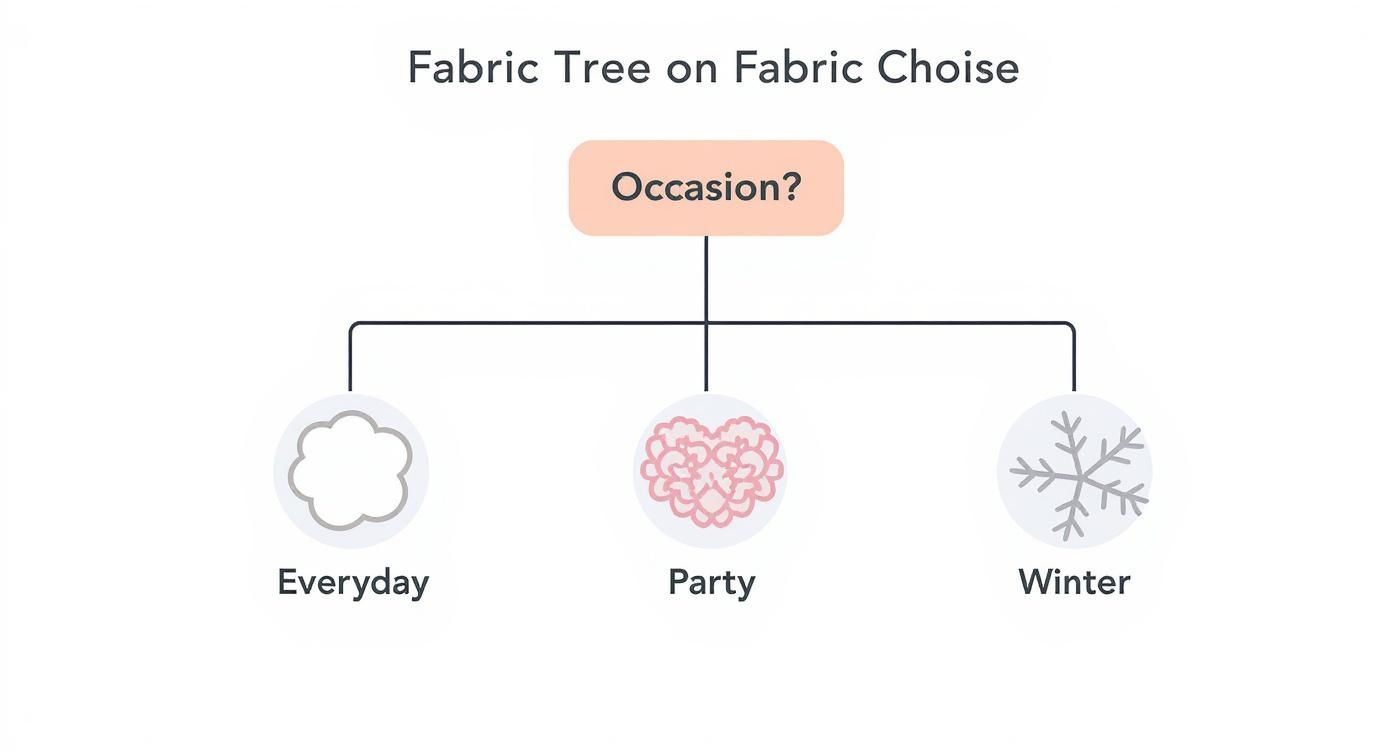
As you can see, the event really helps guide your fabric choice—pointing you to soft cotton for everyday play, elegant lace for parties, and cozy wool for chilly days. When you master both sizing and fabric, you can be sure every single dress you pick is a perfect match for your baby girl.
Styling Outfits with Safe Accessories
Accessories are what take a cute baby girl dress and turn it into a truly special outfit. But let's be honest, when it comes to our little ones, safety always, always comes first. Think of accessories like the cherry on top—they're a sweet addition, but only if they're perfectly safe for your baby to wear.
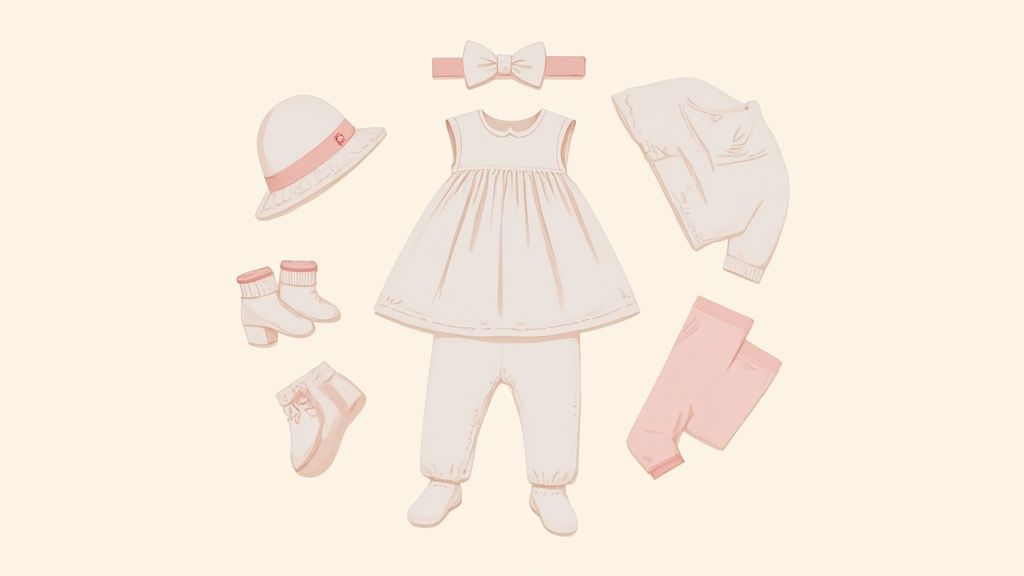
The trick is to stick with items designed specifically for infants. That means no tiny, detachable parts that could ever become a choking hazard. When in doubt, remember the golden rule: simple, soft, and secure.
Choosing the Safest Accessories
Before you add any little extras to your baby's outfit, give them a quick once-over for any potential risks. That adorable bow is only perfect if it's also perfectly safe.
- Headbands and Bows: Look for headbands made from soft, stretchy fabric that won’t pinch or feel too tight on her delicate head. If you love hair clips, make sure they're attached securely and designed to gently grip fine baby hair without pulling.
- Hats and Bonnets: For sunny days, a wide-brimmed sun hat is a non-negotiable. And for chilly weather, nothing is sweeter than a soft, fitted bonnet. Just make sure any chin straps have a safety release or, even better, no ties at all.
- Footwear: Before she's on her feet, soft-soled booties or crib shoes are the way to go. They keep those tiny toes warm and finish off an outfit beautifully without getting in the way.
When it comes to baby accessories, less is often more. A single, well-chosen piece—like a beautiful headband or a pair of sweet booties—can complete a look without overwhelming your baby or adding any risks.
Layering for Weather and Style
One of the best things about dresses is how versatile they are. With just a few smart layers, you can make a single dress work for any season. This isn't just great for style; it's a practical way to keep your baby comfortable.
When things get a little chilly, a pair of soft cotton leggings or tights under a dress adds an instant layer of warmth. You can also slip a simple long-sleeved bodysuit underneath her dress for extra coziness.
A knit cardigan is the perfect finishing touch. It's a classic for a reason—it's easy to pop on and off as the temperature fluctuates. This simple layering strategy means that a favorite summer dress can easily be worn well into the fall and winter, giving you so much more life out of each piece.
Caring for and Preserving Baby Dresses
Let's be honest, those adorable baby girl dresses are basically magnets for spit-up, mashed bananas, and mystery smudges. Keeping them looking fresh isn't just a chore—it's about preserving those tiny, sweet memories wrapped up in the fabric.
The first line of defense is a good, gentle detergent. You'll want something that’s tough on stains but incredibly soft on a baby's sensitive skin. My advice? Look for plant-based, hypoallergenic formulas. You want to see "free from harsh chemicals, dyes, and fragrances" on the label. That’s your ticket to clean clothes without the risk of irritation.
Washing Delicate Dresses
You can't just toss every dress into the machine and hope for the best. A sturdy cotton play dress is one thing, but that beautiful little number with lace trim or delicate embroidery? It needs a softer touch.
- Machine Washing: For everyday cotton dresses, stick to a gentle cycle with cold water. A great trick is to pop the dress into a mesh laundry bag first. It acts like a little bodyguard, preventing it from getting snagged or stretched out by other clothes in the wash.
- Hand Washing: This is the safest bet for those special occasion pieces. Just fill a basin with cool water, add a tiny bit of baby-safe detergent, and let the dress soak for a bit. Gently swish it around, rinse it well with cool water, and you're done. No harsh twisting!
Taking care of baby clothes is a big deal for parents everywhere. The global baby apparel market is valued at around USD 285 billion, with the Asia Pacific region leading the way. That massive number just shows how much parents value quality and want clothes that last. You can read more about these fascinating global baby apparel market trends if you're curious.
Storing and Preserving Keepsakes
Some dresses are more than just clothes—they're keepsakes. Think of that christening gown or the special dress she wore for her first birthday. To keep them pristine for years to come, you need to store them properly, away from light, moisture, and pests.
Here's a pro tip: Never store a precious keepsake dress in a plastic bag or container. Plastic traps moisture, which is the main culprit behind that dreaded yellowing effect over time. Instead, your best friend is an acid-free archival box lined with acid-free tissue paper.
Want to dive deeper into making your little one's entire wardrobe last? We have a complete guide that covers everything. Check out our post on how to care for your child's clothes. With just a few simple habits, you can turn a beautiful dress into a cherished heirloom to be passed down and loved all over again.
Answering Your Top Questions About Baby Girl Dresses
It’s totally normal to have questions when you’re shopping for baby girl dresses. You’re juggling everything from safety and comfort to how many you actually need. Let's clear up some of the most common questions so you can shop with confidence.
Think of this as a quick chat with a seasoned parent who’s been there. We'll get straight to the practical advice you need.
How Many Dresses Does a Baby Actually Need?
This is the big one, isn't it? The honest answer really depends on how often you do laundry and what your daily life looks like. But if you're looking for a solid starting point, aim for 5-7 comfortable, easy-to-wash dresses for everyday wear. These will be your go-to outfits for playdates, trips to the park, or just lounging around at home.
Beyond the daily rotation, it’s a good idea to have 2-3 special occasion dresses tucked away. Think holidays, family pictures, or that first birthday party. Since babies grow at lightning speed, you don't want to go overboard with too many dresses in one size.
What’s the Best Dress Style for a Newborn?
With newborns, two words are king: comfort and ease. A newborn’s body is so delicate, and since they spend most of their time sleeping, simple and practical designs are your best friend.
The best dresses for newborns are the ones that don't require a wrestling match to put on. Look for styles that open completely in the front, like a wrap dress or one with snaps all the way down the side. This way, you never have to pull anything over your baby's fragile little head.
Stick with the softest, most breathable fabrics you can find, like 100% organic cotton. Also, look for wide neck openings and steer clear of anything with fussy buttons or a tight fit that could make dressing time stressful for both of you.
Is It Safe to Buy Second-Hand Baby Dresses?
Absolutely! Buying second-hand is a brilliant move. It's not just great for your wallet; it's also a wonderfully sustainable way to shop. Plus, a little secret: pre-loved clothes are often even softer from being washed multiple times, making them incredibly comfy for your baby’s skin.
Just be sure to give each piece a quick once-over before you buy. Look for any potential hazards like loose threads that could wrap around tiny fingers, weak seams, or broken snaps. The most important step? Wash everything in a gentle, baby-safe detergent before its first wear to get rid of any potential irritants.
Ready to find that perfect dress? Explore the beautiful and comfortable collections at Yarafly.com and discover styles your little one will love. Shop now at Yarafly.com.