

on December 20, 2025
Dressing your new baby boy is one of the sweet, simple joys of being a new parent. But beyond the adorable outfits, a parent's primary concern is their child's health and well-being. Building a strong immune system from an early age is crucial, and it all starts with nutrition. A wardrobe of cozy clothes keeps them warm, but a diet rich in vitamins and minerals builds their internal defense system. This guide is your roadmap to understanding kids' immunity, what to feed them for a stronger immune system, and includes parent-approved recipes for even the pickiest eaters.
A Practical Guide to Your Child's Immune-Boosting Diet

Bringing home your baby boy is an incredible feeling, and while picking out his first clothes is part of the magic, focusing on his health is paramount. A child's immune system is their shield against germs and illnesses. While you can't prevent every sniffle, you can significantly strengthen their defenses through a balanced diet. The goal isn't just to fill their tummy; it's to provide the building blocks their growing body needs to fight off infections. Trust me, at 3 AM, a healthy, sleeping baby is the greatest comfort.
This guide is designed to be your practical friend. We'll skip the fluff and get right to what matters: which foods are immune-boosting powerhouses, what vitamins and minerals are essential, and how to get these nutrients into your child, even if they are a fussy eater.
What You Will Learn in This Guide
My approach is simple: think nutrients, variety, and taste. We'll break everything down so you can feed your family with total confidence. Here's a peek at what we'll cover:
- Core Immune-Boosting Foods: I’ll walk you through the absolute must-haves for a child's diet, like fruits, vegetables, and lean proteins, and point out the key vitamins that are total game-changers for immunity.
- Vitamins and Minerals Explained: You'll learn which nutrients are the stars of the immune system and where to find them in everyday foods. We'll also touch on why a 'food first' approach is best for kids.
- Recipes for All Ages: We'll tackle picky eating head-on with delicious smoothie recipes for babies and toddlers, and share simple meal ideas that even the fussiest kids will love.
The great news for parents today is that the awareness around childhood nutrition is bigger and better than ever. That means more choices, higher quality food options, and a serious focus on long-term health.
You're focusing on nutrition at a great time. The global baby food market was valued at around USD 83.13 billion and is expected to hit over USD 138.78 billion by 2033. What's driving this? Parents just like you who are demanding better, healthier products for their kids.
At the end of the day, I want feeding your child to be fun and simple. Forget the stress of wondering if they're getting enough nutrients. By starting with a solid foundation of healthy foods, you’ll build an immune system that works beautifully. For more on the bigger picture of baby trends, the Babymode homepage is a great place to explore. Now, let’s get started on building that powerful diet for your little guy.
Building a Strong Immune System Through Food
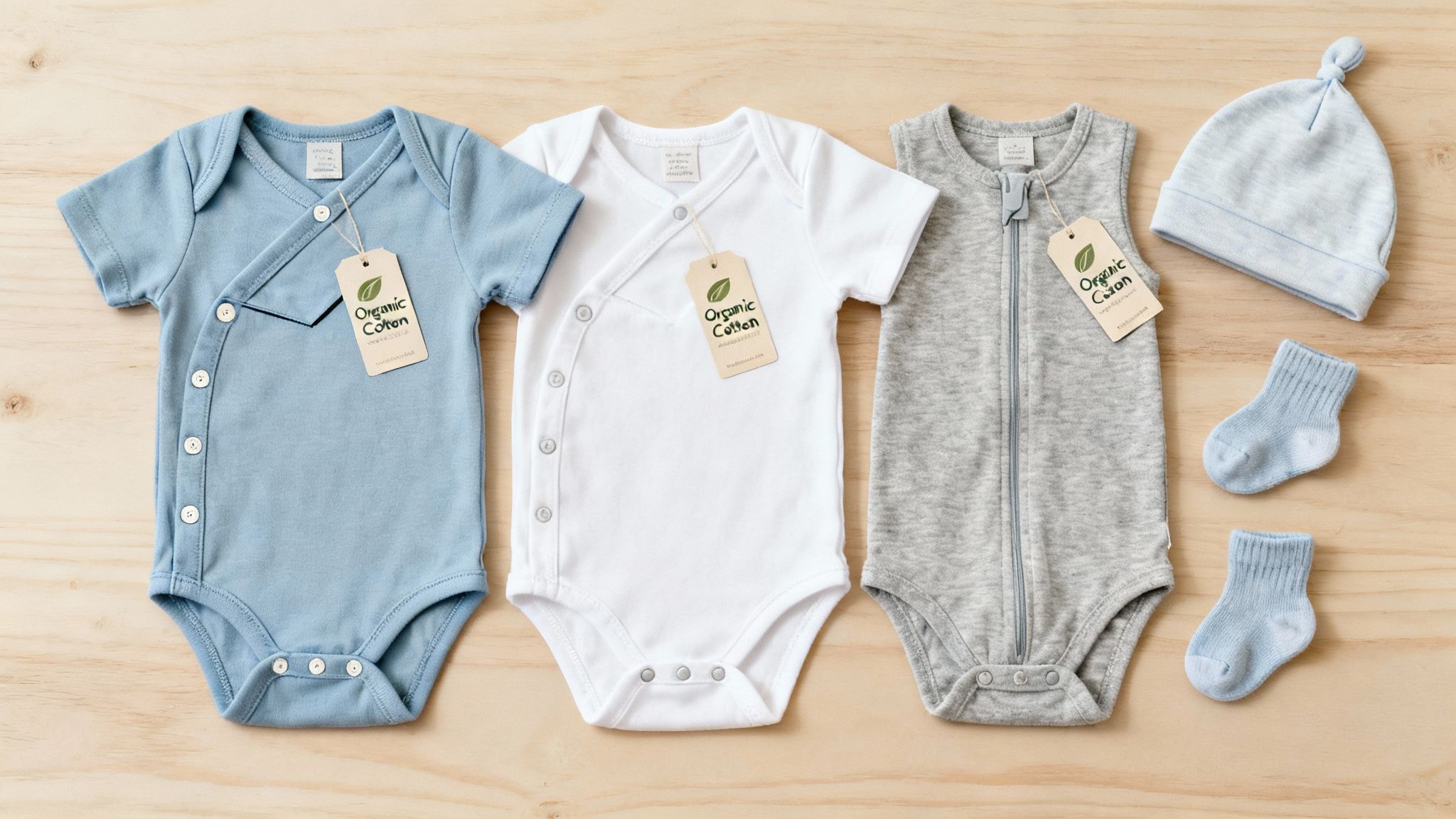
When it comes to your child's health, think food first, supplements second. Building a strong immune system is about creating a collection of nutrient-dense foods they eat regularly. Trust me, when you’re dealing with cold and flu season, the last thing you want is a child who is constantly getting sick.
It’s best to approach this by offering a rainbow of foods. Introduce a variety of fruits, vegetables, proteins, and healthy fats. This simple strategy helps you avoid nutritional gaps and the classic parent trap of falling back on the same few "safe" foods. The real goal is to have a diet full of vitamins and minerals ready to support their body's defenses.
The Absolute Must-Have Nutrients for Immunity
Before you even think about fancy supplements, let's cover the workhorses of your child's immune system. These are the vitamins and minerals their body will be calling on day in and day out.
-
Vitamin C: This is the ultimate immune booster. It helps the body produce white blood cells, which are key to fighting infections. Find it in citrus fruits (oranges, clementines), strawberries, bell peppers, broccoli, and kiwi.
-
Vitamin D: The "sunshine vitamin" is crucial for activating immune defenses. While sunlight is a primary source, you can also find it in fatty fish (like salmon), fortified milk, yogurt, and cereals.
-
Zinc: This mineral is a powerhouse for immune cell function. A zinc deficiency can make a child more susceptible to illness. Good sources include lean meats, beans, nuts, and whole grains.
-
Probiotics: These are the "good bacteria" that live in the gut. A healthy gut is the foundation of a strong immune system. Find them in yogurt with live active cultures, kefir, and other fermented foods.
-
Iron: Essential for helping red blood cells carry oxygen throughout the body, iron also plays a role in immune cell proliferation. Find it in lean red meat, poultry, fish, beans, and fortified cereals.
Foods That Strengthen the Immune System
When you're planning meals, try to include these immune-boosting champions. They are packed with the nutrients kids need to stay healthy.
Things like berries, leafy greens, and lean proteins aren't just random healthy foods; they are lifesavers. These nutrient-dense options are a clear sign that you are providing a diet that supports their growth and immunity.
A well-planned diet isn't just about food; it's about making the childhood years a little bit healthier. Every nutrient-packed meal gives you a few extra moments of calm in a busy day.
Of course, a cozy environment goes beyond just diet. Remember to include other wellness essentials, from adequate sleep to cozy essential blankets for baby boys, to keep your little one comfortable and secure.
How Much Do They Really Need? A Quick Checklist
One of the biggest pieces of advice I can give is this: focus on variety over quantity. Kids' appetites can vary wildly from day to day. A better strategy is to offer a range of healthy options and let them choose.
To make it simple, here’s a quick checklist of food groups to aim for daily.
Essential Food Groups for Kids' Immunity
| Food Group | Recommended Servings (Toddler/Kid) | Key Foods to Include |
|---|---|---|
| Fruits | 2-3 | Berries, oranges, apples, bananas, kiwi |
| Vegetables | 3-4 | Broccoli, spinach, carrots, sweet potatoes, bell peppers |
| Lean Protein | 2-3 | Chicken, fish, eggs, beans, lentils, tofu |
| Whole Grains | 3-4 | Oats, whole wheat bread, brown rice, quinoa |
| Dairy/Alternatives | 2-3 | Yogurt, milk, cheese, fortified soy/almond milk |
| Healthy Fats | 1-2 | Avocado, nuts, seeds, olive oil |
This foundational diet gives you plenty of options for daily meals without creating food battles or nutritional gaps.
Choosing the Best Foods for Sensitive Tummies
A baby boy’s digestive system isn't just smaller than ours—it's incredibly delicate and still developing, making it prone to sensitivities. That’s why picking the right foods for him is less about following trends and more about his comfort and health. Think of it as his first line of defense, a gentle source of nutrition that needs to be easy to digest.
Natural, whole foods are, without a doubt, the gold standard for baby clothes for boys and their diets. These foods, sourced from plants and animals, have built-in benefits that processed foods just can't replicate. Unlike sugary snacks and refined grains that can cause inflammation, whole foods provide clean energy and essential nutrients. This is a huge deal for helping build a healthy gut microbiome and keeping him from getting tummy aches and fussy.
The Top Food Choices for Comfort and Health
Once you start pureeing or offering finger foods, you'll see a few names pop up again and again. These are the parent-approved heavy hitters, and for good reason. They’re gentle, packed with nutrients, and easy on a brand-new digestive system.
-
Avocado: This is the undisputed champion of first foods. It's packed with healthy fats crucial for brain development and has a soft, creamy texture that's easy for babies to manage.
-
Sweet Potato: If you're looking for a nutrient powerhouse, sweet potatoes are it. They are rich in Vitamin A, fiber, and antioxidants, and their naturally sweet taste is a hit with little ones.
-
Banana: The ultimate convenience food. Bananas are soft, easy to mash, and provide potassium and Vitamin B6. They are a great choice for a quick, gentle source of energy.
These foods are the building blocks of a safe, healthy diet. To get a better sense of why whole foods matter, you can read more about soft organic baby clothes, which reflects a similar philosophy of choosing natural, gentle products for your baby.
Decoding Food Labels and Ingredients
It’s not just about what’s in the food, but also what’s not. This is where reading labels comes in. Think of it as a trustworthy guide, telling you exactly what's in the packaged foods you buy. It takes all the guesswork out of finding safe options for your family.
Keep an eye out for these two big things:
-
Added Sugars: This is a major one. Look for "added sugars" on the nutrition panel and check the ingredient list for words like corn syrup, fructose, and cane sugar. For babies and toddlers, the less added sugar, the better.
-
Sodium Content: Babies' kidneys can't handle a lot of salt. Choose foods with low sodium content, and avoid adding salt to the food you prepare at home.
Choosing whole, unprocessed foods gives you peace of mind. It's the simplest way to know that what's fueling your baby's body is free from artificial additives, excessive sugar, and weird chemical residues. It's a priority that's becoming non-negotiable for parents.
This shift hasn’t gone unnoticed. Big brands are finally catching on. Food companies are expanding their organic lines, with some now making up 20-30% of their kids' collections. It's a direct response to what parents are demanding—in recent surveys, nearly 70% said that clean ingredients are a top priority when they shop. You can see more about how these trends in baby clothing statistics mirror trends in the baby food market.
Foods to Avoid or Introduce with Caution
While we love whole foods, some should be approached with caution, especially for babies. Foods like honey should be avoided entirely for babies under one due to the risk of botulism. Common allergens like cow's milk, eggs, peanuts, and soy should be introduced one at a time to watch for any reaction.
Finally, always be mindful of physical hazards. Check for:
- Hard, round foods like whole nuts, grapes, and hot dogs that could be a choking risk.
- Sticky foods like large globs of peanut butter or gummy candies.
- Foods that are tough to chew, like steak or raw carrots, for little ones without a full set of teeth.
By sticking with soft, whole foods and reading labels carefully, you can build a diet for your baby boy that’s not just healthy, but truly nourishing and safe.
Delicious Recipes for Babies, Toddlers, and Picky Eaters
Trying to get kids to eat healthy can feel like a guessing game. You'll quickly notice that a food they loved yesterday is suddenly their worst enemy today. That’s because kids' preferences change, and sometimes they are asserting their independence.
The secret? Make food fun, accessible, and delicious. Pay less attention to forcing them to "clean their plate" and focus on what really matters: offering a variety of healthy options in an appealing way. These simple recipes are a foundation for a healthy diet and will give you a much more accurate idea of what they might enjoy. A picky eater and an adventurous eater might be the same age but will need entirely different approaches.
Smoothie Recipes for Babies, Kids, and Toddlers
Think of smoothies as your secret weapon. They are a fantastic way to pack a ton of nutrients into a delicious, easy-to-drink format. Before adding anything to your blender, especially when making smoothies for your baby clothes for boys-wearing little one, remember to use ingredients they've already been exposed to, to avoid any allergic reactions.
To give you a general idea, here’s a typical breakdown you might love.
Simple & Healthy Smoothie Recipes
| Smoothie Name | Ingredients | Instructions |
|---|---|---|
| Green Monster (Toddler+) | 1 cup spinach, 1/2 banana, 1/2 cup mango chunks, 1/2 cup milk (dairy or non-dairy), 1 tbsp chia seeds | Blend all ingredients until smooth. The sweetness of the fruit completely hides the spinach taste! |
| Berry Blast (Baby 6m+) | 1/2 cup mixed berries (strawberries, blueberries), 1/4 ripe banana, 1/4 cup plain whole milk yogurt | Blend until very smooth. For younger babies, you can thin it with a little water or breastmilk/formula. |
| Orange Dream (Kid-Friendly) | 1 peeled clementine or small orange, 1/2 cup plain yogurt, 1/4 cup frozen pineapple, 1 small carrot (steamed and cooled) | Blend until creamy and smooth. Tastes like a creamsicle but is packed with Vitamin C and A. |
Remember, these recipes are just a starting point. Feel free to customize them based on what you have on hand.
The most practical rule for feeding kids is to involve them in the process. Letting them help wash veggies or push the blender button gives them a sense of ownership and makes them more likely to try the final product.
When in doubt, always keep it simple. If your little guy is hesitant, start with familiar flavors. A simple banana and yogurt smoothie is a great entry point. For a deeper dive into childhood development, you can learn more by understanding children's clothing sizes in our complete parent's guide which highlights how quickly they grow.
This flow chart can help you quickly decide on the best fabrics for your baby's sensitive skin, just as the recipes above can help with sensitive palates.
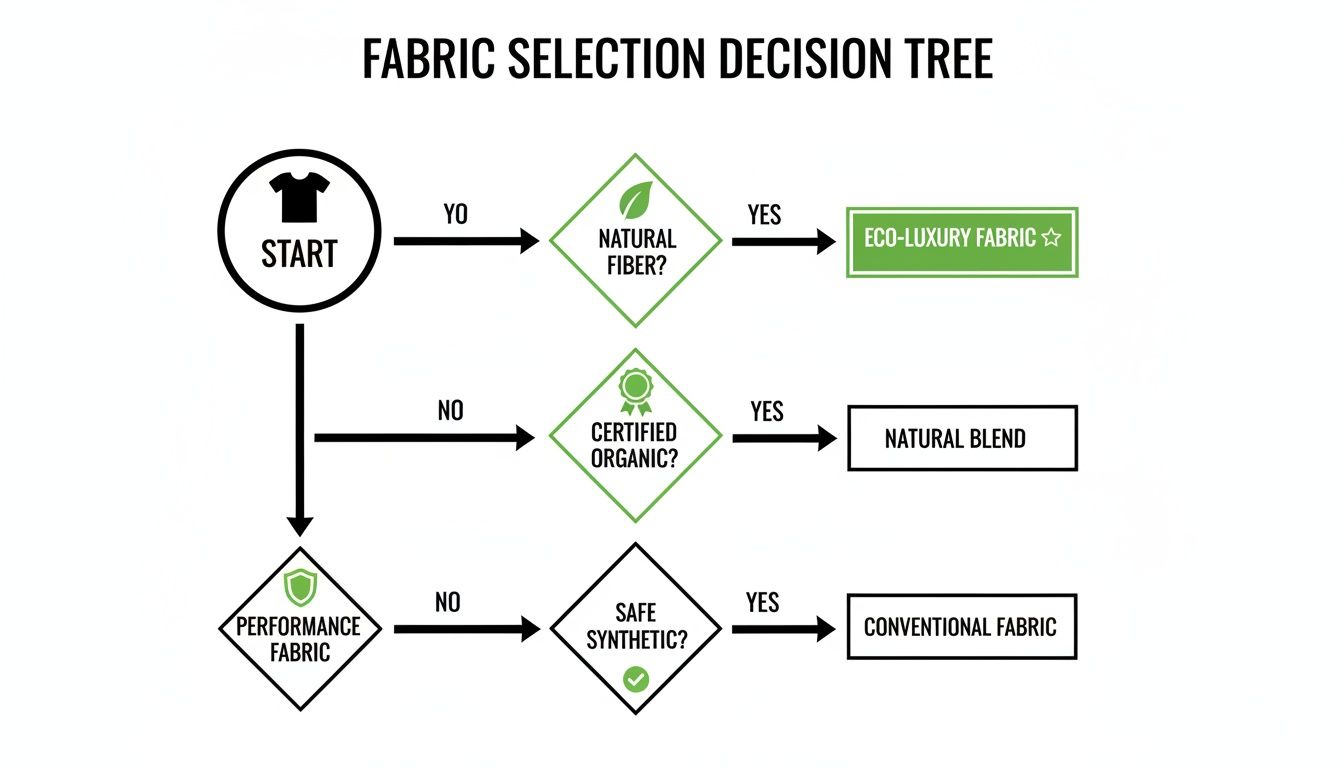
As the chart shows, sticking with natural, certified materials is the surest way to choose clothes that are gentle and safe for your baby. The same principle applies to food: natural, whole ingredients are best.
Recipes for Picky Eaters
A good meal isn’t just about nutrition; it's about presentation and taste. You want food that is appealing but not so intimidating that a picky eater refuses to even try it.
Here are a few simple ideas to try:
- "Hidden Veggie" Pasta Sauce: Sauté finely diced carrots, zucchini, and onions until very soft. Add a can of crushed tomatoes and your favorite herbs. Simmer for 20 minutes, then use an immersion blender to make it completely smooth. They'll never know the veggies are in there!
- Chicken & Veggie Skewers: Cube chicken breast and colorful bell peppers. Marinate in a little olive oil, lemon juice, and herbs. Thread onto skewers and bake or grill. Food on a stick is always more fun.
- Sweet Potato "Fries": Cut a sweet potato into fry shapes, toss with a little olive oil and a pinch of paprika, and bake at 400°F (200°C) until tender and slightly crispy. A much healthier alternative to regular fries.
By using these simple recipes and creative presentations, you can feel confident that you’re offering food that will keep your little boy healthy, happy, and ready for his next adventure.
Dressing Your Baby Boy for Every Season
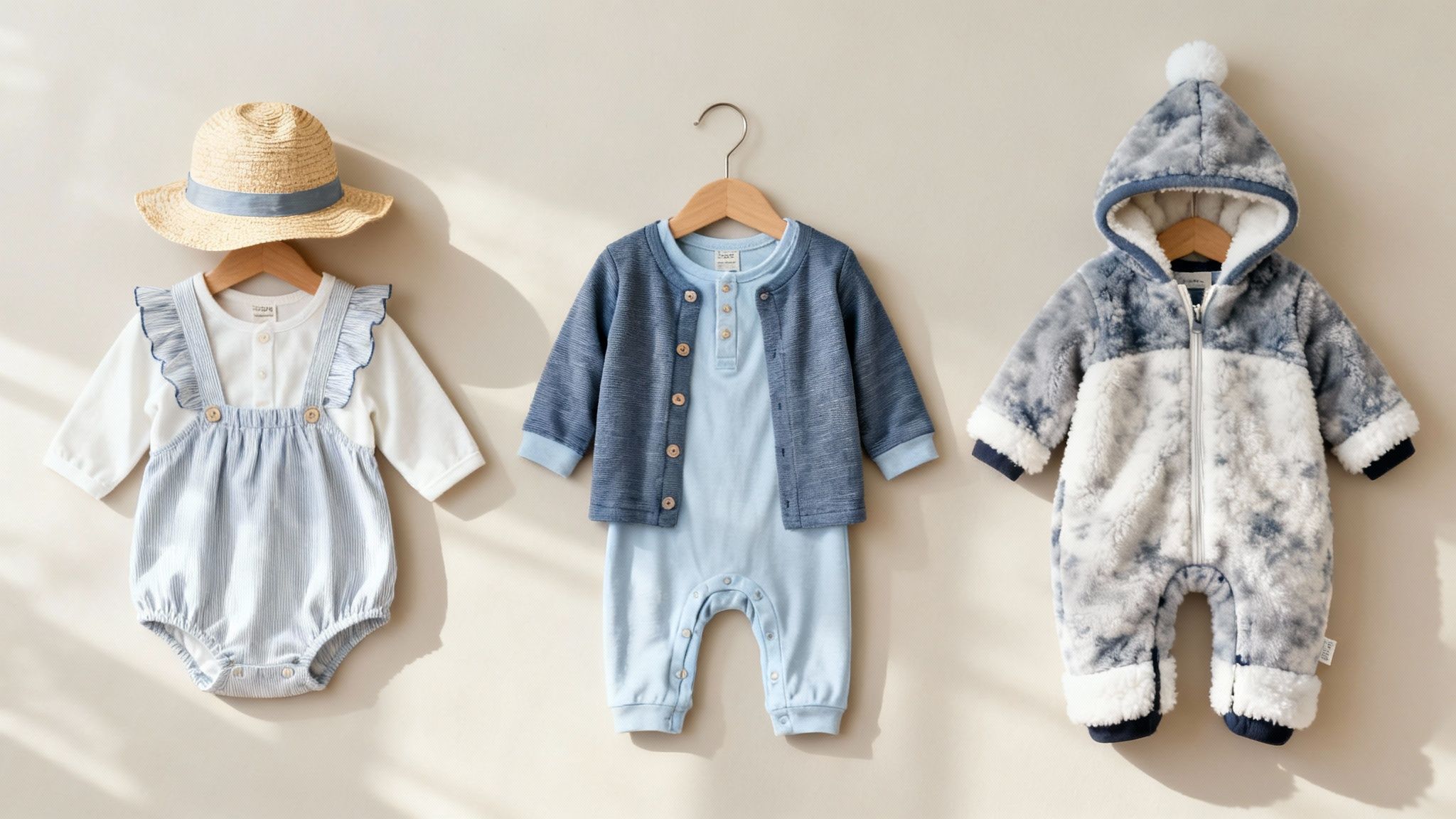
Keeping your little guy comfortable all year doesn’t mean you need an overflowing wardrobe for every type of weather. It’s actually much simpler. The secret is smart planning and getting really good at layering. A flexible collection of clothes lets you adapt to any forecast on the fly, making sure he’s never too hot or too cold.
The best way to do this is by choosing versatile pieces that you can mix and match. A simple cotton bodysuit is the perfect example—it’s the ultimate chameleon of baby clothes. On a warm day, it’s a complete outfit. When it gets chilly, it becomes a cozy base layer under a sweater or sleepsuit. This approach helps you get the most out of every single garment and keeps him happy through any temperature shifts.
Mastering the Art of Layering
Layering is your number one tool for keeping your baby boy comfortable. Babies can't regulate their body temperature as efficiently as we can, so it’s our job to help them out by adding or removing layers as needed. The golden rule you’ll hear everywhere (because it works!) is to dress your baby in one more light layer than you’re wearing yourself.
Start with a soft, breathable base like a cotton bodysuit. From there, you can build his outfit:
- A Middle Layer: This could be a long-sleeved shirt, a pair of soft pants, or a light cardigan.
- An Outer Layer: Depending on the weather, this might be a fleece jacket, a bunting bag, or a full snowsuit for those really cold winter days.
This system gives you complete control. If you go from the chilly outdoors into a warm store, you can just slip off the outer layer to keep him from overheating. That adaptability is everything.
A Seasonal Wardrobe Checklist
To make planning a little easier, here are some essentials to have on hand for each season. This checklist focuses on versatile baby clothes for boys that you can mix and match for dozens of cute and practical outfits.
Spring and Fall (The In-Between Seasons)
These seasons are notoriously unpredictable, which is why layers are non-negotiable.
- 7-8 Long-sleeve bodysuits
- 5-6 Pairs of soft pants or leggings
- 3-4 Light sweaters or cardigans
- 1-2 Lightweight jackets or hoodies
- 7 Pairs of socks
- 2-3 Beanies or soft hats
Summer (Warm Weather)
Your main goal here is to keep him cool with lightweight, breathable fabrics.
- 7-8 Short-sleeve bodysuits or sleeveless rompers
- 3-4 Pairs of lightweight shorts or cotton pants
- 1 Wide-brimmed sun hat to protect his delicate skin
- 1-2 Lightweight long-sleeve shirts for extra sun coverage
- Lightweight muslin blankets for creating shade
You can see these different needs reflected in the global market. While parents in North America and Europe often gravitate toward luxury and premium brands for the 0-12 months category, the Asia Pacific region is a powerhouse, accounting for over 40% of all baby boy clothing sales.
This massive growth is fueled by expanding middle-class populations in countries like China and India, which just goes to show how much parental priorities shape the market worldwide. You can dive deeper into these global baby boy clothing market trends to see how different parts of the world contribute to the amazing variety we have today.
Winter (Cold Weather)
It's all about warmth. Focus on cozy fabrics and be ready to stack on those layers.
- 7-8 Long-sleeve bodysuits (thermal or fleece-lined are fantastic)
- 5-6 Pairs of fleece-lined or thicker pants
- 3-4 Fleece or wool sweaters
- 1 Insulated snowsuit or bunting for outdoor adventures
- Warm hat, mittens, and thick booties
- Several pairs of warm, thick socks
With this seasonal game plan, you’ll be ready for whatever the weather throws at you, and your little guy will always be dressed just right.
Shopping Smart and Caring for Baby Clothes
Getting the most out of every piece of baby clothes for boys really boils down to two things: how you buy them and how you care for them. A little bit of planning upfront can save you a lot of money and hassle down the road. It's all about knowing where to invest and where you can save, helping you build a practical wardrobe without that feeling of "where did all the money go?"
Once you have all those adorable outfits, the trick is to keep them looking great. A simple, consistent laundry routine is all it takes to keep fabrics soft, colors bright, and those tiny clothes ready for their next adventure.
Creating a Smart Budget
Before you hit the "add to cart" button, take a moment to think about what's most important to you. Are you all-in on organic fabrics? Or is your top priority finding pieces that can withstand a lot of wear and tear? Pinpointing your must-haves helps you spend your money where it counts.
-
Invest in the Basics: It’s smart to put a little more of your budget toward the everyday essentials. Think bodysuits, sleepsuits, and comfy pants. These are the true workhorses of his wardrobe, and investing in quality here means they'll survive endless cycles in the wash.
-
Save on the Splurges: For that cute holiday outfit or a trendy piece he might only wear once or twice, feel free to look for more budget-friendly options. This is the perfect time to explore secondhand shops or gratefully accept hand-me-downs from friends and family.
-
Shop Sales with a Strategy: Keep an eye out for end-of-season sales to grab pieces for the next size up. A little forward-thinking is one of the easiest ways to save big. Here at Yarafly, we run seasonal deals and offer free shipping on orders over $50, so you can stock up without breaking the bank.
A Simple Laundry Routine for Baby Clothes
Doing laundry for a baby doesn’t have to be a major production. The secret is to use gentle products and methods to protect your baby's delicate skin and his clothes.
Always start with a baby-safe detergent. Look for formulas that are free from the harsh chemicals, dyes, and fragrances that can irritate sensitive skin. A quick sort by color will also keep those bright reds from turning his white bodysuits pink.
When you're ready to wash, stick with the gentle or delicate cycle and use cold water. Cold water gets the job done beautifully and is much kinder to fabrics than hot water, which can lead to shrinking and fading.
A consistent, gentle laundry routine is your best defense against wear and tear. It protects your investment, keeps clothes feeling soft, and ensures every outfit is clean, comfortable, and ready for your little one's next adventure.
For drying, the low heat setting on your tumble dryer is your friend. Better yet, air-dry clothes whenever you can—it's the gentlest method of all and helps everything keep its shape. And for those unavoidable spit-up and food messes? Acting fast is key. We've got a ton of baby-safe tips in our guide on how to remove stains from baby clothes. Following these simple steps will keep your little guy’s wardrobe in top-notch condition.
Common Questions About Baby Boy Clothes
Let's face it, diving into the world of baby clothes brings up a lot of questions, especially if you're a new parent. You find yourself wondering about sizing up, what on earth a "sleepsuit" is, and whether you're buying too much or not enough. Getting a few straight answers can make all the difference.
We'll walk through some of the most common things parents wonder about when building a wardrobe for their baby boy, offering practical advice to help you shop smart and keep your little guy comfortable.
How Many Clothes Does a Newborn Boy Really Need?
It is so easy to get carried away buying every tiny, adorable outfit you see. But trust me, newborns grow at lightning speed. The real secret is starting with a core collection that gets you through a few days between laundry cycles without cluttering up the nursery. Think of it as a "capsule wardrobe" for your baby.
For the first three months, this is a great place to start:
- 7-10 Bodysuits: These are the MVPs of his wardrobe. They work as a perfect first layer or as a complete outfit when it's warm.
- 5-7 Sleepsuits: You'll want a fresh, cozy one ready for every night of the week (and for those inevitable middle-of-the-night changes).
- 5 Pairs of Pants: Soft, stretchy pants are a must for pulling together quick and comfy outfits.
- 2-3 Sweaters or Cardigans: Ideal for adding a layer of warmth on cooler days.
- 7 Pairs of Socks: To keep those tiny toes toasty.
- 2 Season-Appropriate Hats: A soft beanie for the cold or a sun hat for sunny strolls.
This list gives you enough to handle spit-up and diaper blowouts without over-investing in a size he'll be out of in a blink.
What Is the Difference Between a Bodysuit and a Sleepsuit?
At first glance, they might seem similar, but bodysuits and sleepsuits have very different jobs in your baby's wardrobe. Knowing when to use which one will keep him dressed just right for playing, napping, and sleeping soundly.
Think of a bodysuit (what many people call a "onesie") as a T-shirt with snaps at the crotch. That simple design is genius—it keeps the shirt from riding up his back and makes diaper changes so much easier. It's the ultimate daytime base layer.
A sleepsuit, on the other hand, is a full-body, one-piece outfit, usually with built-in feet, made specifically for sleeping. It wraps your baby in warmth from neck to toe, which means you don't have to worry about loose blankets in the crib.
Are Gender-Neutral Baby Clothes a Good Idea?
Absolutely! Choosing gender-neutral baby clothes for boys isn't just a trend; it's a super practical move. These pieces often come in beautiful, timeless colors like heather gray, cream, sage green, and mustard, with classic patterns like stripes or sweet nature prints.
Opting for gender-neutral clothes is one of the smartest ways to save money and reduce waste. Plus, they look wonderfully modern and are incredibly easy to hand down to a future sibling, boy or girl.
How Do I Know If My Baby's Clothes Are Too Tight?
Getting the fit right is all about your baby's comfort and safety. To check if an outfit has gotten too snug, you just need to know what to look for.
When you're changing him, glance at his skin. Do you see any red marks or indentations, especially around his neck, armpits, thighs, or tummy? A great rule of thumb is the two-finger test: you should be able to slide two fingers comfortably between the fabric and his skin. If he seems extra fussy, can't move freely, or the snaps keep popping open, you know it's officially time to size up.
At Yarafly, we believe finding the perfect style for your little guy should be simple and fun. Explore our collection of playful, comfortable, and affordable baby boy clothes designed to keep up with his every wiggle and giggle.
Shop the latest collection of baby clothes for boys at Yarafly.com