

on November 03, 2025
Finding affordable organic baby clothes isn't just a pipe dream; it's a smart and achievable goal for parents. It’s all about finding clothes made from natural fibers grown without harsh pesticides or chemicals. This simple switch means a gentler touch for your baby’s delicate skin, and yes, it can be done on a budget.
Why Organic Clothes Are a Kinder Choice for Your Baby
When you hear "organic," you probably think of the produce aisle—maybe a shiny, pesticide-free apple. That's actually the perfect way to think about baby clothes. Organic clothing is the "farm-to-closet" version of that apple: pure, clean, and grown without all the synthetic stuff used in conventional farming.
Here's something that might surprise you: conventional cotton is one of the most chemically-intensive crops out there. It's often grown using a whole cocktail of pesticides, herbicides, and synthetic fertilizers. Even after processing, traces of these chemicals can stick around in the fabric. A baby's skin is incredibly thin—up to five times thinner than an adult's—and much more absorbent. That means their sensitive skin can easily soak up any chemical residues left in their clothing.
Choosing organic fabric is like putting a soft, protective buffer between your little one and the outside world. These materials, especially organic cotton, are grown and processed under strict rules that ban all those toxic inputs from the get-go.
From the Farm to the Onesie
The commitment to being "organic" doesn't just stop once the cotton is picked. The entire process is designed to be cleaner and safer for everyone involved.
- No Nasty Pesticides: Instead of synthetic pesticides, organic farmers use natural methods like crop rotation and even beneficial insects to keep pests away.
- Safer Dyes and Finishes: Those cute colors and soft textures on organic baby clothes come from non-toxic, water-based dyes. This process sidesteps the heavy metals, formaldehyde, and other harsh chemicals that are common in standard textile production.
- Naturally Hypoallergenic: When you take away all those chemical residues, what you're left with is a naturally hypoallergenic fabric. This dramatically lowers the risk of skin irritation, rashes, and flare-ups of conditions like eczema.
For many parents, this peace of mind is everything. Organic baby clothes are a huge help for families managing immune disorders or skin sensitivities triggered by synthetic materials. Since organic cotton and other natural fibers are free from these toxins, choosing them becomes a decision that’s good for both health and the planet. If you're interested in the data, you can read more about the growing demand for non-toxic baby apparel in this market analysis.
It’s More Than Just Skin Deep
While the skin benefits are the main event, the perks of going organic don't stop there. The fabric itself just feels better. Because they haven't been broken down by harsh chemical treatments, organic cotton fibers are often longer and stronger.
This means the clothes are not only incredibly soft but also surprisingly durable. They can withstand countless cycles in the washing machine, holding their shape and coziness long enough to become hand-me-downs for a younger sibling or a friend's baby.
At the end of the day, choosing organic is a proactive way to care for your baby’s comfort and health. It’s about wrapping them in something as pure and natural as they are. Knowing this helps make it clear that looking for affordable organic baby clothes isn't just following a trend—it's a practical, loving choice for giving your baby the healthiest start possible.
How to Decode Labels and Certifications
Walking down the baby aisle can feel like trying to navigate a foreign country. You're hit with a blizzard of green leaves, eco-friendly claims, and confusing acronyms on every tiny tag. It’s easy to feel lost, wondering what’s genuine and what’s just clever marketing.
Let’s clear up the confusion. Think of this section as your personal translator for the language of organic textiles, so you can spot the real deal every time.
A brand might say its onesie is made with "organic cotton," and that could be true. But that simple phrase doesn't tell you anything about the harsh dyes, chemical softeners, or even the metal snaps used during manufacturing. This is where official certifications become your best friend.
This infographic neatly sums up the core promises of certified organic clothing: a pesticide-free start, no toxic residues left behind, and an incredibly gentle feel against your baby's delicate skin.
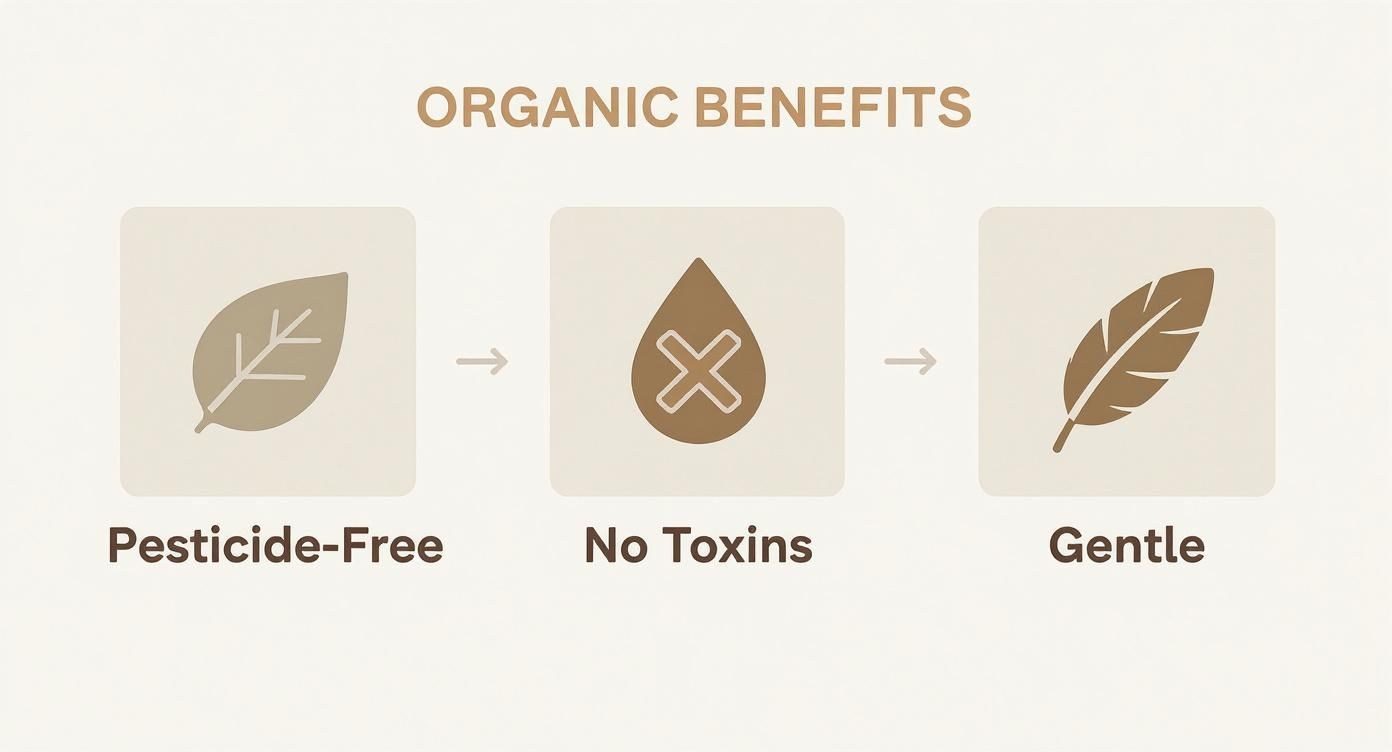
These are the exact benefits that trusted certifications are designed to verify, giving you peace of mind with every purchase.
Organic and Safety Certification Cheat Sheet
To make it even simpler, here's a quick-reference table that breaks down the most common certifications you'll see. It compares what they cover and, most importantly, what they mean for you and your baby.
| Certification | What It Guarantees | Key Takeaway for Parents |
|---|---|---|
| GOTS | A true "seed-to-seam" organic standard. Covers everything from non-GMO seeds and pesticide-free farming to non-toxic dyes and ethical labor practices. | This is the gold standard for truly organic clothing. If you see this logo, you know the entire process was clean and safe. |
| OEKO-TEX STANDARD 100 | Focuses on end-product safety. It tests every single component (thread, buttons, fabric) for a long list of harmful substances. | This is your safety guarantee. It ensures the final garment is free from chemicals that could harm your baby's health, but it doesn't mean the fibers were grown organically. |
Seeing both labels on a single item is fantastic, but understanding their distinct roles helps you prioritize what matters most to your family.
Understanding the Gold Standard: GOTS
If there's one certification to memorize, it's the Global Organic Textile Standard (GOTS). This isn't just another label; it's a comprehensive guarantee that the clothing is organic from the cotton field all the way to the finished product on the shelf.
Think of GOTS as a meticulous quality inspector who watches over every single step of the journey. To earn that seal, a product absolutely must:
- Contain at least 95% certified organic fibers. This is your proof that the core material was grown the right way.
- Be processed without toxic chemicals. All dyes, softeners, and other inputs are held to incredibly strict environmental and toxicological standards.
- Adhere to social criteria. This means safe working conditions, fair wages, and a ban on child labor. The clothes aren't just good for your baby; they're made by people who are treated well.
When you see the GOTS seal, you're not just buying a piece of clothing. You're buying a promise that it is truly organic, non-toxic, and ethically produced from start to finish.
OEKO-TEX: A Sharp Focus on Safety
Another common label you'll run into is OEKO-TEX STANDARD 100. While it isn't strictly an "organic" certification, it’s a crucial one for any parent focused on safety.
So, what’s the difference? While GOTS is concerned with the entire organic process, OEKO-TEX laser-focuses on the safety of the end product. If a bodysuit has the OEKO-TEX label, it means every last component—from the thread and fabric to the zipper and buttons—has been tested and found free of a long list of chemicals known to be harmful to human health.
Sometimes you’ll find products with both GOTS and OEKO-TEX certifications, which is the best of both worlds. However, for parents specifically looking for affordable organic baby clothes, prioritizing the GOTS label is the most direct way to ensure you're getting an authentically organic item.
Ultimately, learning to spot these key logos is the first step toward finding genuinely soft organic baby clothes. Once you can decode the labels, you can shop with total confidence, knowing you’re making a safe and healthy choice for your little one.
Finding Trusted Brands That Won't Break the Bank
Let's be honest: navigating the world of baby clothes can feel like a full-time job. You're trying to find things that are safe, soft, and stylish, but you also have a real-world budget to stick to. The great news? Finding high-quality, affordable organic baby clothes is a lot easier than you might think. A growing number of brands have made it their mission to offer beautiful, GOTS-certified pieces without the shocking price tag.
This isn't just a happy accident. The boom in direct-to-consumer online shopping has really shaken things up. By cutting out traditional retail middlemen, these brands can pass the savings directly on to parents like you and me.
The result is a market where you no longer have to pick between what's best for your baby and what's best for your wallet. You can find trusted options that deliver on that promise of pure, gentle fabric without having to wince at the checkout.
Top Brands for Affordable Organic Baby Clothes
When you’re just starting your search, it helps to know a few reliable names. These brands have built a solid reputation with parents by consistently delivering GOTS-certified organic cotton basics that are soft, durable, and don't cost a fortune.
-
Burt's Bees Baby: Yes, the same brand you know for lip balm is a powerhouse in the organic baby world. They offer a massive range of essentials—from footie pajamas to bedding—all made from 100% GOTS-certified organic cotton. Their little bee prints are iconic, and they have frequent sales that make their already reasonable prices even more attractive.
-
HonestBaby: A branch of The Honest Company, HonestBaby nails the simple, clean, and modern aesthetic. Their multi-packs of organic cotton bodysuits and pajamas are an incredible value. The quality is fantastic, and parents rave about how well the fabric holds up to the endless cycle of washing and wearing.
-
Little Planet by Carter's: Carter's is a household name for a reason, and their Little Planet line shows a real commitment to sustainability. This entire collection is made with GOTS-certified organic cotton, featuring the same adorable styles and practical designs you expect from Carter's, just with a focus on pure materials.
These brands are proof that you don't have to compromise. They've become the go-to choices for parents who want the best for their baby’s sensitive skin while keeping a close eye on the family budget.
Hidden Gems and Other Noteworthy Brands
Beyond the big players, a handful of other brands absolutely deserve a spot on your radar. These companies often have a strong ethical mission and produce beautiful organic clothing that is surprisingly budget-friendly.
By focusing on timeless designs and durable construction, these brands ensure their clothing lasts long enough to become cherished hand-me-downs, maximizing the value of every dollar you spend.
Here are a few more to explore:
-
Colored Organics: This brand is all about ethically made, 100% organic cotton basics in a gorgeous palette of muted, earthy tones. Their pieces are perfect for building a minimalist "capsule wardrobe" for your little one. They also have a give-back mission, partnering with organizations to help children in need.
-
Touched by Nature: If you’re looking for the absolute best bang for your buck, you have to check out Touched by Nature. You'll primarily find them on Amazon, where they offer multi-packs of organic cotton dresses, bodysuits, and sleepers at unbelievably low prices. The designs are straightforward, but their commitment to organic fabric is solid.
-
Owlivia: Known for its exceptionally soft organic cotton, Owlivia creates high-quality sleepwear and basics that feel luxurious but are priced very competitively. Parents constantly praise the thickness and durability of their fabrics, which makes them a fantastic long-term investment.
The growth of these brands points to a larger, positive trend. Major players like Burt’s Bees Baby, Finn + Emma, and Hanna Andersson have made big strides in offering competitively priced organic lines, helped along by e-commerce platforms that slash distribution costs. This shift is making organic clothing more affordable and accessible than ever. To see how the industry is evolving, you can explore the market trends in organic baby apparel.
Ultimately, the best brand is the one that fits your family's style, needs, and budget. With so many wonderful options out there, you can confidently build a wardrobe for your baby that is safe, comfortable, and beautifully affordable.
Smart Shopping Strategies for Every Budget
https://www.youtube.com/embed/3j-KgIHEE60
Knowing a few good brands is a great start, but the real secret to saving money on organic baby clothes is how you shop. With a couple of clever tricks up your sleeve, you can build a beautiful, safe wardrobe for your little one without breaking the bank. It's less about just buying things and more about shopping with a plan.
Think about it like buying groceries. You know you get the best deals and quality when you buy fruits and vegetables that are in season. The same logic works for baby clothes.
One of the easiest ways to find amazing deals is to buy for the next season, not the current one. That means looking for those cozy organic fleece onesies in the middle of spring or stocking up on lightweight cotton sunsuits as autumn leaves start to fall. Retailers are always trying to clear out old inventory, which is your chance to snag high-quality pieces at a steep discount—often 50% or more. Yes, it requires a little guesswork on what size your baby will be in six months, but the payoff is huge.
Master the Art of Digital Deal Hunting
These days, the best deals often come straight to your inbox, as long as you know where to look. The simplest tool in your savings kit? The brand newsletter. I know, another email subscription sounds like a hassle, but it's genuinely like getting a backstage pass to the best prices.
Brands save their best offers for their loyal subscribers.
- Welcome Discounts: Almost every brand will give you a one-time discount, usually around 15-20% off, just for signing up. That’s an easy win right off the bat.
- Early Access to Sales: Subscribers are the first to know when a big sale is coming. This means you get first dibs on the best stuff before popular sizes are gone.
- Subscriber-Only Promotions: You'll also get alerts for flash sales and special coupon codes that no one else sees.
My pro-tip: create a separate email folder just for these newsletters. It keeps your main inbox tidy and lets you scan for deals from your favorite organic brands whenever you have a minute.
Embrace the Pre-Loved Goldmine
The world of second-hand shopping has completely changed, and for baby clothes, it's a game-changer. Babies grow out of things so fast, often long before their clothes show any wear. Buying pre-loved is not only smart for your wallet but also fantastic for the planet, especially when you're dealing with durable organic fabrics that are made to last.
Think of the second-hand market as a collection of clothing that has already passed a real-world durability test. When you find a GOTS-certified outfit from a top brand, you're getting that premium quality for just a fraction of the cost.
Places like Facebook Marketplace, Kidizen, and Once Upon A Child are absolute treasure troves for finding like-new affordable organic baby clothes. Seriously, many items have only been worn a handful of times. You can build a high-end organic wardrobe for your baby on a tiny budget.
Build a Minimalist Capsule Wardrobe
One of the biggest money pits for new parents is simply buying too much. It's so easy to do! But babies grow incredibly fast, and that special occasion outfit might only get worn once before it's too small. The best way to combat this is to think like a minimalist and create a "capsule wardrobe."
The idea is to focus on a small collection of versatile, high-quality essentials that all mix and match. Stick to GOTS-certified basics in a simple, complementary color palette. For new moms wondering what's actually necessary, our comprehensive baby shopping list can help you cut through the noise. A well-planned capsule wardrobe saves you money, but it also means less laundry, less clutter, and less time spent wondering what to dress the baby in.
Caring for Organic Garments to Make Them Last
You've done the research and picked out some beautiful, affordable organic baby clothes. That's a great first step! Now, the trick is to care for them in a way that keeps them soft and durable, ready for all the adventures ahead—and maybe even for a future sibling. The right care protects your investment and makes sure each piece lives up to its sustainable promise.
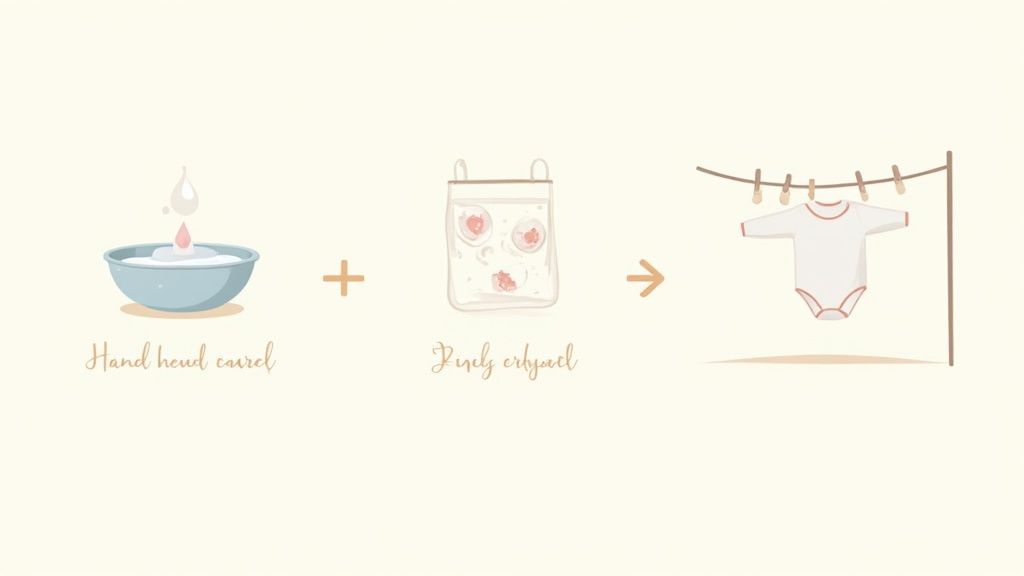
Think of organic cotton fibers as being in their pure, natural state. They’re incredibly strong and soft precisely because they haven't been weakened by harsh chemical processing. The secret to keeping them that way is simple: keep treating them gently. Avoiding aggressive detergents and high heat is the single best thing you can do to preserve their quality.
Gentle Washing for Lasting Softness
The washing machine can be a battlefield for delicate fabrics, but a few small changes can make a huge difference. The goal is to get things clean without damaging the natural fibers that make organic cotton so wonderfully soft.
Always wash organic clothes in cold water on a gentle or delicate cycle. Cold water is much kinder to the fibers, preventing shrinkage and helping those lovely, natural dyes stay vibrant.
It’s also a good idea to use a mild, pH-neutral detergent. Look for one that's free of fragrances, dyes, and chlorine. The harsh chemicals in many conventional detergents can strip the fabric of its natural softness and leave behind residues that might irritate your baby's skin.
Pro Tip: Try to wash organic baby clothes with other soft items. This prevents them from rubbing against rougher materials like denim or towels, which can cause pilling. For extra delicate pieces, a mesh laundry bag is your best friend.
Drying and Stain Treatment Best Practices
How you dry the clothes is just as important as how you wash them. The intense heat from a machine dryer is one of the quickest ways to wear out natural fibers and cause them to shrink.
Whenever you can, line dry or lay items flat to dry. A little sunshine is a fantastic natural stain remover and whitener, but don't leave dark colors out for too long, or they might fade. If you have to use a machine, choose the lowest heat setting and pull the clothes out while they're still just a tiny bit damp.
When those inevitable stains happen, a quick response is key.
- Pre-treat Promptly: As soon as you spot a stain, gently blot it with a clean, damp cloth. Don't rub!
- Use Natural Solutions: A simple paste made from baking soda and water or a little white vinegar can work wonders on many common baby-related stains.
- Soak if Needed: For really stubborn spots, let the garment soak in cold water with a splash of your gentle detergent before washing it as you normally would.
By getting into these gentle care habits, you'll find your baby’s clothes last much longer and stay just as soft and pure as the day you brought them home. For a deeper dive, you can learn all about washing and maintenance tips in our comprehensive guide to keep your little one's wardrobe looking its best.
The Bigger Picture on Sustainable Baby Apparel
When you choose affordable organic baby clothes, it often starts with a simple goal: protecting your baby’s sensitive skin without breaking the bank. And while those are fantastic reasons, your decision ripples out much further than you might think. Every time you pick up a GOTS-certified onesie instead of a conventional one, you're casting a vote for a healthier planet and a more ethical industry.
This isn't just some fleeting trend—it's a global movement gaining serious momentum. Parents everywhere are waking up to the true costs of fast fashion, both for the environment and the people who make our clothes. This growing awareness is forcing the entire apparel market to change, pushing brands toward cleaner production and more honest supply chains.
The Growing Demand for Conscious Choices
The numbers tell the story. The global organic baby clothing market is exploding, largely because parents are more concerned than ever about skin sensitivities and environmental harm. In 2023, the market was valued at around USD 1.2 billion. By 2032, it's expected to surge to USD 2.8 billion.
That's a steady growth rate of about 10.6% every year, which points to a massive shift in what parents want. You can dig into the specifics in the full organic baby clothing market report.
This growth isn't happening in a vacuum. It's the direct result of millions of individual choices, just like yours, adding up to create powerful economic pressure. It sends a loud, clear message to the industry: sustainability isn't just a "nice-to-have" anymore; it's a core expectation. As this demand keeps climbing, brands have no choice but to innovate, which thankfully is making organic options more accessible and affordable for everyone.
Your purchase is more than just a transaction. It's an investment in a future where safe, sustainable, and affordable options are the standard for every family, not the exception.
A Hopeful Outlook for Future Generations
By putting your money behind brands that are committed to organic practices, you're helping build a system that values long-term well-being over short-term profits. What does that actually mean? It means healthier soil, cleaner water, and safer conditions for the farmers and factory workers who bring these clothes to life. You're helping create a world where the clothes on our children's backs are as pure as the future we hope for them.
The search for affordable organic baby clothes is about so much more than just shopping. It’s a way to connect your family's everyday needs to the health of our planet and its people. Your thoughtful choices are laying the groundwork for a more sustainable world, proving that small decisions, when made together, really can create massive positive change.
Common Questions Answered
Diving into the world of organic baby clothes can feel a little overwhelming. You want the best for your baby, but you also need to stick to a budget. Let's clear up some of the most common questions parents have when making the switch.
Is Organic Baby Clothing Really Worth It?
It's a fair question. While some organic pieces might cost a little more at first, most parents agree the peace of mind is invaluable. The biggest win is for your baby’s delicate skin. Organic fabrics are made without the harsh chemicals, pesticides, and toxic dyes that are common in standard clothing, which dramatically lowers the risk of skin irritation and rashes.
But it’s not just about what’s left out. High-quality organic cotton is often tougher and softer because its fibers haven't been weakened by chemical processing. This means those adorable onesies and sleepers last longer through endless wash cycles, making them perfect for hand-me-downs and giving you better value in the long run.
What Is the Softest Organic Material for a Baby?
When you’re looking for that cloud-like softness, a couple of fabrics really shine. GOTS-certified organic Pima cotton is a fan favorite. Its extra-long fibers create a silky, smooth texture that’s incredibly gentle against a newborn's skin.
Another fantastic option is bamboo viscose. Parents love it for its buttery feel and amazing breathability. It’s also naturally hypoallergenic and great at regulating body temperature, keeping your little one comfy whether it's warm or cool. You can't go wrong with either for everyday essentials.
How Can I Verify if a Brand Is Truly Organic?
With so many "green" claims out there, it's smart to be skeptical. The best way to know for sure is to look for a trusted third-party certification. For baby clothes, the one you really need to know is the Global Organic Textile Standard (GOTS).
Think of the GOTS label as the ultimate seal of approval. It doesn't just mean the cotton was grown organically. It guarantees that the entire journey—from the cotton field to the final stitch—was free of harmful chemicals and followed strict ethical and environmental rules.
If you spot that GOTS logo, you can rest easy. It’s the clearest, most reliable sign that you’re getting a genuinely safe and responsibly made product for your baby.
Ready to build a soft, safe, and stylish wardrobe for your little one? At Yarafly.com, we offer a wide selection of playful and comfortable children's apparel that parents and kids love. Shop our collections today!