

on November 29, 2025
Navigating toddler clothing sizes can feel like trying to crack a secret code. You're standing in the aisle, looking at a tag that says "24 Months" and another that says "2T," and they seem almost identical. But here’s the inside scoop from parents who've been there: the real difference boils down to diapers.
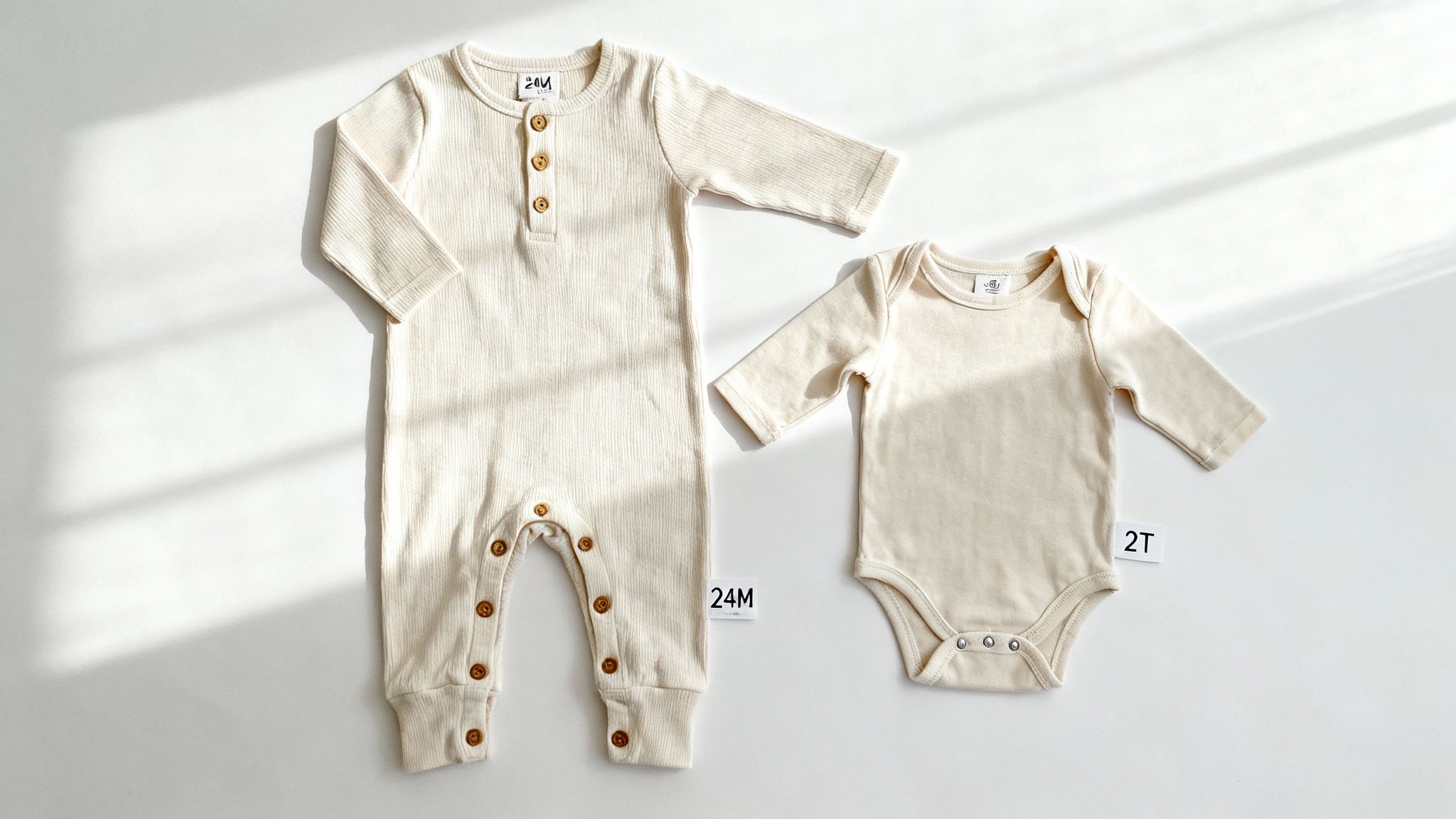
A 24 month onesie is designed for a toddler who is still wearing diapers. It’s cut longer and a bit roomier in the bottom to comfortably fit over a diaper without pulling or stretching. Think of it as the grand finale of baby sizing.
On the other hand, 2T (the 'T' stands for Toddler) is the first step into "big kid" clothes. It’s for the little one who is starting, or has mastered, potty training. These clothes have a shorter, slimmer cut because there's no diaper to accommodate.
Decoding the 24 Month Onesie vs 2T Dilemma
As your child nears their second birthday, you'll hit this confusing crossroads in the clothing aisle. While the numbers seem interchangeable, they're actually tailored for two very different, and very important, stages of your toddler's development.
It all comes down to one major milestone: potty training.
Think of a 24 month onesie as the perfect all-in-one outfit for a busy toddler still in diapers. Its longer torso and those handy snaps at the crotch are lifesavers for quick changes. This size is built for comfort and convenience, giving your little one plenty of room to crawl, cruise, and toddle without any restrictions.
A 2T outfit, however, is all about fostering independence. It's designed like a miniature adult's outfit, often with separate tops and bottoms. This makes it so much easier for a potty-training toddler to pull their pants up and down all by themselves—a huge win for them (and you!).
The Deciding Factor: Potty Training
Still on the fence? This little chart makes it crystal clear. It's less about their age in months and more about where they are on their journey to ditching diapers.
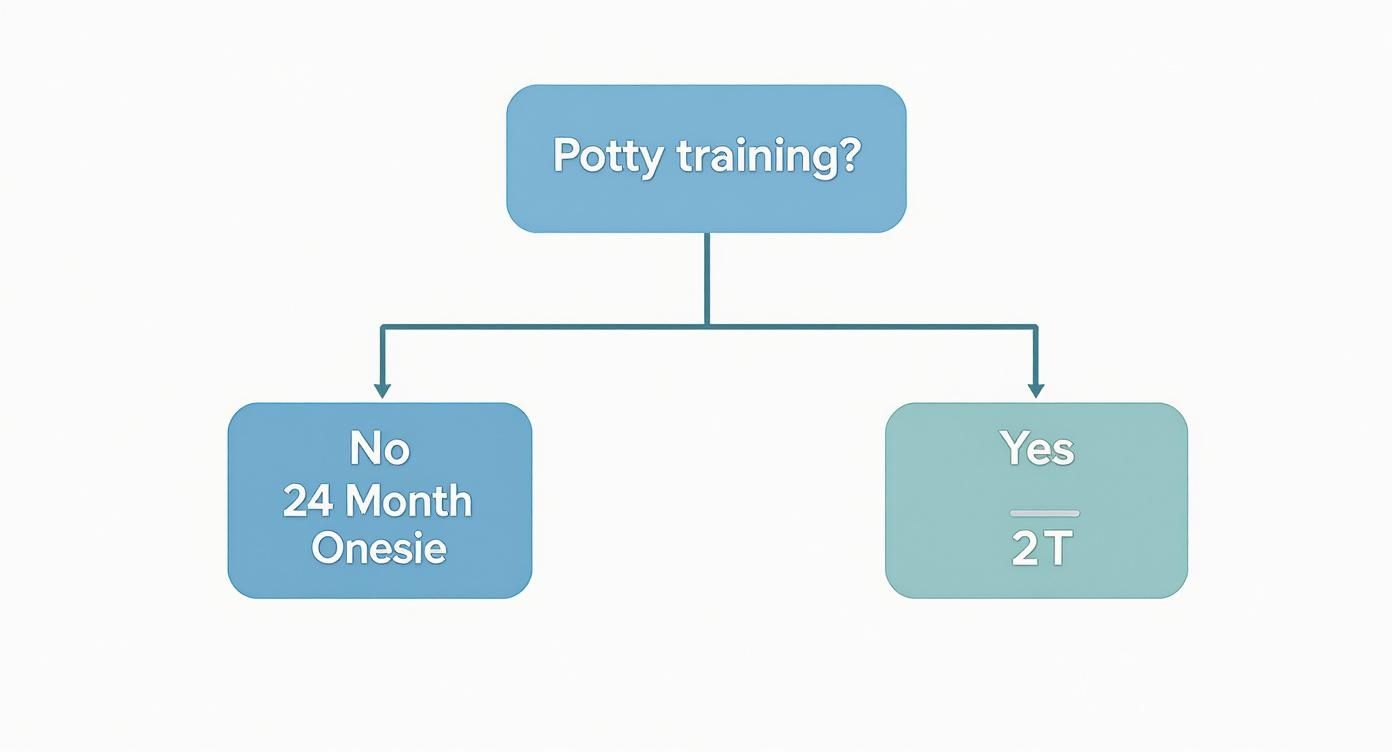
The takeaway here is simple: let your child's developmental stage be your guide. Trust what you see in front of you, not just the number on the tag.
At its core, the 24 month size is the final step in baby sizing, while 2T marks the official beginning of toddler sizing. This shift reflects a move from diaper dependency to potty-training readiness.
24 Month Onesie vs 2T at a Glance
Use this quick comparison to decide which size is the right fit for your toddler's current stage.
| Feature | 24 Month Onesie | 2T (Toddler) Size |
|---|---|---|
| Primary User | Toddlers in diapers | Potty-training toddlers |
| Torso Fit | Longer, with extra room | Shorter and slimmer |
| Bottom Style | Snap closures at the crotch | No snaps; separate tops/pants |
| Overall Cut | Designed to fit over a diaper | Assumes no diaper is worn |
| Sizing Category | The largest "baby" size | The first "toddler" size |
Ultimately, choosing between these two sizes is about getting the best fit for your child right now, ensuring they're comfortable and ready for their next adventure, whether it's climbing the couch or running to the potty.
This sizing distinction is a big deal in the children’s apparel world. The global market for baby bodysuits and onesies hit around USD 4.7 billion in 2024 and is only getting bigger. It’s a huge industry built around these small, but important, details. When you're trying to understand sizing, it helps to see the full picture; you can explore products for the 0-24 month age range to see how brands approach this transition. For a deeper dive into measurements, our guide on the https://yarafly.com/blogs/news/kids-clothing-size-chart is a great resource.
Finding a Perfect Fit for Your Growing Toddler
We’ve all been there. You grab a piece of clothing that should fit based on the age on the tag, only to find it's too snug or comically large. It’s one of those classic parenting traps, and it’s especially true with the jump to toddler sizes. Just because your little one is almost two doesn’t mean a 24 month onesie is the automatic right choice.
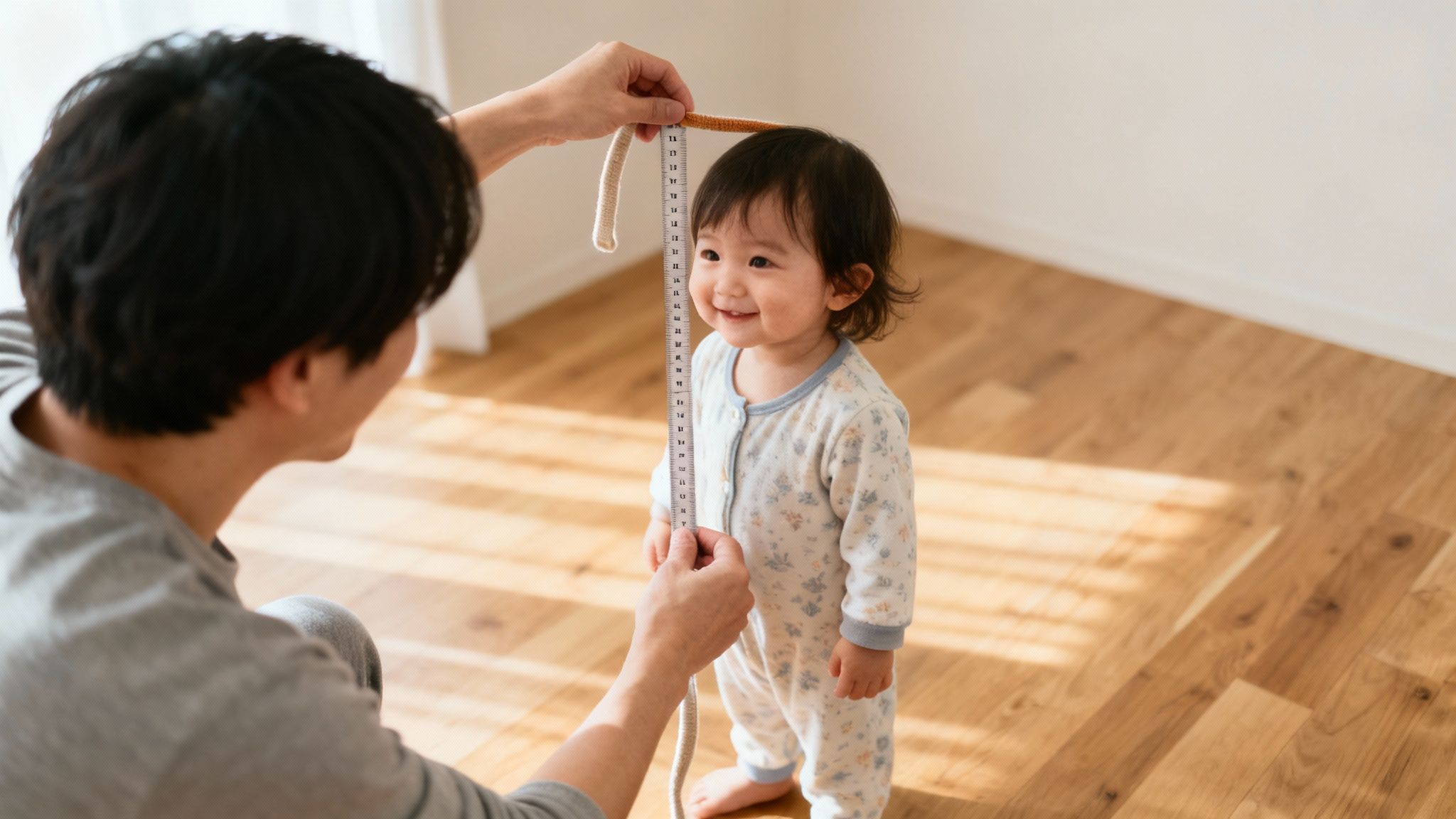
Every child grows on their own unique curve. That’s why the most reliable guides for getting the right fit are your toddler’s actual height and weight, not the number of candles on their last birthday cake.
Think of the size on the label as a starting point, not a strict rule. The only way to guarantee a comfy, well-fitting onesie is to measure your child. After all, a onesie that’s too tight can be restrictive and uncomfortable, while one that’s too baggy can get twisted up while they’re sleeping or playing.
How to Measure a Wiggly Toddler
Trying to get measurements from a toddler who has places to be and things to climb can feel like wrestling a tiny octopus. The trick is to be quick, clever, and make it a game.
Here are a few parent-approved hacks:
- Make it a game: Stand them against a wall or doorframe, make a little pencil mark just above their head, and cheer about how big they’re getting! You can measure from the floor to the mark after they’ve zoomed off to their next activity.
- Measure their best-loved outfit: Grab a onesie or sleeper that fits them like a glove right now. Lay it flat and measure it from the shoulder down to the snaps. This gives you a solid real-world number to compare to online size charts.
- Use a soft tape measure: The best time for this is often when they're distracted, lying down, or even fast asleep. A quick, gentle measurement of their length works wonders.
With their height and weight in hand, you’re ready to shop with confidence, no matter what the age on the tag suggests.
Demystifying Brand Size Charts
Here’s a little secret: there’s no universal standard for baby and toddler clothes. A 24 month onesie from one brand might fit just like a 2T from another. This is precisely why you need to ignore the "age" column on a size chart and go straight to the height and weight recommendations.
Find the row that matches your toddler’s measurements. What if they’re right on the cusp between two sizes? The golden rule is almost always to size up. It gives them that little bit of extra room to grow, meaning you'll get more than just a few weeks of wear out of it. Staying on top of their growth helps, and understanding baby growth spurts can give you a heads-up on when they might suddenly outgrow everything.
Smart design can extend the life of a onesie. Look for features like stretchy cotton blends, adjustable shoulder snaps, or an extra row of snaps at the crotch. These small details provide extra room and flexibility, giving you more value from each garment.
Choosing the Best Fabric for Your Toddler's Skin
A toddler’s skin is a world away from our own. It’s incredibly delicate, more porous, and far more sensitive to scratchy textures or irritating chemicals. So, when you're picking out 24 month onesies, the fabric is just as crucial as the fit. The right material can mean the difference between a happy, comfortable kid and an itchy, fussy one.
The best fabrics are almost always soft, breathable, natural fibers. They let air move freely, which is key for helping your little one regulate their body temperature, whether they're running around the living room or settling down for a nap.
Why Organic Cotton Is a Parent Favorite
When you ask around, you'll hear parents sing the praises of organic cotton, and for good reason. It’s grown without all the synthetic pesticides and fertilizers, making it a much cleaner, safer choice for skin that's still building its protective barrier. If your toddler has sensitive skin or is prone to eczema, organic cotton's hypoallergenic nature can be a real game-changer.
On top of that, it’s just wonderfully soft and impressively durable. This stuff can go through the wash again and again without losing that gentle feel—an absolute must for any toddler garment. You can learn more about what makes soft organic baby clothes such a smart choice.
The Benefits of Bamboo Fabric
Bamboo is another fantastic option for 24 month onesies. It has this silky, almost luxurious feel that’s incredibly gentle. What’s really neat about bamboo is how well it regulates temperature; it helps keep your toddler cool in the heat and warm when it's chilly.
This natural fiber also wicks moisture away from the skin, which is perfect for active toddlers, and it even offers a bit of UV protection. It’s just another great, gentle choice for sensitive skin.
When you choose fabrics like organic cotton or bamboo, you're not just picking a soft material. You're investing in a fabric that is breathable, naturally hypoallergenic, and free from the harsh chemicals often found in conventional textiles.
Understanding Fabric Safety Certifications
Have you ever seen a label that says "Oeko-Tex Standard 100" and wondered what it meant? It’s not just marketing fluff—it’s a guarantee. This certification means every single part of the clothing, from the fabric down to the thread and snaps, has been tested and found to be free of harmful substances.
Choosing onesies with this label gives you that extra peace of mind, knowing that what’s touching your child’s skin is proven to be safe. It’s this focus on chemical-free clothing that’s fueling huge growth in the organic baby apparel market. Valued at USD 2.02 billion in 2024, the market is projected to reach USD 3.39 billion by 2032. It's clear that parents everywhere are prioritizing safer, gentler options for their kids.
Smart Features That Make a Parent's Life Easier
When you're chasing after a toddler, the little things really do become the big things. The design of a 24 month onesie is about so much more than just a cute pattern; it's the practical, thoughtful features that can save your sanity during those hectic moments.
We're talking about clever designs that simplify dressing a wiggling child or make a speedy diaper change possible. From the type of closure to the cut of the neckline, these smart features can turn a simple piece of clothing into your most valuable player.
Closures That Make All the Difference
In the middle of a 3 a.m. diaper change, the battle between snaps and zippers is real. Every parent has a favorite, and for good reason—each one has its own perks.
- Snaps are the classic choice for a reason. They're super secure, so they won't pop open while your little one is on the move. Plus, you can unsnap just the bottom half for a quick change, keeping your toddler's torso warm.
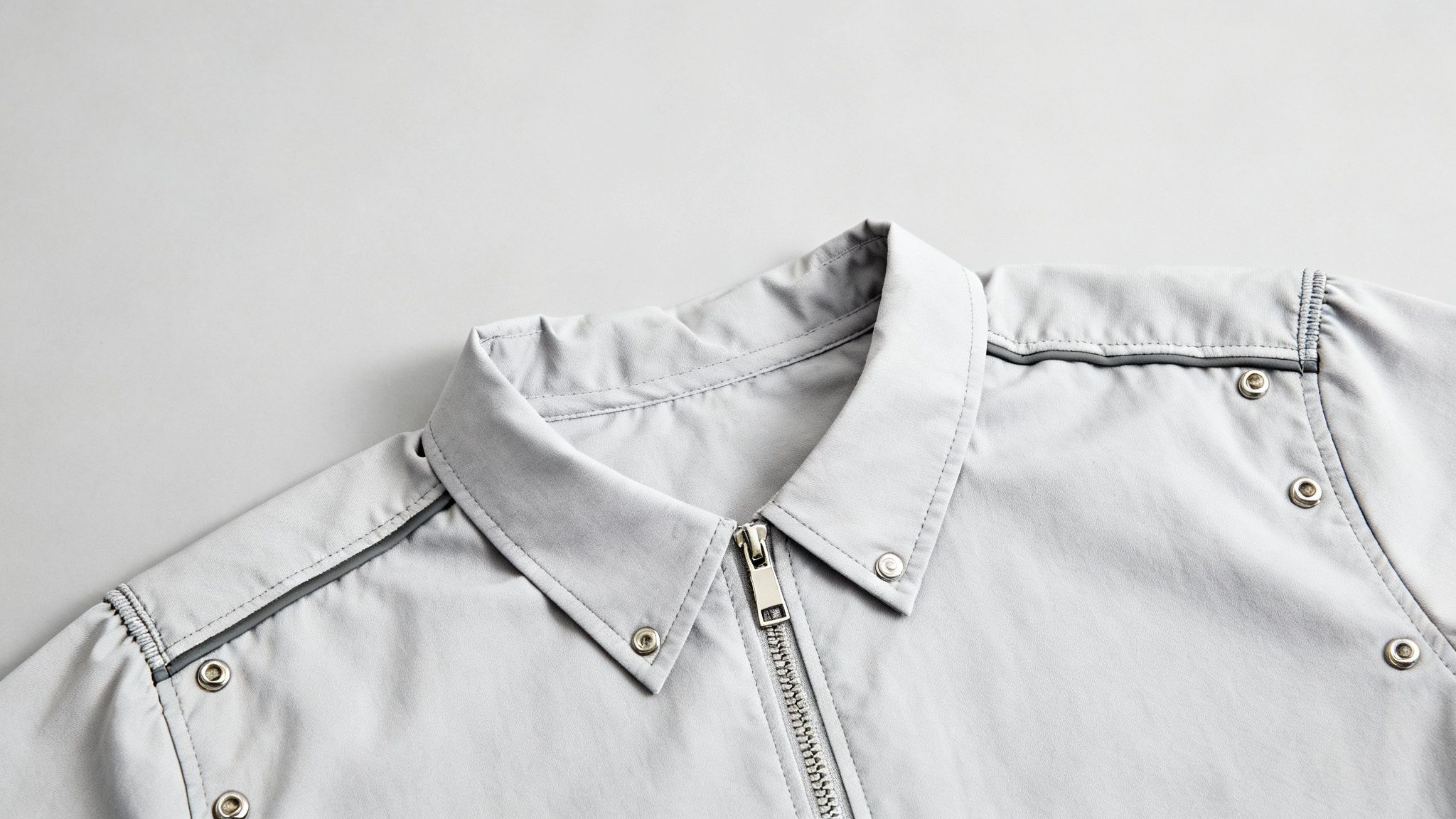
- Zippers are all about speed. A two-way zipper is a parent's dream—it lets you zip up from the bottom for a diaper change without having to completely undress your toddler. Less fuss, less cold air, and a happier baby.
Keep an eye out for onesies with a reinforced snap panel. It's a small strip of sturdier fabric along the snaps that prevents the soft cotton from tearing over time. This tiny detail makes a huge difference in how long the onesie lasts.
The Genius of the Expandable Neckline
Toddlers are messy. It's just a fact of life. From yogurt splatters to the dreaded diaper blowout, getting a soiled onesie off without smearing the mess everywhere can feel like an impossible task. This is where expandable necklines, or "envelope shoulders," come to the rescue.
That overlapping fabric on the shoulders isn't just for show—it's a brilliant hack. It lets you stretch the neckline wide enough to pull the entire onesie down over your toddler's shoulders and legs, avoiding their head completely.
This "downward-removal" trick is a game-changer. It keeps the mess contained and turns a potential disaster into a minor cleanup. Honestly, once you've used it, you'll never go back.
Styling Your Toddler's Onesie for Any Occasion
Let's be honest, the humble 24 month onesie is the real MVP of your toddler's closet. It’s so much more than just an undershirt; it's a super versatile starting point for outfits perfect for playdates, park adventures, and even just lounging at home. With a bit of imagination, this simple piece can be the foundation for countless adorable and practical looks.
Think of a onesie as your blank canvas. A solid-colored one looks instantly put-together when you pair it with some fun patterned leggings or printed pants. Throw on a soft cardigan or a little denim jacket, and you’ve got a picture-perfect outfit that’s still comfy enough for them to run around in all day.
Everyday Outfit Ideas
For a casual day of playing, a cute graphic onesie works perfectly as a top. Just pair it with shorts in the summer or some cozy joggers when the weather gets a little cooler. It’s a simple, no-fuss outfit that lets your toddler move and explore without any restrictions.
A great trick is to mix and match different textures and patterns. For instance, a plain white onesie looks absolutely classic under a pair of denim overalls. It's a timelessly cute look, but it's also incredibly practical—the snaps on the onesie keep it neatly tucked in, no matter how much climbing, crawling, or tumbling is on the agenda.
Smart Layering for Every Season
Layering is the secret to keeping toddlers comfortable, especially when the temperature can swing from chilly in the morning to warm in the afternoon. A 24 month onesie is the ultimate base layer because it always stays put and gives them a soft first layer against their skin.
- For Chilly Days: Start with a long-sleeved onesie. You can layer a cozy sweater or a fleece pullover on top and finish with pants. That onesie ensures no chilly drafts get to their back or tummy.
- For Bedtime: A onesie is a great pajama top to wear under a sleep sack or a pair of fleece PJs. It adds an extra bit of warmth without being bulky, which helps everyone get a better night's sleep.
- For Mild Weather: On a breezy spring or fall day, a short-sleeved onesie under a lightweight zip-up hoodie is the perfect combo. It gives you the flexibility to easily add or remove a layer when you're on the go.
Think of the onesie as the ultimate "tuckable" shirt. Its snap closure ensures it never rides up, providing a seamless and warm base layer that simplifies dressing and keeps your toddler comfortable from morning to night.
How to Choose Your Perfect Yarafly Onesie
Alright, you've got the lowdown on fit, fabric, and all the little features that matter. Now comes the fun part: picking out the perfect Yarafly onesie for your little one. We've designed our entire collection around these principles, so you can be sure you're getting a durable, comfy 24 month onesie that can keep up with your toddler.
First things first, grab those measurements you took earlier. Your toddler's unique height and weight are your best friends here. Just match them up with our size chart to find that sweet spot—a fit that’s snug enough for comfort but leaves plenty of room for all the wiggling, crawling, and toddling they can muster.
Using the Yarafly Size Chart
When you look at our size chart, let your child's measurements lead the way, not just their age. Toddlers grow at their own unique pace, after all.
A quick pro-tip: if your little one is hovering between two sizes, always go for the bigger one. It’s a simple trick that buys you a little more wear-time and keeps them comfortable as they hit their next growth spurt.
Beyond just the fit, we're serious about our fabrics. Every Yarafly onesie is made from premium materials like super-soft organic cotton. We want them to feel like a gentle hug, which is why our garments are breathable, hypoallergenic, and perfect for sensitive skin. Add in practical details like reinforced snaps that won't give up and expandable necklines for easy changes, and you've got a onesie truly built for the chaos of toddler life.
At Yarafly, our whole mission is to marry practical, parent-friendly design with styles that are genuinely fun. A great onesie should survive the laundry pile, feel amazing against your child's skin, and make your day-to-day just a little bit smoother.
Shopping with Total Confidence
We get it. Shopping for kids online can feel like a gamble, which is why we've made our policies as straightforward and parent-friendly as possible. We want you to feel great about your purchase from click to delivery.
- Free Shipping: We offer free shipping on all orders over $50, so you can stock up on all the essentials without worrying about extra fees.
- Easy Returns: If you get it home and the fit isn't quite right, no problem. Our return process is simple and hassle-free because finding the perfect item should be easy.
- Our Collection: Ready to find their new favorite? You can explore our full range of baby and toddler bodysuits to see all the playful prints and everyday basics we have to offer.
Picking the right 24 month onesies is a bigger deal than you might think. These staples are a huge part of the global baby apparel market, which hit a value of USD 67.47 billion in 2024. In fact, here in North America, bodysuits and onesies accounted for about 32% of all baby clothing sales in 2023. Discover more insights about the baby apparel market on verifiedmarketresearch.com. By taking a moment to focus on proper measurements and quality materials, you’re not just buying clothes—you’re investing in your toddler’s daily comfort and happiness.
Common Questions About 24 Month Onesies & Toddler Wellness
As your toddler grows, so do your questions. Beyond finding the right 24 month onesie, you're navigating the world of nutrition to keep them healthy and strong. A robust immune system starts with the right fuel, packed with essential vitamins and minerals from whole foods.
Toddlers are busy exploring, and their immune systems are working overtime. Key nutrients like Vitamin C from fruits, Vitamin A from carrots, and Zinc from beans act as their internal bodyguards. A balanced diet is the best defense against common bugs and sniffles.
Foods That Strengthen a Child's Immune System
Making food fun is the secret to getting toddlers to eat well. Aim to serve a variety of colorful fruits and vegetables, as different colors often signal different nutrients.
- Vitamin C Powerhouses: Berries, oranges, kiwi, and bell peppers are fantastic for building up their defenses.
- Leafy Greens & Orange Veggies: Spinach, kale, sweet potatoes, and carrots provide Vitamin A, crucial for vision and immune function. Try blending spinach into a smoothie or adding mashed sweet potato to baked goods.
- Yogurt & Kefir: These contain probiotics, the beneficial bacteria that support a healthy gut. Since much of the immune system is in the gut, these are a top choice.
- Lean Proteins & Legumes: Chicken, fish, beans, and lentils are excellent sources of zinc and iron, which are vital for immune cell development.
Quick & Healthy Recipes for Toddlers
Mealtime with a toddler doesn't have to be a battle. Smoothies are a parent's best friend for packing in nutrition, and a few creative recipes can win over even the pickiest eaters.
Immunity-Boosting Smoothie Recipes:
- Green Monster Smoothie: Blend a large handful of spinach, 1/2 banana (frozen for creaminess), 1/4 cup of mango chunks, and 1/2 cup of plain yogurt with a splash of milk. It’s sweet, nutrient-dense, and the fun green color is a hit.
- Berry Blast Smoothie: Combine 1/2 cup of mixed berries (strawberries, blueberries), 1/2 banana, a tablespoon of chia seeds, and 1/2 cup of kefir or milk. This smoothie is loaded with antioxidants and fiber.
Fun Food Ideas for Picky Eaters:
- Mini "Pizzas": Use a whole-wheat English muffin as the base, spread with tomato sauce, sprinkle with cheese, and top with finely diced bell peppers or mushrooms. Toast until bubbly.
- Broccoli "Trees" with Dip: Lightly steam broccoli florets and serve them as "little trees" alongside a yummy dip like hummus or a yogurt-based ranch.
- Hidden Veggie Meatballs: Add finely grated zucchini and carrots to your favorite meatball recipe. They'll cook down and become nearly invisible, adding moisture and a dose of vitamins.
Building healthy eating habits early sets the stage for a lifetime of wellness. By focusing on whole, nutrient-rich foods, you give your child's immune system the support it needs to thrive.
At Yarafly, we know that what your child wears is just as important as what they eat. Comfort is key! Check out our collection of soft, playful, and durable clothing made for every step of their journey. Find their new favorite outfit at Yarafly.com.